 THEBUSINESSBYTES.COM Fast. Focused. Future-ready

Odisha’s future industrial growth lies in prioritizing the aluminium value chain, unlocking green opportunities and aligning with global sustainability trends, writes Pradyumna K. Panda
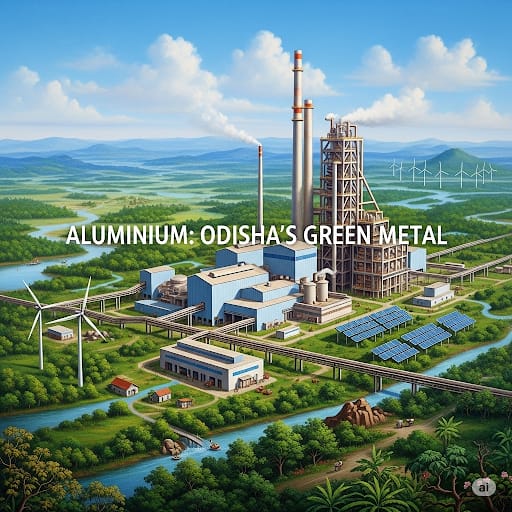
Odisha stands at a defining juncture in its industrial journey. While steel has long been the backbone of the state’s economic development, a compelling case is emerging for a strategic pivot toward aluminium — a metal that aligns powerfully with the global shift toward sustainability and technological advancement. With its abundance of natural resources, rapidly expanding global demand, and potential for high-value manufacturing, aluminium could become the cornerstone of Odisha’s green industrial revolution.
The state’s competitive edge begins with its rich mineral wealth. Odisha holds the largest share of India’s bauxite reserves — estimated at 1,530 million tonnes as of 2020 — accounting for more than half of the country’s total. This resource advantage provides Odisha with a unique opportunity to reduce import dependency and strengthen economic self-reliance, laying the foundation for a robust and integrated aluminium value chain.
Beyond resource availability, aluminium’s environmental credentials make it indispensable in a decarbonizing global economy. With a superior strength-to-weight ratio, it plays a crucial role in lightweighting applications, particularly in electric vehicles and aerospace, directly contributing to emission reductions. Aluminium is also 100% recyclable and significantly less energy-intensive to reprocess — requiring up to 95% less energy compared to primary production and producing 94% fewer carbon emissions. While steel remains vital in infrastructure, aluminium aligns more seamlessly with the world’s transition to a circular and low-carbon economy.
What further strengthens the case for aluminium is its high potential for value addition and employment generation. Unlike primary metal production, downstream aluminium industries encompass a wide range of applications — from consumer electronics to solar panel frames and electric vehicle components. These sectors not only create more jobs but also drive industrial diversification. Odisha’s Angul Aluminium Park is a prime example of how targeted infrastructure can unlock opportunities in advanced manufacturing, creating a ripple effect across the state’s economy.
 Global market trends reinforce the urgency of this strategic shift. The aluminium market is expected to reach USD 367.3 billion by 2030, driven by surging demand from emerging sectors such as electric mobility, renewable energy, packaging, and electronics. For instance, the aluminium used per vehicle is projected to more than double, from 121 kg in 2006 to 256 kg by 2030. Additionally, the ongoing global energy transition is expected to require an additional 15 to 22 million tonnes of aluminium by the end of the decade. Odisha is well-positioned to align its industrial policies to tap into these high-growth opportunities.
The state already benefits from a well-established aluminium ecosystem, with major players like NALCO and other private sector giants having made substantial investments. Building upon this existing infrastructure and institutional expertise offers a faster, more efficient path to scaling operations and attracting new investment, particularly in downstream sectors.
A focused strategy on aluminium could bring transformative socio-economic benefits. It has the potential to generate large-scale direct and indirect employment, stimulate regional infrastructure development, and enhance livelihoods through skill development and vocational training. It would also boost state revenues, enabling greater investments in education, healthcare, and community welfare — particularly in tribal and bauxite-rich regions.
Yet, this strategic direction is not without challenges. Aluminium production is energy-intensive, and Odisha must invest in renewable energy integration and cleaner technologies to ensure environmental sustainability. The management of industrial by-products such as red mud must be addressed through innovative waste management practices. Besides, the shift toward high-value manufacturing will require continuous workforce upskilling and technological adaptation.
Equally important is the need to uphold the rights and dignity of local communities. All mining and industrial activities must adhere strictly to the Forest Rights Act (FRA), 2006, and other relevant legislations. Industries must ensure prior informed consent of tribal communities, provide fair and transparent compensation and rehabilitation, and include these communities as stakeholders in the development process. Sustainable livelihoods, cultural respect, and ecological stewardship must be at the heart of Odisha’s aluminium growth story.
By strategically leveraging its aluminium potential, Odisha has the opportunity to lead India’s next wave of sustainable industrial growth. This vision not only positions the state as a hub of green manufacturing but also as a model for inclusive, responsible, and future-ready development.


Leave a Reply