 THEBUSINESSBYTES.COM Fast. Focused. Future-ready

THEBUSINESSBYTES BUREAU
BHUBANESWAR, JUNE 24, 2025
In the tribal heartland of Odisha’s Kalahandi district, where tradition is a way of life and ancestral legacies run deep, two ancient art forms—Saura painting and Dhokra craft — once stood on the verge of fading into oblivion. Today, however, these timeless expressions of tribal heritage are witnessing a vibrant revival, thanks to Vedanta Aluminium’s visionary community initiative, Project Adikala.
What began as a cultural preservation effort has now blossomed into a grassroots movement—empowering artisans, revitalizing rural economies, and repositioning Kalahandi as a proud custodian of India’s tribal artistry.
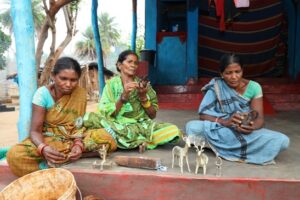 Dhokra, a 4,000-year-old metallurgical tradition practiced in Kankeri village of Lanjigarh block, is renowned for its rustic depictions of mythology, flora, fauna, and tribal life — crafted using the intricate ‘lost wax’ technique. Saura paintings, characterized by their intricate geometrical motifs, are deeply spiritual narratives painted on tussar silk and canvas, capturing the rhythms of tribal life, agriculture, and ritual.
Yet in recent decades, the twin forces of industrialization and urban migration led to dwindling demand, lack of income, and the erosion of generational interest in these crafts. With limited market exposure and inadequate support, artisans found it difficult to sustain their livelihoods — until Vedanta Aluminium stepped in with Project Adikala.
Launched under the company’s CSR framework, Project Adikala was designed to do more than preserve art—it set out to make it sustainable and future-ready. The initiative blends traditional craftsmanship with contemporary design, builds market linkages, and equips artisans with skills to become self-reliant and globally relevant.
For Dhokra artisans, Vedanta introduced innovations in casting techniques without compromising the authenticity of the art. Saura painters, on the other hand, received digital training and were encouraged to explore new mediums — from eco-friendly jute bags and textiles to scented candles and home décor. Through curated workshops, exhibitions, and branding under the “Kalahandi Craft” label, the project has helped reimagine tribal art for the modern consumer.
A shining example of this transformation is Uanshu Kansari, a 47-year-old Dhokra artisan from Kankeri, Bandhapari. Descended from a lineage of metalworkers, Uanshu once struggled to sustain his family. With Vedanta’s support, he became part of a producer group that facilitated collective production, improved quality, and ensured direct access to markets. His income increased manifold, enabling him to educate his children — an aspiration once beyond reach. Uanshu’s journey is a testament to how cultural preservation, when paired with empowerment, can create lasting change.
Since its inception in 2018, Project Adikala has grown from engaging just 15 artisans to supporting over 120 in Saura and Dhokra crafts. Average artisan incomes have risen by more than 50%, and over 100 schoolchildren are now being trained to carry forward this rich legacy. In FY 2025 alone, artisan sales reached ₹20 lakh — a milestone that has not only stemmed migration but also brought many back to their roots. The economic ripple effect is now visible in improved living standards and confident, self-reliant communities.
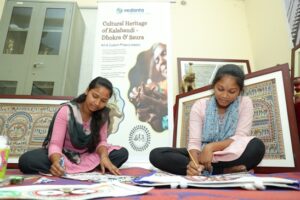 This remarkable transformation has earned recognition from the Odisha Rural Development and Marketing Society (ORMAS), which has promoted Kalahandi’s tribal art in major cultural hubs like Bhubaneswar. Artisans under Project Adikala have showcased their creations at over 30 prominent events, including the International Aluminium Conference, Utkarsh Odisha, TRIFED exhibitions, and the International Gita Mahotsav. What was once confined to village walls is now celebrated on national and international platforms.
What makes Project Adikala particularly impactful is its emphasis on inclusivity and sustainability. Over 85% of participating artisans are women, turning the revival into a movement of economic empowerment. With more than 90% of raw materials being eco-friendly, the initiative aligns with Vedanta’s commitment to responsible and green practices. Strategic convergence with government schemes such as ORMAS has institutionalized these efforts, helping scale artisan-led enterprises. Today, their growing portfolio includes over 100 distinctive designs — each telling a story of cultural continuity and modern relevance.
In the remote villages of Kalahandi, where heritage is etched in molten metal and painted with hand-made dyes, Vedanta’s Project Adikala is much more than a CSR programme. It is a lifeline to identity, a catalyst for community-led development, and a model for how corporate responsibility can preserve the cultural soul of a nation.
By bridging the gap between tradition and innovation, Vedanta Aluminium has not only helped artisans reclaim their craft but also empowered an entire region to rediscover its pride, purpose, and prosperity.


Leave a Reply