 THEBUSINESSBYTES.COM Fast. Focused. Future-ready

THEBUSINESSBYTES BUREAU
JHARSUGUDA/LANJIGARH, AUGUST 11, 2025
Odisha’s tribal heartlands — home to vibrant communities such as the Kondh, Gond, Santal, Munda, and Saura — are celebrated for their distinctive cultures, crafts, and traditions. Yet, behind this cultural wealth lay decades of neglect, poverty, and isolation. In the rugged landscapes of Rayagada, the famine-scarred Kalahandi region of Lanjigarh, and the remote expanses of Sundargarh and Jharsuguda, remoteness long kept progress out of reach.
Kalahandi, in particular, became a stark symbol of deprivation in India. Famines, chronic malnutrition, and extreme poverty gave rise to the infamous term “Kalahandi Syndrome,” evoking images of malnourished children, empty granaries, and families surviving on wild roots and forest leaves. Poor literacy, minimal infrastructure, and a lack of economic opportunity kept these districts locked in a cycle of hardship.
In these areas, illnesses often went untreated for want of medical facilities, maternal mortality was alarmingly high, and children trekked miles to attend crumbling schools—many dropping out before completing primary education. Subsistence farming and the sale of minor forest produce provided meagre, irregular incomes, with food insecurity a constant reality. Basic infrastructure was almost non-existent: electricity was rare, clean water scarce, and roads little more than dirt tracks. For many, survival was a daily battle, often forcing men to migrate in search of work.
Vedanta entered these regions with a vision to empower tribal communities — creating opportunities for prosperity while preserving their cultural identity. Rather than offering short-term relief, the company set out to establish a framework for lasting progress, built on interconnected pillars: healthcare, education, livelihoods, women’s empowerment, infrastructure, and cultural revival.
Working in partnership with the Government, local panchayats, and grassroots organisations, Vedanta launched initiatives that reached deep into the remotest villages — bringing essential services, building skills, and opening up local economic opportunities so that people could thrive in their own homeland.
Across Rayagada, Kalahandi, Sundargarh, and Jharsuguda, these interventions have directly touched nearly 4,00,000 lives — turning once-forgotten communities into rising examples of resilience and progress.
A Holistic Approach to Development
Healthcare has seen a marked transformation through Mobile Health Units, the Vedanta Hospital at Lanjigarh serving over 60,000 patients annually, and large-scale immunisation and health awareness drives. Education has been strengthened with the district’s first English-medium DAV Vedanta International School for over 1,300 students, digital learning in Rayagada, and upgraded Anganwadis.
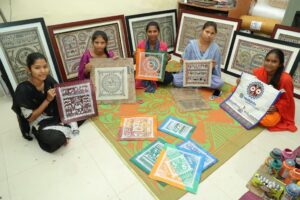 Livelihoods and women’s empowerment have been advanced by supporting over 5,000 farmers under the ‘Sangam’ programme, equipping self-help groups with income-generating machinery, and empowering 9,000+ women and girls through ‘Pehli Udaan’. Infrastructure gaps have been bridged with solar lighting, clean water systems, rural road improvements, and modernised community spaces benefiting over 50,000 people.
Cultural heritage has been revitalised through ‘Adikala’, which has revived Saura and Dhokra art for 210 artisans, while grassroots sports training has enabled 110 tribal archers to compete at national levels. Additional efforts include distributing over 18,000 livelihood support packets, installing 67 solar streetlights, setting up solar borewells and water purification systems, planting 2,500 trees in school premises, and supporting local festivals that strengthen community identity.
Visible, Measurable Change
The transformation is tangible. Immunisation rates have risen, maternal and infant mortality rates have declined, and nutrition has improved. School attendance is up, dropout rates are down, and more youth are pursuing higher education and professional careers once thought unattainable.
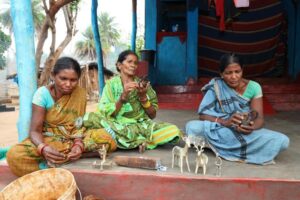 Economically, Kalahandi’s Gross District Domestic Product growth has outpaced the state average, while migration for unskilled labour has fallen across all four districts. Women have moved from financial exclusion to business ownership, artisans are sustaining their crafts without leaving home, and farmers are progressing from subsistence to commercial farming.
Nearly 4,00,000 people have directly benefitted from Vedanta’s initiatives, creating a ripple effect that is reshaping entire communities. Villages once synonymous with neglect now stand as models of inclusive, targeted development.
A Blueprint for the Future
On this World Tribal Day, Odisha’s journey from the despair of “Kalahandi Syndrome” to a story of self-reliance and growth sends a clear message: development that is inclusive, culturally sensitive, and sustained can lift entire communities out of poverty without erasing their heritage.
From Rayagada’s isolation to its emerging opportunities, from Jharsuguda and Sundargarh’s underdevelopment to their economic momentum, and from Kalahandi’s tragedy to its triumph, the transformation is living proof that lasting change is possible when progress and cultural pride go hand in hand.


Leave a Reply