 THEBUSINESSBYTES.COM Fast. Focused. Future-ready

THEBUSINESSBYTES BUREAU
LANJIGARH (KALAHANDI), AUGUST 8, 2025
On the occasion of World Tribal Day, Vedanta Aluminium, India’s largest producer of aluminium, celebrates the inspiring transformation of Kalahandi — a district once marked by poverty and underdevelopment — into a national model for tribal-led progress and grassroots empowerment.
In 2001, Kalahandi’s contribution to Odisha’s Gross District Domestic Product (GDDP) was less than 1 per cent, and the average per capita income hovered around just Rs 19,000. However, with the establishment of Vedanta Aluminium’s alumina refinery in Lanjigarh and the company’s community-first approach, the district began a remarkable journey of socioeconomic revival. Over the years, Kalahandi has evolved into an Aspirational District, currently ranked #1 in Odisha for Health & Nutrition and #2 in Education under NITI Aayog’s programme. From 2003 to 2015, the district’s GDDP grew by over 16 per cent, more than double the state average.
 This transformation was recently acknowledged during a review meeting chaired by NITI Aayog in Odisha, where Kalahandi was lauded for achieving 100 per cent success in five out of six key developmental indicators, including women and child health, nutrition, education, and agriculture.
Commenting on the occasion, Rajiv Kumar, CEO of Vedanta Aluminium, said, “On World Tribal Day, we take immense pride in the transformation story of Kalahandi, a region once known for its abject poverty, which is now rising through the resilience of its tribal communities. At Vedanta Aluminium, our mission goes beyond business; it’s about building futures, especially in the rural regions we operate in. Our social impact efforts are rooted in respect for tribal identity and a belief in inclusive, sustainable development.”
Vedanta Aluminium’s social development initiatives have played a pivotal role in Kalahandi’s progress across several key sectors. In the field of education, the DAV Vedanta International School — Kalahandi’s first English-medium institution — now educates over 1,300 students, 83 per cent of whom are from tribal communities. Equipped with smart classrooms, academic mentoring, Mini Science Centres, and Gyanshree Scholarships, the school is helping students excel. Coaching support for NEET and JEE is enabling tribal youth to pursue careers in engineering, medicine, and scientific research.
In healthcare, Vedanta’s hospital at Lanjigarh serves more than 60,000 people annually. Additionally, mobile health units reach another 20,000 individuals in remote tribal villages. Awareness campaigns have fostered trust in modern medicine, improving hygiene practices, maternal care, and nutritional standards. In 2024 alone, over one lakh people across 120 villages benefitted from Vedanta’s healthcare programmes.
Sports development is another area of impact. Vedanta’s grassroots archery training programme has trained over 300 tribal children, providing access to national coaches, modern equipment, and nutritional support. These young athletes secured 40 medals in 2024, and the initiative now benefits from the mentorship of Olympian Rahul Banerjee.
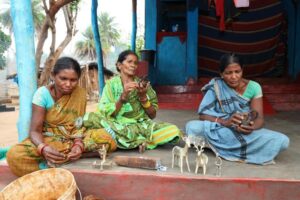
Through Project Adikala, Vedanta is also working to preserve and promote tribal art forms such as Saura and Dhokra in villages like Bandhapari and Kankeri. The initiative has helped 120 artisans revive traditional practices while gaining national and international exposure through exhibitions and partnerships with organisations like ORMAS and TRIFED.
Women empowerment remains central to Vedanta’s approach. Project Sakhi has supported around 4,900 rural women across 471 self-help groups, helping them emerge as entrepreneurs, farmers, and community leaders. These women are engaged in over 1,500 income-generating activities, and more than 600 have received training in financial literacy and enterprise development.
In the domain of livelihoods and skilling, Vedanta, in collaboration with NABARD, has trained tribal youth in vocations such as welding, tailoring, hospitality, and digital services — reducing migration by promoting local employment. Agriculture too has seen significant shifts, with farmers transitioning from subsistence farming to cultivating high-value crops like bananas and strawberries, supported by solar irrigation and drip systems. This integrated model is enhancing both income security and food resilience in tribal communities.
Kalahandi’s transformation is not an isolated success story but a systemic shift — an example of how industry can coexist with and uplift tribal identity. As we mark World Tribal Day, Kalahandi stands as a beacon of hope and a roadmap for inclusive development in tribal districts across India.


Leave a Reply