 THEBUSINESSBYTES.COM Fast. Focused. Future-ready

THEBUSINESSBYTES BUREAU
BHUBANESWAR, SEPTEMBER 22, 2025
Aluminium is often hailed as the ‘metal of the future’ – powering cutting-edge applications that hold the promise to transform our world. At the same time, it has firmly established itself as the ‘metal of the present’ From building aeroplanes that connect continents to encasing solar cells that quietly power our homes, aluminium is deeply embedded in the fabric of modern life. And at the heart of this technological progress lies the aluminium billet: a foundational product enabling us to build, innovate, and evolve.
Long, cylindrical, and silver-hued, billets may appear deceptively simple at first glance. Yet their production is anything but ordinary. Advanced casting technologies now allow precise control over billet purity, grain structure, and surface finish. Following this, billets undergo homogenization and rigorous testing to meet the exacting standards of industries as demanding as aerospace, automotive, construction, and renewable energy. The outcome is a product that is both reliable and versatile, forming the backbone of high-performance applications across diverse sectors, said Vijay Murthy, Chief Marketing Officer, Vedanta Aluminium.
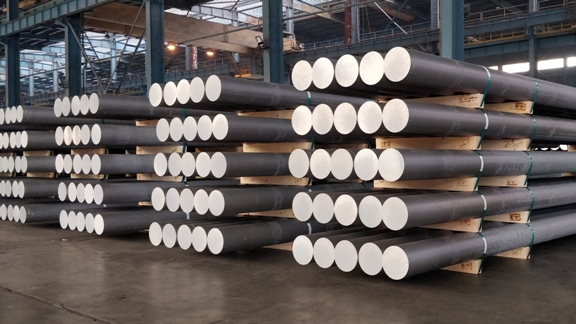
What makes India’s billet story especially compelling is the convergence of scale, quality, and innovation. Once seen mainly as a raw material supplier, India is now emerging as a global force in value-added aluminium products. This shift is reflected in the surge of domestic billet production, where billets are increasingly recognized not only for their utility but also for their strategic role in driving industrial growth and technological advancement.
Vedanta Aluminium, India’s largest aluminium producer, is at the forefront of this transformation. With state-of-the-art manufacturing facilities, the company blends cutting-edge technology with rigorous quality assurance and a commitment to environmental stewardship. Its operations hold certifications to the highest global benchmarks, including the Aluminium Stewardship Initiative’s Performance Standards for sustainable practices, BIS certification for quality, and ISO standards for quality management, environmental management, and energy efficiency. These credentials underscore a philosophy of responsible manufacturing while ensuring global competitiveness.
Yet the continued success of India’s aluminium industry depends on nurturing a supportive ecosystem. This includes stronger policy incentives for domestic value addition, robust infrastructure investments to ease logistics, and deeper partnerships to accelerate innovation in alloy development and extrusion technologies. Expanding production to meet India’s growing needs must go hand in hand with strengthening downstream capabilities, unlocking fresh avenues for applications across sectors.
The conversation on domestic aluminium, therefore, must extend beyond the focus on products and processes. It must envision a resilient, future-ready aluminium ecosystem – one that empowers Indian producers to compete globally, innovate locally, and contribute meaningfully to national priorities like infrastructure development, clean energy, and sustainable mobility.
Aluminium billets may work silently in the background, but they are steadily shaping the systems that define modern life. By supporting domestic producers and fostering collaboration across the value chain, India can ensure that its aluminium industry does not merely respond to global trends but sets them. In this way, India’s aluminium billets are not just shaping products – they are shaping possibilities.


Leave a Reply