 THEBUSINESSBYTES.COM Fast. Focused. Future-ready

THEBUSINESSBYTES BUREAU
BHUBANESWAR, SEPTEMBER 27, 2025
Behind the smelters, refineries, and rolling mills that make Vedanta Aluminium India’s largest aluminium producer stands a dynamic workforce of 2,000 engineers. Spread across Jharsuguda and Lanjigarh in Odisha and Korba in Chhattisgarh, this diverse community of talent does far more than keeping machines in motion. They are innovators, problem-solvers, and agents of change — transforming aluminium into a strategic driver of India’s industrial growth, clean energy transition, and global competitiveness.
What sets Vedanta Aluminium’s engineering force apart is its youthful energy. With an average age of just 29–30 years, its engineers combine strong technical expertise with a fearless appetite for experimentation. Their innovations span from deploying digital twin models to optimise smelter performance, to reimagining industrial by-products as resources — such as converting waste into high-purity, battery-grade graphite. At Vedanta, innovation is not a slogan but a lived, everyday practice.
This spirit of curiosity and disruption is personified by leaders like Jajneswar Dash, CEO of Metal, Vedanta Jharsuguda, whose journey began by commissioning the first 76 pots at the world’s largest single-location smelter. For Dash, engineering is more than a profession — it is a mindset built on adaptability, persistence, and courage to embrace digital disruption rather than resist it. His story captures Vedanta’s ethos: engineers are encouraged to learn constantly, experiment boldly, and drive innovation at scale.
Breaking Barriers in Inclusive Manufacturing
Innovation at Vedanta Aluminium extends beyond technology into the realm of inclusion. In a pioneering step, the company transitioned an entire smelter line at Jharsuguda to be operated exclusively by women — the first such initiative in India. This is part of Vedanta’s broader goal of achieving 30% female representation across its workforce by FY2030.
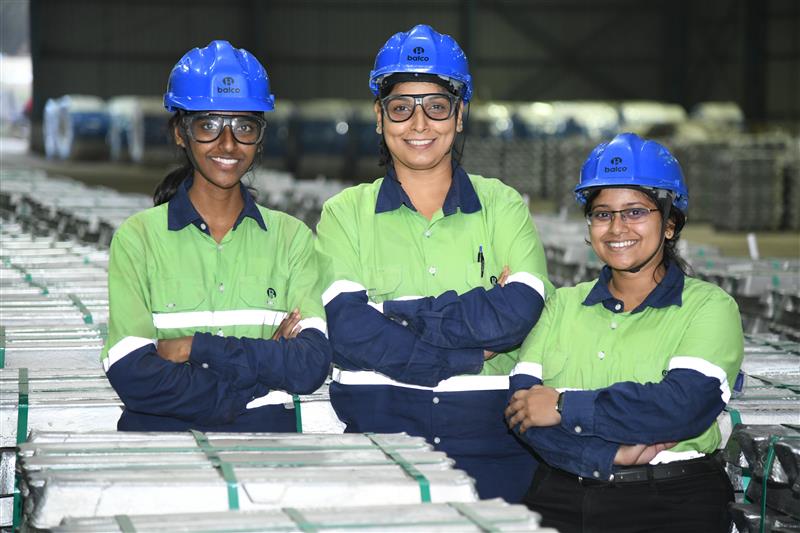 Engineers such as Namrata Kumari and Soumya Priya are scripting this change. As part of the pioneering women-led potline, they have faced skepticism, long shifts, and technical hurdles head-on, carving space for themselves in a traditionally male-dominated environment. Their journeys highlight that diversity in heavy industry is not tokenism but a strategic advantage — injecting fresh perspectives, resilience, and leadership into some of the most demanding industrial challenges.
The leap from academic learning to industrial practice is rarely straightforward, yet Vedanta Aluminium ensures young engineers are prepared for the transition. Its Graduate Engineer Trainee (GET) programmes provide early hands-on exposure, while continuous upskilling keeps the workforce ahead of technological shifts. Partnerships with leading academic and R&D institutions further accelerate breakthroughs in sustainability, automation, and process innovation.
For many engineers, the journey is deeply personal as well as professional. Rajnish Gupta, a chemical engineer at Vedanta Lanjigarh, grew up in a farming family in Ayodhya. Overcoming personal hardships to pursue higher education, he now contributes to critical process improvements at the plant. His story is one of resilience and aspiration — reflecting the dreams of countless young Indians who see engineering not merely as employment, but as a path to transformation.
Engineering the Future of Aluminium
India’s aluminium sector is poised for exponential growth, with demand expected to rise nearly sixfold by 2047. Meeting this challenge will require not only capital investment but also an engineering workforce capable of scaling production responsibly and sustainably. Vedanta’s engineers are already preparing for this future, embedding digitalisation into manufacturing, advancing decarbonisation strategies, and driving efficiencies that set new global benchmarks.
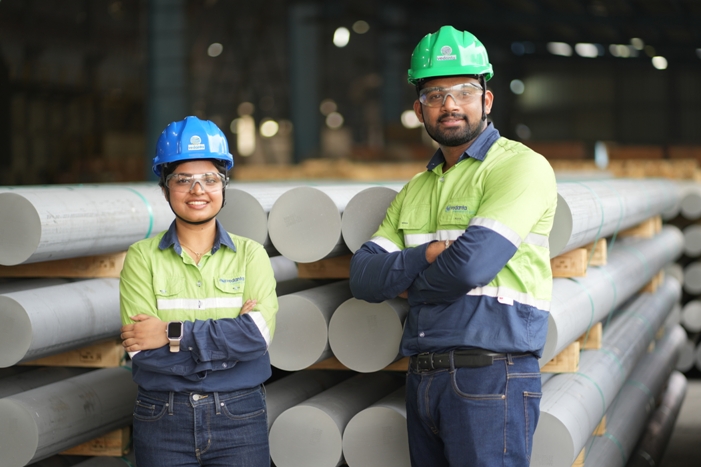 At the same time, Vedanta Aluminium’s geologists, including Bidisha Das and Koyel Chatterjee at its Jamkhani coal mines, play a pivotal role. From geological modelling to biodiversity management, they ensure raw material security while aligning operations with sustainability goals. Their work illustrates how engineering at Vedanta transcends factory floors, extending across the value chain by integrating science, sustainability, and social responsibility.
Although aluminium manufacturing may appear to be about machinery and scale, its true strength lies in people. Each engineer — whether dismantling a radio as a curious child, running a potline as a young woman, or applying sustainable geology in mining — contributes to a collective vision. Their stories embody the innovation, resilience, and purpose that power the dream of a Viksit Bharat.
For Vedanta Aluminium, this vision is more than an ambition — it is a promise. A promise of global leadership in aluminium, of advancing India’s industrial self-reliance, and of enabling sustainable growth. For its engineers, it is about solving real-world challenges, leaving enduring legacies, and demonstrating that behind every tonne of aluminium lies not just metal, but the ingenuity and determination of people shaping the future.


Leave a Reply