 THEBUSINESSBYTES.COM Fast. Focused. Future-ready

THEBUSINESSBYTES BUREAU
MUMBAI, SEPTEMBER 25, 2025
Solidaridad Asia, in collaboration with The Solvent Extractors’ Association of India (SEA) and the Asian Palm Oil Alliance (APOA), has unveiled a research-backed white paper titled “Path to Palm Oil Self-Sufficiency in India”. The paper outlines a comprehensive strategy to reduce India’s heavy reliance on palm oil imports, enhance domestic production, and achieve up to 50 percent self-sufficiency by 2047. If realised, this effort could save the country trillions of dollars in import costs while significantly improving farmer incomes and advancing environmental sustainability.
India, the world’s largest importer of palm oil, brought in 8.9 million metric tonnes (mmt) in 2023, accounting for 21 percent of global imports, while its domestic output met less than five percent of demand. With vegetable oil demand projected to rise to 66.8 mmt by 2047 due to increasing incomes, rapid urbanisation, and a growing dependence on processed foods, the white paper warns that India could face a 40 mmt supply gap if production does not keep pace.
“India’s pursuit of self-sufficiency in edible oils is both a national imperative and a collective responsibility. Among vegetable oils, palm oil stands out for its affordability, versatility, and critical role in meeting nutritional and industrial needs. Yet, domestic production fulfils only a fraction of our demand, leaving the nation heavily dependent on imports,” said Dr. B.V. Mehta, Executive Director of SEA.
The white paper identifies four crucial pathways where palm oil can deliver transformative impact. Economically, oil palm is highly profitable, with a Benefit-Cost Ratio (BCR) of 1.49 compared to 1.03 for rice and 1.13 for cotton. In states like Andhra Pradesh, shifting from low-return crop cycles such as rice-rice, rice-maize, and groundnut-based systems to oil palm can increase farmer profits by Rs 30,000 to Rs 1,50,000 per hectare annually. From a multi-sectoral perspective, the expansion of the palm oil value chain is expected to generate an additional cumulative output of INR 15 trillion by 2047 and create nearly 6.9 lakh new jobs each year, empowering rural households, enhancing livelihood security, and driving regional development.
The environmental case for palm oil is equally strong. Its high yield per hectare results in lower emissions per unit of oil compared to soybean, sunflower, and rapeseed. Cultivation on non-peatland areas, as is the practice in India, produces among the lowest emissions globally — 1.44 kg CO₂ per kg of oil versus 3.45 kg for soybean and 3.32 kg for sunflower. With improved land-use planning and adoption of methane-capture technologies for Palm Oil Mill Effluent (POME), India can further curb emissions, positioning palm oil as a climate-smart oilseed. On the food security front, palm oil plays a critical role, especially in developing economies. Evidence from Indonesia and Costa Rica shows that switching to oil palm cultivation increased household calorie intake by 13 percent and broadened access to nutritious food.
“India’s push for palm oil self-sufficiency is not just about economic resilience — it’s a bet on home-grown innovation that can transform rural livelihoods and secure food for billions,” said Dr. Shatadru Chattopadhyay, Managing Director of Solidaridad Asia. “Beyond farms, the multipliers are vast. A robust domestic palm oil ecosystem could generate an additional INR 15 trillion in output and create nearly seven lakh new jobs annually. For a country aiming to build resilient supply chains and inclusive growth, this is an opportunity too significant to ignore.”
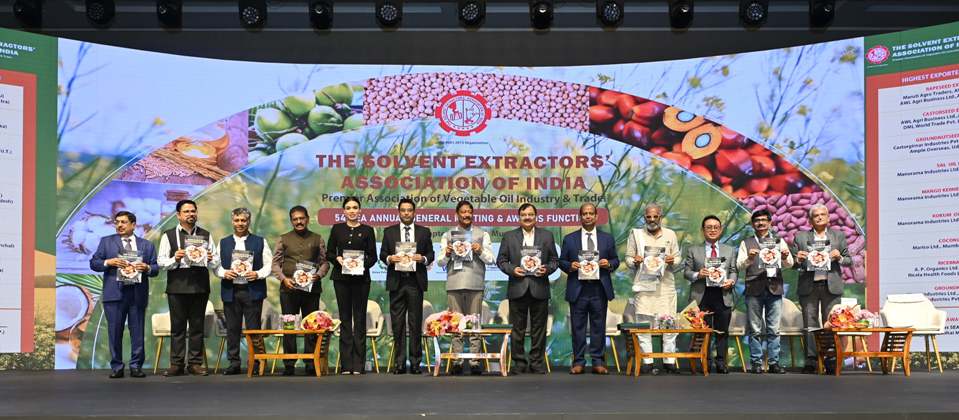 To achieve these ambitious goals, the white paper proposes a five-point action plan. It calls for expanding the coverage of the National Mission on Edible Oils – Oil Palm (NMEO-OP), strengthening irrigation networks, and providing targeted support for rainfed regions, particularly in the Northeast. It also recommends repurposing about 16.08 million hectares of marginal rice-growing areas, identified as suitable for oil palm, to enhance yields and returns. Improving productivity is another priority, with strategies aimed at raising yields from the current 2.4 metric tonnes per hectare to 4–5 metric tonnes through better planting material, advanced agronomic practices, and timely access to inputs. The paper further stresses the need to build an enabling ecosystem by investing in rural road connectivity, fresh fruit bunch (FFB) collection systems, and processing facilities, especially in the Northeastern states where infrastructure gaps persist. Finally, it underscores the importance of catalysing private-sector participation, noting that private players already own 69 of India’s 82 seed nurseries and operate 26 of the 32 processing mills. Strengthened public–private partnerships under NMEO-OP could boost production, expand processing capacity, and improve farmer market access through technology transfer and investment.
Speaking at the launch, APOA Chairperson Atul Chaturvedi emphasised the regional significance of this initiative. “A self-reliant India is critical for the development of the region. The white paper illustrates strong evidence of south-south cooperation, especially through key learnings from Indonesia and Malaysia on predictable returns and inclusive growth for palm smallholders.”
The document also recommends strengthening research through regional Indian Institute of Oil Palm Research (IIOPR) centres and embedding the India Palm Oil Sustainability (IPOS) framework into NMEO-OP to ensure responsible production practices, traceability, and certification. It urges the adoption of regenerative agriculture and certification-based models that can improve soil health, enhance ecosystem services, and build long-term resilience. The integration of smallholder farmers into value chains is highlighted as critical, requiring measures such as access to affordable credit, secure land rights, and dedicated advisory services. Public–private partnerships, particularly in nurseries, mills, and Centres of Excellence for training and mechanisation, are seen as vital to accelerating investments and enabling inclusive growth.
Together, these strategies lay out a clear pathway for India to transform palm oil cultivation into a driver of economic, environmental, and social progress, moving the nation closer to its target of self-sufficiency by 2047.


Leave a Reply