 THEBUSINESSBYTES.COM Fast. Focused. Future-ready

THEBUSINESSBYTES BUREAU
BHUBANESWAR, AUGUST 12, 2025
In what has become one of India’s most inspiring public utility success stories, Odisha’s power sector has undergone a remarkable transformation, emerging as a national model for electricity distribution reform. Since 2020, through a visionary Public-Private Partnership (PPP) with Tata Power, the state has tackled chronic inefficiencies, modernised ageing infrastructure, and expanded access to reliable electricity to over 13 lakh new consumers — reaching not just cities, but the remotest corners of the state.
Once plagued by frequent outages, high technical and commercial losses, and public dissatisfaction, Odisha’s distribution landscape stood as a symbol of the challenges facing India’s power sector. Distribution losses exceeded a staggering 30 percent, with broken or outdated meters, reactive maintenance systems, and provisional billing crippling progress. Despite Odisha’s abundant natural resources and a determined population, the electricity sector remained a bottleneck to broader development.
The tide turned in 2020, amid the uncertainty of the COVID-19 pandemic, when Tata Power assumed operational control of the state’s four distribution companies — CESU, NESCO, WESCO, and SOUTHCO. These entities were restructured into TPCODL, TPNODL, TPWODL, and TPSODL, respectively. While others hesitated, Tata Power stepped in during the most trying times, initiating a quiet but resolute overhaul that would go on to deliver extraordinary results.
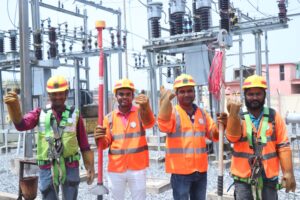 Odisha’s resilience was put to the test almost immediately. Cyclone Yaas in May 2021 and Cyclone Dana in October 2024 struck with typical ferocity. Historically, such events would render the power grid inoperable for days, if not weeks. But under the new distribution regime, 15,000 ground staff were mobilised, 70 percent of power was restored within just eight hours after Yaas, and full restoration after Dana was achieved within 24 hours — an unprecedented feat that showcased the benefits of proactive planning and decentralised response mechanisms.
The numbers that have followed tell a story of transformation. Technical and commercial losses have plummeted from over 30 percent to just 16.4 percent. For two consecutive years, all four DISCOMs earned the Ministry of Power’s prestigious A+ rating — marking a first in Odisha’s history. Over Rs 4,200 crore has been invested in infrastructure upgrades, including the installation of more than 40,000 new transformers and 1,200 substations. Nearly 3 lakh defective meters have been replaced, bringing billing accuracy and transparency to millions of consumers. Outages are no longer a daily worry, and consumer trust in the system has been revitalised.
Importantly, this transformation has not been limited to urban areas. In a refreshing departure from earlier reform attempts, the initiative has brought inclusive development to the heart of rural Odisha. Over 5,000 local contractors and vendors have been engaged, with projects worth Rs 16,000 crore generating significant employment and empowering the local economy. More than 13 lakh new connections have brought stable power to homes, farms, small businesses, and industries — facilitating better healthcare, education, and livelihoods in some of the state’s most underserved regions.
What makes Odisha’s success truly stand out is its replicability. The Tata Power–Government of Odisha partnership has not only restored a failing system — it has created a scalable, people-first model that is being closely watched by other states. As India continues its march towards becoming a developed nation under the vision of Viksit Bharat, states such as Uttar Pradesh, Madhya Pradesh, Rajasthan, and Chhattisgarh have a ready-to-adopt blueprint in front of them—one that proves real reform is achievable, even under the toughest conditions, when guided by the right intent and execution.
Odisha’s journey from power deficits to power empowerment is more than a success story — it’s a signal of hope and possibility for the entire nation.


Leave a Reply