 THEBUSINESSBYTES.COM Fast. Focused. Future-ready

India imports bauxite worth thousands of crores every year despite Odisha holding nearly 60 per cent of the country’s reserves — a gap that cripples self-reliance and regional growth, writes Priyabrat Biswal
India finds itself trapped in a strange and costly paradox. Despite being endowed with some of the world’s richest deposits of bauxite — the ore that forms the backbone of aluminium production — the country continues to import more than 4.5 million tonnes every year, spending $282.2 million (FY 2023-24 data) in foreign exchange. This contradiction undermines India’s ambition of becoming self-reliant under the Atmanirbhar Bharat mission and weakens the vision of Viksit Bharat@2047, which seeks to build a robust, globally competitive industrial economy.
The irony deepens when one looks at Odisha, which holds nearly 59 percent of India’s total bauxite reserves. The Eastern Ghats, particularly the districts of Kalahandi, Rayagada, and Koraput, are home to some of the world’s finest-quality deposits. Yet, these resource-rich hills lie largely untapped even as the nation’s aluminium industry depends heavily on imported bauxite from countries such as Guinea, China, Guyana, Brazil, Trinidad and Tobago, Sierra Leone, and Vietnam. The problem is not geological abundance, but administrative inertia, policy bottlenecks, and infrastructural gaps that prevent these reserves from being converted into national assets.
Experts note that India’s dependence on imports stems from a mix of geological, regulatory, and social challenges. Not all of India’s bauxite is of uniform grade. Many deposits contain high levels of reactive silica or other impurities that make them less suitable for direct metallurgical use without beneficiation, which adds significantly to processing costs. Environmental and tribal clearances also pose major obstacles. A large part of Odisha’s bauxite belt lies in ecologically sensitive zones or tribal areas, where development projects face intense scrutiny and local resistance. The Niyamgiri Hills episode, where proposed mining was halted following community opposition, remains a defining example of this delicate balance between ecological preservation and economic progress.
Infrastructure is another critical challenge. The bauxite-bearing hills of Odisha are often located in remote and inaccessible regions with poor road connectivity, limited rail links, and inadequate power supply. The logistical cost of transporting ore from these locations to refineries or industrial clusters can make projects economically unviable. Compounding this are procedural delays, prolonged mine auctions, and overlapping jurisdictional approvals that discourage investors and slow industrialisation. The absence of reliable captive linkages between mines and refineries leaves domestic producers dependent on costly imports, eroding competitiveness and creating systemic inefficiencies.
The outcome is a glaring paradox: India, which possesses the world’s fifth-largest bauxite reserves, continues to spend heavily on imports. This not only weakens the aluminium value chain but also stifles employment generation, small enterprise growth, and regional development. Every tonne of imported bauxite represents a lost opportunity for domestic miners, small industries, and workers in mineral-rich states. It also reflects how policy inertia and infrastructural neglect can transform a natural advantage into an economic liability.
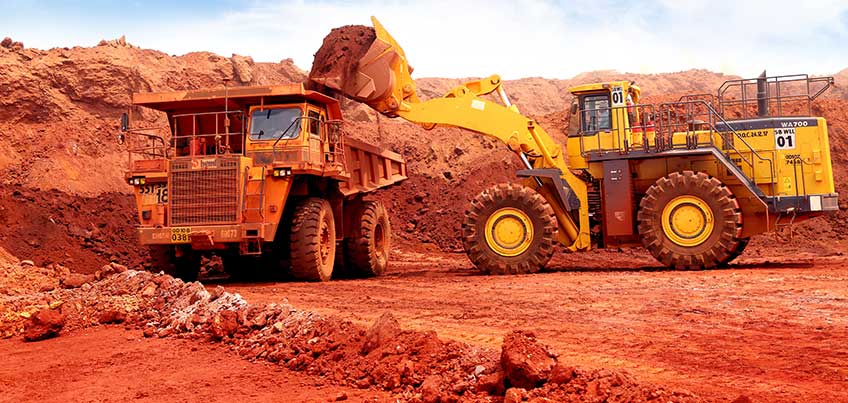 The stakes are enormous because aluminium is a metal of the future — central to clean energy, electric mobility, defence, aerospace, and infrastructure. From solar panel frames and electric vehicle bodies to aircraft fuselages and missile casings, aluminium drives the technologies shaping tomorrow’s economy. For a country aspiring to global leadership in renewable energy and manufacturing, a secure domestic supply of bauxite is indispensable. Dependence on imports not only drains foreign exchange but also exposes the country to geopolitical risks and supply-chain disruptions.
Unlocking Odisha’s bauxite potential, therefore, is not just an economic imperative — it is a national necessity. Studies suggest that systematic development of the state’s reserves could generate 2.4 million jobs, empower over 10,000 small and medium enterprises, and attract multi-billion-dollar investments. Odisha stands at what many experts describe as a “now-or-never” moment. Its vast mineral wealth, if responsibly harnessed, can transform the socio-economic landscape of its tribal hinterlands and contribute significantly to India’s industrial growth.
For this transformation to materialise, the state must initiate decisive policy reforms. Odisha’s Industrial Policy needs to be recalibrated to make the process of mine allocation, operationalisation, and production simpler and time-bound. Administrative and political will must converge to remove uncertainty, ensure transparency, and build investor confidence. Equally important is infrastructural development — roads, rail networks, power supply, and communication facilities in bauxite-bearing regions must be expanded to make mining commercially feasible and socially beneficial.
However, the human dimension of mining is just as vital. Industrial growth must not come at the cost of local communities. It should be the state’s responsibility to ensure that project-affected people are fairly compensated, adequately rehabilitated, and included in the economic benefits that development brings. Transparent communication and community participation are key to preventing misinformation and mistrust. Mining, when undertaken responsibly, can coexist with environmental protection and social justice.
Odisha must also focus on local value addition. Instead of merely extracting and exporting raw ore, the state should encourage the establishment of refineries, smelters, and downstream manufacturing units that create higher-value products. This integrated value chain would ensure that the economic gains of Odisha’s mineral wealth are multiplied within the state, driving regional prosperity and industrial resilience.
Sustainability must remain at the heart of this process. Modern mining practices — progressive land reclamation, reforestation, water-efficient processing, and biodiversity restoration — can make resource development both environmentally responsible and socially acceptable. With transparent governance and community oversight, Odisha can demonstrate that resource-based growth need not come at the cost of nature or livelihoods.
Ultimately, India’s continued dependence on imported bauxite is a symptom of deeper structural inertia. Bureaucratic delays, fragmented policies, and infrastructural neglect have turned a natural resource advantage into a missed opportunity. In a world increasingly reliant on aluminium for green technologies, India cannot afford to remain a bystander.
The message is clear: Odisha’s bauxite must be unlocked — not recklessly, but responsibly. The state stands on the brink of a historic opportunity to convert its “God-given resources into people-centred growth,” ensuring that future generations inherit not just mineral wealth but enduring prosperity. If the government, industry, and communities act together with foresight and fairness, the red hills of Odisha can cease to be symbols of untapped potential and instead rise as engines of a truly self-reliant and developed India.


Leave a Reply