 THEBUSINESSBYTES.COM Fast. Focused. Future-ready

THEBUSINESSBYTES BUREAU
NEW DELHI, AUGUST 15, 2025
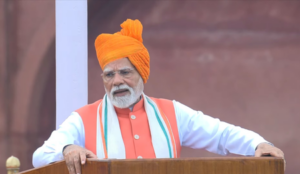
Prime Minister Narendra Modi, in his address to the nation on the 79th Independence Day on Friday, hailed the Goods and Services Tax (GST) as one of the most significant economic reforms since its implementation in 2017, underscoring its contribution to the nation’s growth. He emphasised that the next wave of GST reforms will focus on delivering tangible relief to the common man, farmers, the middle class, and MSMEs, while bolstering the country’s economic resilience.
 As part of its vision to build an ‘Atmanirbhar Bharat’, the Central Government has outlined a comprehensive reform agenda built on three pillars — structural reforms, rate rationalisation, and ease of living. A detailed proposal has already been sent to the Group of Ministers (GoM) constituted by the GST Council for examination and recommendations.
The reform blueprint includes rationalising tax rates to make essential and aspirational goods more affordable, addressing classification-related disputes, and correcting inverted duty structures in key sectors to promote domestic value addition. It also seeks to provide rate stability and policy predictability, strengthening industry confidence and fostering long-term investment.
Under the structural reforms, the focus will be on aligning input and output tax rates to reduce input tax credit accumulation, resolving classification ambiguities, and ensuring greater equity across sectors. Rate rationalisation aims to simplify the GST structure by reducing the number of slabs to primarily two — standard and merit — with special rates reserved for select goods. The cessation of the compensation cess has also created fiscal space, allowing the government greater flexibility in rate alignment.
The ease-of-living measures are designed to streamline GST compliance for businesses, especially small enterprises and startups, through technology-driven registration processes, pre-filled returns to minimise mismatches, and faster, automated refund mechanisms for exporters and sectors facing inverted duty structures.
The Centre has reiterated its commitment to cooperative federalism, assuring close collaboration with States to build consensus on the reforms. The GST Council, in its upcoming meeting, will deliberate on the GoM’s recommendations, with the government aiming for implementation within the current financial year to maximise benefits for citizens and the economy.
Reaffirming its long-term vision, the Government stated that the ultimate goal is to evolve GST into a simple, stable, and transparent tax system that fuels inclusive growth, strengthens the formal economy, and enhances the Ease of Doing Business across India.


Leave a Reply