THEBUSINESSBYTES BUREAU
DHENKANAL, OCTOBER 7, 2026
As erratic weather
patterns increasingly pose a challenge to paddy cultivation, farmers in
Odisha’s Dhenkanal district are turning to climate-resilient farming practices
to protect their crops, reduce risks and safeguard their livelihoods.
In Kamalanga and
Mangalpur panchayats, where GMR Kamalanga Energy Limited (GKEL) operates a
1,050-MW thermal power plant, traditional farming practices are gradually
giving way to a more informed and scientific approach to cultivation.
A farming initiative
supported by the GMR Varalakshmi Foundation (GMRVF) through GKEL’s CSR
programme now covers nearly 500 acres and has benefited more than 230 farmers
across the two panchayats.
Implemented through
the farmer-owned Hartha Brahmani Devi Farmer Producer Company (FPO), the
initiative is helping cultivators make informed decisions on soil management,
crop selection and cultivation practices, while improving their access to
agricultural inputs and technical guidance.
Soil testing,
climate-resilient paddy varieties, line sowing and the System of Rice
Intensification (SRI) are among the practices being promoted under the
initiative. Farmers are also being encouraged to use organic manure and
bio-inputs, while eco-friendly pest-management measures such as pheromone and
sticky traps are helping protect crops.
At locations
vulnerable to animal intrusion, solar fencing is being used to minimise crop
damage, adding another layer of protection for farmers who often face multiple
risks during a cultivation cycle.
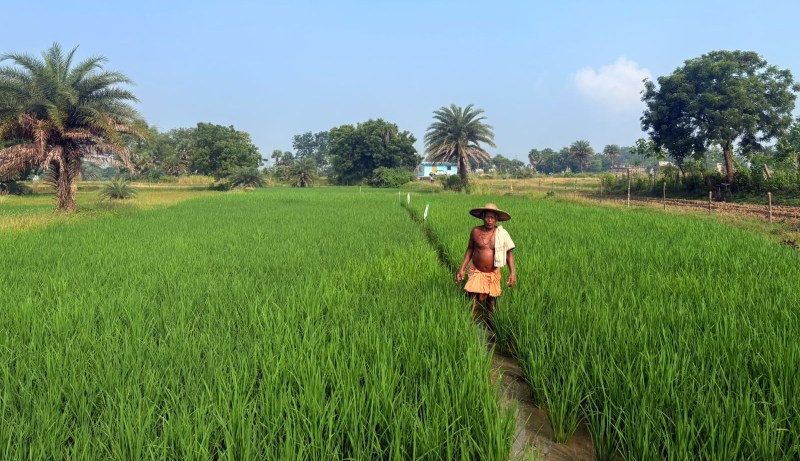
For farmers, the
impact of these interventions is becoming visible in the fields.
“Earlier, we largely depended on the methods
we had been using for years. Soil testing has helped us understand what our
fields need and choose the right variety and inputs. The crop is healthier and
the tillering is better. The training has also given us greater confidence to
deal with changing weather,” said Batu Raj, a farmer from Kamalanga.
In neighbouring
Mangalpur, farmer Biranchi Narayan Sahoo said access to better information had
changed the way many cultivators approached farming.
“We have learned that small changes in farming
practices can make a real difference. Understanding our soil, choosing suitable
varieties and adopting better methods have helped us manage our crops more
confidently. With the weather becoming unpredictable, this knowledge is
especially valuable,” he said.
Beyond individual
farms, the farmer producer company is strengthening collective action among
cultivators by facilitating access to agricultural inputs and technical
knowledge, encouraging the exchange of experiences and helping farmers find
solutions to common challenges.
For communities
dependent on agriculture, such changes are becoming increasingly important as
weather uncertainty adds to the risks associated with cultivation.
In Kamalanga and Mangalpur, the move towards smarter and more climate-resilient cultivation is helping farmers build healthier crops while strengthening their ability to withstand changing conditions.
The transition may be taking place one field at a time, but for the farmers involved, it represents a broader shift — from relying solely on inherited practices to combining experience with science, information and collective action to secure their agricultural future.