THEBUSINESSBYTES BUREAU
NEW DELHI, NOVEMBER 12, 2026
India is firmly committed to climate action through multilateral
collaboration, with initiatives such as the Leadership Group for Industry
Transition (LeadIT) playing a crucial role in accelerating the decarbonisation
of hard-to-abate sectors, Union Environment Minister Bhupender Yadav said on
Thursday.
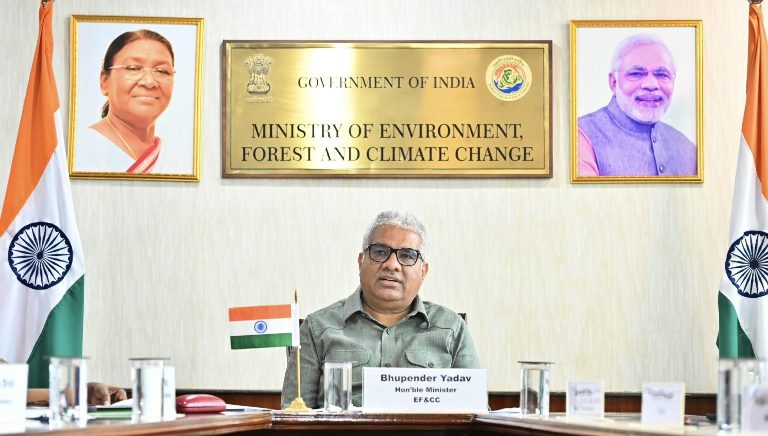
Ahead of India's participation in the UN Climate Change Conference
(COP31) in Antalya, Turkiye, Yadav interacted with representatives of major industries,
including steel, cement and transport, as well as leading academic and research
institutions, to discuss pathways for accelerating industrial transition
towards low-carbon technologies.
Emphasising the importance of partnerships between the government,
industry and academia, the minister said India's climate action strategy was
firmly rooted in collaboration and the effective implementation of ambitious
policies and programmes.
"The Ministry of Environment, Forest and Climate Change and the Government
of India are committed to supporting collaborative climate action. LeadIT 3.0
will be an implementation-oriented platform, translating ambition into tangible
impact," Yadav said.
The interaction brought together Indian member companies of LeadIT, including
Tata Steel, JSW Steel, Steel Authority of India Limited (SAIL), Synergy
Advanced Metals, Adani Ambuja Cement, Dalmia Cement, JK Cement, JSW Cement,
UltraTech Cement, Volvo Group and SpiceJet.
Project partners under the India-Sweden Industry Transition Partnership
(ITP), including Jindal Steel and Power Ltd, Prism Johnson, Höganäs India and
MyHome Industries, also participated in the deliberations.
Representatives of premier research institutions, including the National
Council for Cement and Building Materials, IIT Bombay, IIT Bhubaneswar, IIT
(ISM) Dhanbad, IIT Hyderabad and IIT Kharagpur, shared their perspectives on
developing and deploying low-carbon technologies.
Industry representatives highlighted their experiences of engagement with
LeadIT and appreciated the platform's role in facilitating project
partnerships, assessing technological feasibility and promoting
knowledge-sharing.
They also underlined the need for enhanced support in pre-competitive
project preparation, pilot projects and capacity-building initiatives to
accelerate the adoption of sustainable industrial technologies.
Launched jointly by the governments of India and Sweden at the UN Climate
Action Summit in New York in 2019, with the support of the World Economic
Forum, LeadIT has emerged as an important public-private partnership for
advancing the transition of energy-intensive industries towards net-zero
emissions.
The initiative currently brings together 19 countries and 33 companies,
reflecting growing international cooperation on industrial decarbonisation.
The renewed mandate of LeadIT was announced by the Prime Ministers of
India and Sweden in May 2026, further strengthening the partnership's
commitment to accelerating the global industrial transition.
Yadav, along with the Swedish Ministry of Climate and Enterprise, will launch the third phase of the initiative, LeadIT 3.0, on November 17 at the LeadIT Industry Leaders Roundtable on the sidelines of COP31 in Antalya.
The new phase is expected to place greater emphasis on implementation, technological collaboration and translating climate commitments into measurable outcomes, particularly in hard-to-abate industrial sectors.