Justice Pramath Patnaik (Retd) to head panel;
district-wise data collection to determine actual political representation in
PRIs and ULBs
THEBUSINESSBYTES BUREAU
BHUBANESWAR, NOVEMBER 13, 2026
In a significant move towards ensuring equitable political representation
of Socially and Educationally Backward Classes (SEBCs) in grassroots democratic
institutions, the Odisha government has constituted a dedicated commission
headed by retired Justice Pramath Patnaik to examine their representation in
Panchayati Raj Institutions (PRIs) and Urban Local Bodies (ULBs).
The constitution of the commission comes in pursuance of the directions
of the Supreme Court of India and is aimed at assessing the actual political
representation of SEBCs in local self-government institutions and examining the
need for proportionate reservation to ensure their effective participation in
grassroots democracy.
Retired IAS officer Bijay Kumar Prusty has been appointed as a member of
the commission, while Soojata Misra, Special Secretary to the ST & SC
Development, Minorities and Backward Classes Welfare Department, has been
appointed as its Member Secretary.
The commission has already begun functioning from its office located on
the premises of the Scheduled Castes and Scheduled Tribes Research and Training
Institute (SCSTRTI) at CRPF Square in Bhubaneswar. Since its constitution, the
panel has held several meetings to deliberate on issues concerning SEBC
representation and finalise the methodology for undertaking the assessment.
As part of its exercise, the commission has decided to undertake
comprehensive district-wise data collection to establish the actual
representation of SEBCs in elected local bodies. Significantly, the exercise
will include information on SEBC candidates elected under the Unreserved (UR)
category in both PRIs and ULBs across the state.
The data is expected to provide an evidence-based picture of SEBC
political representation beyond reserved seats and help the commission assess
the issue in the light of applicable constitutional and legal provisions.
To expedite the exercise, the commission has decided to request the ST
& SC Development, Minorities and Backward Classes Welfare Department, the
nodal department, to coordinate with all District Collectors for collection and
submission of the required information in the prescribed formats.
The department has been asked to furnish consolidated district-wise data
to the commission at the earliest, preferably within 45 days, so that the panel
can proceed with its examination and take further necessary steps in a
time-bound manner.
The commission has also provided a dedicated email address,
[email protected], for official communication and submission of relevant
information.
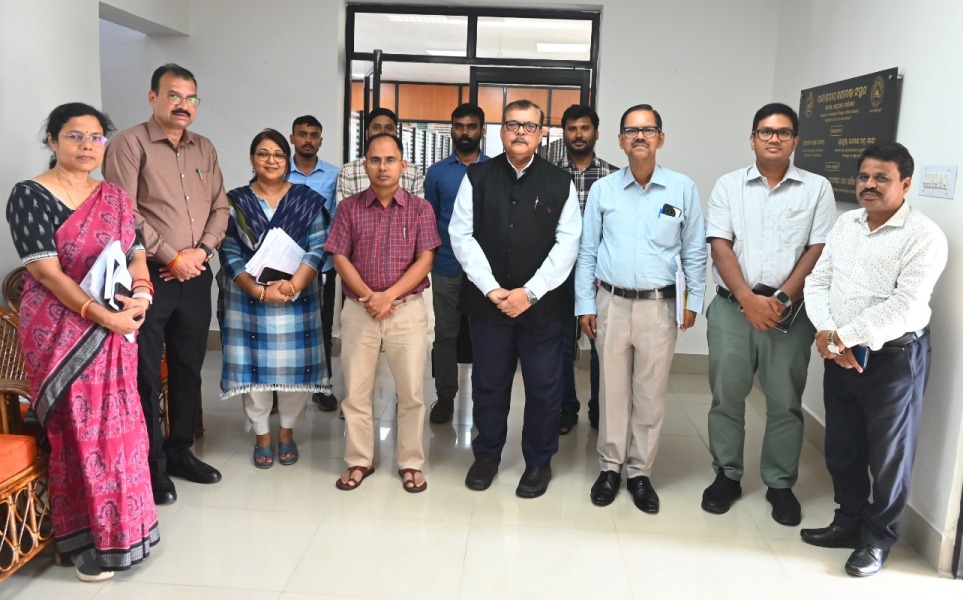
Senior officials who attended the commission's meeting included B. Parameswaran, Commissioner-cum-Secretary, ST & SC Development, M&BCW Department; Arindam Dakua, Director, Municipal Administration, Housing and Urban Development Department; Surya Narayan Dash, Additional Secretary, Panchayati Raj and Drinking Water Department; and Indramani Nayak, Director, Panchayati Raj Department, besides other concerned officials.
The district-level data exercise is expected to play a crucial role in determining the extent of SEBC representation in Odisha's rural and urban local governance structures and providing the commission with the factual basis for its recommendations on ensuring inclusive and equitable grassroots democracy.