THEBUSINESSBYTES BUREAU
NEW DELHI, NOVEMBER 11, 2026
India's rural digital connectivity drive has gained significant momentum,
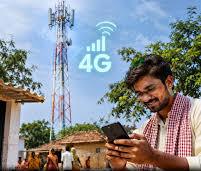
with the number of villages without 4G mobile coverage declining by nearly 75
per cent in four years, from 45,180 in 2022 to 11,372 in 2026, as the government
steps up efforts to bridge the digital divide.
The Department of Telecommunications (DoT) said its 4G Saturation
Project, aimed at extending mobile connectivity to previously unconnected
villages, has played a crucial role in expanding network coverage across
remote, rural and underserved regions.
Under the initiative, designed to cover 24,680 unconnected villages,
state-owned Bharat Sanchar Nigam Limited (BSNL) has commissioned 18,291 mobile
network sites, which are witnessing substantial data consumption, indicating
growing adoption of digital services in rural areas.
These sites recorded a maximum of 10.21 lakh active users in a single day
during October 2026, with total monthly data consumption crossing 1.86 crore
GB, or 18.65 million GB, according to official data.
The average monthly data usage stood at 18.3 GB per user, while each
commissioned site served around 56 active users on average, highlighting the
growing reliance of rural communities on mobile internet connectivity.
The government said private telecom service providers have also
contributed to expanding rural 4G coverage through their respective network
expansion initiatives.
To further accelerate the process, the government has sanctioned an
additional 26,000 mobile network sites under the next phase of expansion to
address the remaining connectivity gaps.
However, extending telecom infrastructure to remote and geographically
challenging locations continues to pose hurdles due to difficult terrain, high
infrastructure costs, scattered settlements and the presence of remote tribal
habitations.
The DoT is working in coordination with BSNL and other telecom service
providers to overcome these challenges and ensure that villages outside
existing network coverage are brought under the digital connectivity framework.
Going forward, the department will prioritise unconnected villages,
particularly in remote, tribal and aspirational regions, through deployment of
additional mobile sites, expansion of network-sharing arrangements and better
utilisation of existing telecom infrastructure.
The government is also focusing on targeted interventions in geographically difficult areas to accelerate network expansion and ensure that rural communities have access to digital governance, online education, healthcare, financial services and other essential digital platforms.
The initiative is part of the government's broader vision of building a digitally connected India, with the objective of ensuring that the benefits of reliable mobile connectivity reach even the remotest corners of the country.