
A Responsive Government Deserves Appreciation
True
public confidence is earned not through promises, but when every citizen — irrespective
of status or influence — is assured of fairness, accountability and justice in
governance, writes Priyabrat
Biswal
IN
an era when citizens often complain that their grievances disappear into
bureaucratic files, a prompt response from the Government deserves recognition.
Good governance is measured not merely by ambitious policies or impressive
announcements, but by the willingness of those in authority to listen to
ordinary citizens and ensure that administrative machinery responds with
fairness, efficiency and accountability.
A recent instance
from Odisha offers an encouraging example.
A representation
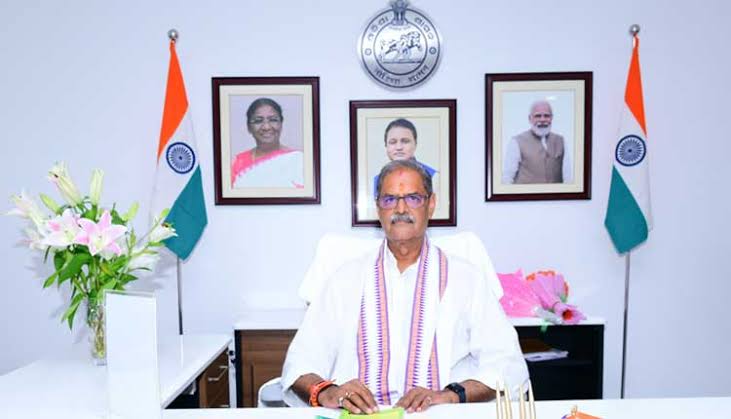
submitted to Deputy Chief Minister Shri K. V. Singh Deo regarding
alleged deficiencies in a rooftop solar installation under the PM Surya Ghar: Muft Bijli Yojana
received immediate administrative attention. Rather than allowing the complaint
to remain another unattended petition, the Deputy Chief Minister, who also
holds the Energy portfolio, directed senior officials of the Department to
examine the allegations. Acting on those directions, the Department has sought
a factual report from TP Central Odisha Distribution Limited (TPCODL), setting
in motion an official enquiry into the issues raised.
This is precisely how
a responsive administration should function.
The significance of
this intervention extends beyond one individual's grievance. The outcome of the
enquiry will naturally depend upon the evidence and facts that emerge during
investigation. However, the very fact that the complaint of an ordinary
consumer was treated seriously sends a reassuring message that public
authorities remain accessible and accountable.
Shri K. V. Singh Deo
has long been regarded as a dignified public figure whose calm disposition and
administrative experience command respect across political lines. His recent
intervention reflects qualities that citizens expect from those occupying high
constitutional office — accessibility, sensitivity and prompt decision-making.
Such gestures strengthen public confidence in democratic institutions far more
than rhetoric ever can.
Yet this episode also
highlights an equally important issue. It should not be viewed merely as an
isolated dispute between a consumer and a vendor. The PM Surya Ghar: Muft Bijli Yojana is one of the country's most
ambitious renewable energy programmes, intended to transform millions of
households into clean-energy producers. As the scheme expands rapidly, ensuring
quality installations, ethical conduct by empanelled vendors and effective
consumer protection becomes just as important as increasing the number of
rooftop solar systems.
Many beneficiaries,
particularly senior citizens and first-time users of solar technology, may not
possess the technical knowledge necessary to assess installation quality or
understand their contractual rights. Some may silently endure defective
workmanship or unfair practices simply because they are unaware of the
available grievance mechanisms or reluctant to challenge authorised vendors.
This is why the
ongoing enquiry assumes significance far beyond one complaint. If any
shortcomings are found, corrective measures should not stop with addressing an
individual case. The Government should use the opportunity to strengthen
quality audits, improve vendor accountability, establish time-bound grievance
redressal mechanisms and ensure strict compliance with prescribed technical
standards.
Equally important is
consumer awareness. Every beneficiary under the scheme should receive clear
information regarding installation standards, safety norms, warranty documents,
payment milestones and available remedies in the event of disputes. An informed
consumer is not an adversary of the system; rather, such a consumer becomes its
strongest partner. Awareness enhances transparency, reduces disputes and
ultimately contributes to the long-term credibility of the scheme.
Odisha has an opportunity to establish a model for effective implementation of the PM Surya Ghar programme. The Deputy Chief Minister's prompt response has demonstrated that the Government is willing to listen. The next step is to ensure that the enquiry is independent, impartial and comprehensive, and that its findings translate into systemic reforms.
Responsive governance deserves appreciation. Lasting public confidence, however, will be earned when every consumer — irrespective of influence or status — is assured that fairness, accountability and justice remain the guiding principles of public administration.