THEBUSINESSBYTES BUREAU
NEW DELHI, NOVEMBER 20, 2026
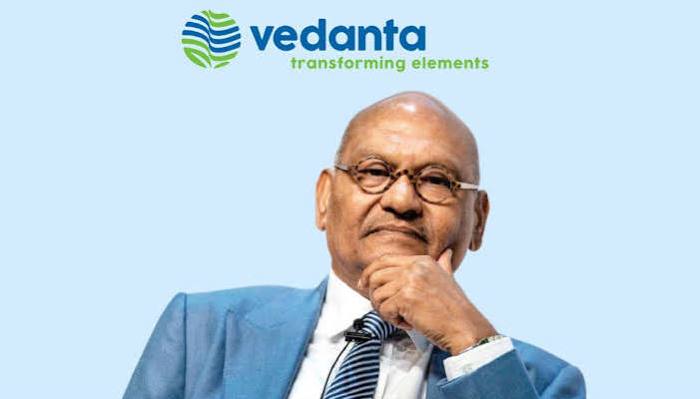
Vedanta Group Chairman Anil Agarwal has pitched an ambitious reform
agenda centred on large-scale privatisation, simplified regulatory procedures
and promotion of exploration startups, saying the three initiatives could
create crores of jobs, boost incomes and strengthen the rupee as India moves
towards the goal of Viksit Bharat.
In a post on social media platform X, Agarwal said the industry was
energised by Prime Minister Narendra Modi's inspiring address to industry at
the FICCI event and urged businesses to wholeheartedly support the government's
vision of making India a developed nation.
Outlining three key proposals for the country, Agarwal said the
government should consider unlocking the potential of its vast portfolio of
public sector assets and companies by transferring their management to the
private sector, which, he claimed, could multiply production several times and
generate significant employment opportunities.
"It is proven in India and globally, that if the same companies are
run by private management, production can increase multifold, even 10
times," he said.
However, he stressed that privatisation should be accompanied by two
safeguards — no retrenchment of existing employees and a commitment to increase
employment by three times.
Agarwal suggested two possible models for privatisation: selling shares
to private corporate entities or distributing shares among the public, citing
British Airways and British Petroleum as examples of the latter approach.
Pointing to the performance of sectors such as airports, ports, airlines,
telecommunications, metals and hotels, he said private sector participation had
demonstrated its ability to expand businesses, generate three to four times
more jobs and improve salary levels in privatised companies.
The Vedanta Chairman said the private sector was ready to replicate this
success across sectors such as gold, copper, power, defence, engineering
equipment and shipping.
Emphasising that these assets would continue to remain national assets,
he said the substantial proceeds from privatisation could be utilised to reduce
government debt and finance infrastructure development.
"In democratic countries, government does not run business. The US
has followed this with great success. We can do even better," he said.
His second proposal focused on building a trust-based regulatory
framework to accelerate industrial growth. Referring to the Prime Minister's
emphasis on trust, Agarwal said lengthy approval procedures should be replaced
with self-certification to enable new industries to start operations quickly.
He argued that the government's role should primarily be to establish
simple rules and ensure compliance through audits, rather than subjecting
businesses to prolonged approval processes.
Agarwal's third proposal sought to transform mineral, metal and
hydrocarbon exploration into a startup-driven movement, opening up
opportunities for young entrepreneurs across the country.
He said exploration, unlike mining and processing, does not necessarily
require massive capital investment and could encourage hundreds or even
thousands of startups. An investment of around Rs 5 crore would be sufficient
to get an exploration venture started, he suggested.
The crucial reform, according to Agarwal, would be to allow independent
explorers and startups to commercially sell their discoveries to established
companies with the financial and technical capacity to undertake large-scale
mining and processing.
For instance, an exploration startup discovering oil should be allowed to
sell its findings to ONGC, while a company discovering minerals could monetise
its discovery by selling it to Hindustan Zinc, he said.
At present, such discoveries become government property, restricting the
ability of private explorers to commercially benefit from their findings. This
policy framework needs to be modified to encourage greater private
participation and entrepreneurial investment in exploration, he added.
Calling the present period an exciting phase for India, Agarwal said the
country's young population and women should get opportunities to realise their
full potential under a positive and progressive government.
Drawing a parallel with the slogan 'Jai Jawan Jai Kisan', which helped
galvanise the country towards food self-sufficiency nearly six decades ago, he
called for a similar nationwide movement around privatisation,
self-certification and exploration.
"Let us get together and build a movement," he said, adding that the three initiatives could create employment, increase incomes and strengthen the Indian rupee.
Agarwal's proposals come amid a broader policy focus on improving ease of doing business, attracting private investment and accelerating India's journey towards becoming a developed economy.