THEBUSINESSBYTES
BUREAU
BHUBANESWAR, JANUARY 27, 2026
On a day when the nation reflects on service and
sacrifice, an Indian Army soldier has shown that duty extends far beyond the
uniform. Havildar Sukhwinder Singh, a career serviceman committed to
safeguarding the country, recently completed a profoundly personal mission — donating
his blood stem cells to help a patient battling a life-threatening blood
disorder.
 Marking Republic Day, DKMS Foundation India
highlighted Singh’s inspiring journey to underscore how a simple decision — made
years earlier — can offer someone a precious second chance at life. His story
is a powerful reminder that service to the nation can also take the form of
compassion and patience.
Marking Republic Day, DKMS Foundation India
highlighted Singh’s inspiring journey to underscore how a simple decision — made
years earlier — can offer someone a precious second chance at life. His story
is a powerful reminder that service to the nation can also take the form of
compassion and patience.
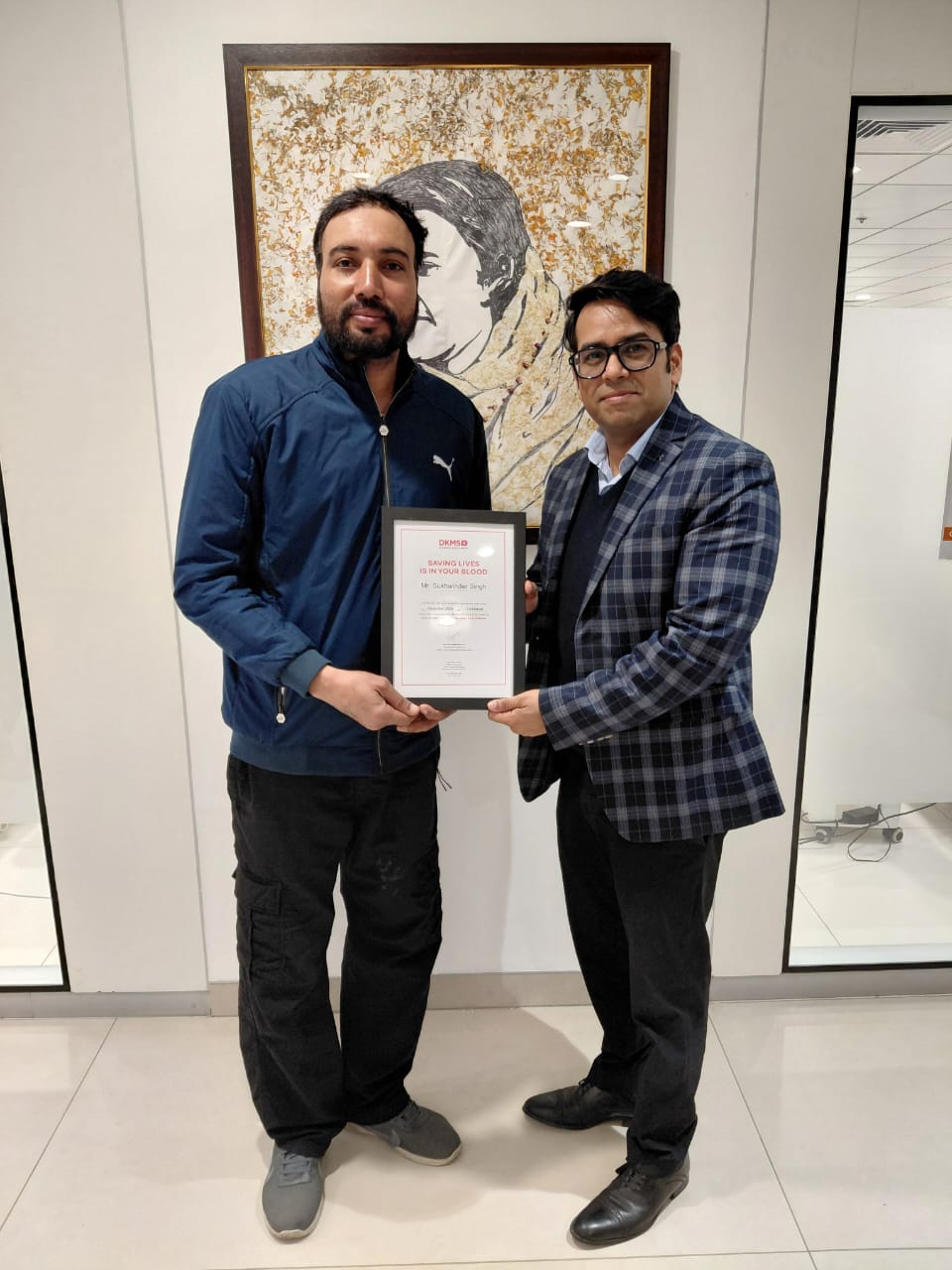
Singh registered as a potential blood stem cell
donor in 2019 during a patient appeal drive for a young leukemia patient.
Although he was not a match at the time, he chose to remain on the registry,
quietly carrying a promise that could be called upon at any moment. For more
than six years, that commitment stood firm.
In December 2025, the long-awaited call arrived.
Singh was identified as a perfect match for another patient in urgent need of a
transplant. Without hesitation, he stepped forward to honour the pledge he had
made years ago, undergoing the donation process and offering renewed hope to
someone fighting for survival.
While Singh’s act stands as a beacon of hope, it
also draws attention to a critical healthcare challenge in India. For patients
with blood cancers and disorders such as thalassemia, a blood stem cell
transplant is often the only curative option. Yet finding a compatible donor
remains a race against time. In India, a new blood cancer case is diagnosed every
five minutes, and more than 10,000 children are born with Thalassemia Major
each year. Despite this overwhelming need, only 0.09 per cent of the eligible
population is registered as potential donors. Since tissue types are closely
linked to ethnicity, this shortage creates a severe genetic bottleneck, leaving
many patients without a matching donor.
“Registering
as a blood stem cell donor is a commitment that may span years,” said Patrick
Paul, Executive Chairman of DKMS India. “Sukhwinder’s journey is extraordinary.
His willingness to act the moment he was called shows how one decision taken
long ago can become the reason someone else has a future. He is truly a hero — both
in uniform and in the
DKMS Foundation India continues to intensify efforts
to raise awareness and expand the national donor registry. Any healthy Indian
adult between 18 and 55 years of age, with a body mass index under 40 and not
already registered, can sign up as a potential donor. Registration is simple
and non-invasive, requiring only consent and a cheek swab to collect tissue
cells. Eligible individuals can begin the process by ordering a home swab kit
at www.dkms-india.org/register.
Through stories like Havildar Sukhwinder Singh’s,
DKMS hopes to inspire more citizens to step forward—because one selfless choice
can save a life.