THEBUSINESSBYTES BUREAU
BHUBANESWAR, NOVEMBER 23, 2026
As many as 21,000 eco-friendly boats made from banana stems have been
prepared for this year's Boita Bandana festivities in Odisha, opening up fresh
market opportunities for rural farmers and women Self-Help Groups (SHGs) while
promoting sustainable alternatives to traditional festival celebrations.
The innovative initiative, facilitated by the Odisha Rural Development
and Marketing Society (ORMAS) under the Department of Panchayati Raj and
Drinking Water, has transformed the state's iconic maritime festival into an
avenue for rural livelihood generation, agricultural resource utilisation and
women's economic empowerment.
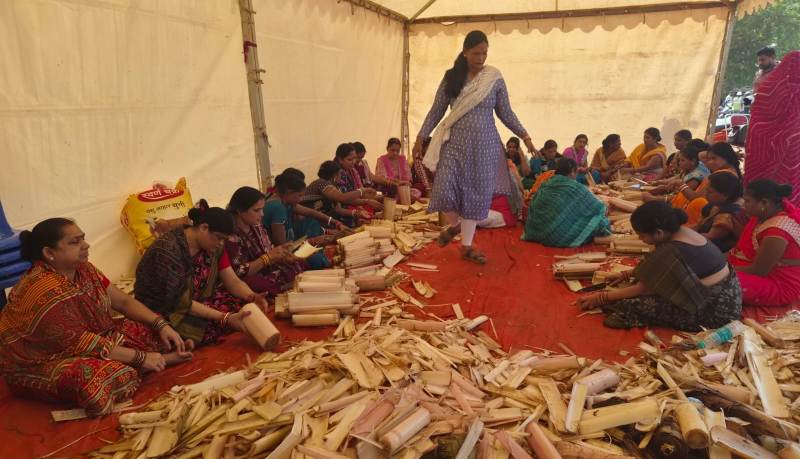
Around 40–50 women members belonging to four to five SHGs have been
engaged in preparing the banana-stem boats, with an estimated remuneration of
Rs 90,000 earmarked for their work. The initiative has provided rural women
with an additional source of festival-linked income while strengthening their
prospects for economic self-reliance.
 The initiative has also brought additional financial benefits to banana
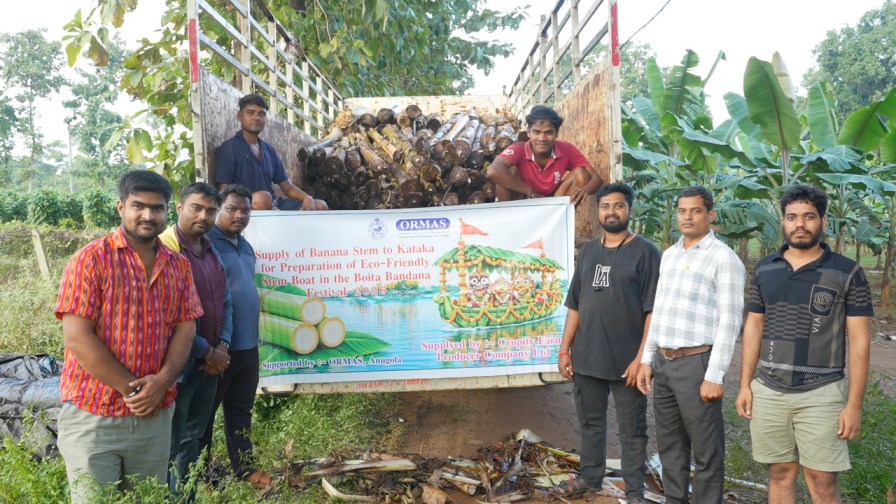
farmers by turning agricultural waste into a marketable resource. Through Cropify
Farmers Producer Company Ltd in Angul district, around 350–400 Kandi of bananas
have been marketed, generating an estimated revenue of up to Rs 1.40 lakh.
Significantly, banana stems that were earlier discarded after harvesting
have now been put to productive use. Stems from 750 banana trees have been
utilised for making the eco-friendly boats, enabling farmers to earn an
additional Rs 7,500. The stems procured from Angul have been transported to
Cuttack, where they are being used to manufacture the boats for the Boita
Bandana celebrations.
"Our festivals are not just a reflection of our cultural traditions;
they can also serve as a means of strengthening the rural economy. ORMAS's
initiative to connect our glorious tradition of Boita Bandana with rural
enterprises and the economic empowerment of women is certainly
commendable," said Rural Development, Panchayati Raj and Drinking Water
Minister Rabi Narayan Naik.
Dr Monica Priyadarshini, Chief Executive Officer of ORMAS, said the initiative had enabled productive utilisation of local agricultural resources while connecting farmers and women SHGs with new market opportunities. ORMAS would continue to facilitate market linkages and create fresh livelihood avenues for rural producers through such innovative interventions, she added.
The initiative highlights how Odisha's rich cultural traditions can go beyond symbolic celebrations to become catalysts for grassroots economic development. By linking festival-related demand with locally available agricultural resources and women-led enterprises, ORMAS has demonstrated a sustainable livelihood model that simultaneously reduces agricultural waste, supports rural producers and promotes environmentally responsible celebrations.