
THEBUSINESSBYTES
BUREAU
BENGALURU,
JANUARY 18, 2026
Dr. Rajesh Iyer, Senior Consultant
Neurologist at Poorna Neuro Superspecialty Clinics and Honorary Consultant to
the Multiple Sclerosis Society of India (MSSI), Bengaluru, has underlined the
critical importance of early diagnosis and timely access to high-efficacy
therapies to prevent disability and improve quality of life among people living
with multiple sclerosis (MS), a neurological condition that primarily affects
young adults in their most productive years.
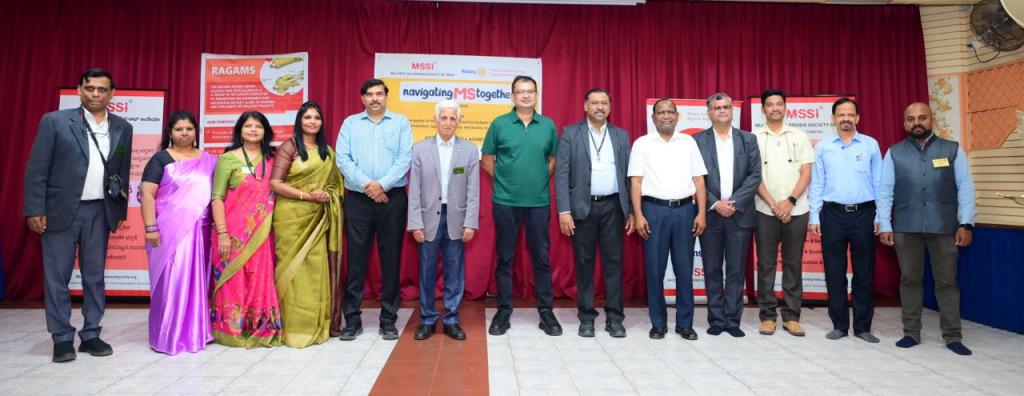
Speaking at “Navigating MS Together”,
an awareness and advocacy programme organised by the MSSI Bengaluru Chapter in
collaboration with the Rotary Action Group Against Multiple Sclerosis (RAGAMS),
Dr. Iyer cautioned that delayed diagnosis and sub-optimal treatment could lead
to severe disability and reduced life expectancy. The programme, held at the
Rotary House of Friendship in Bengaluru on January 17, brought together
neurologists, policymakers, Rotary leaders, caregivers and people living with
MS to highlight the need for greater visibility, dignified living and systemic
reform in MS care across India.
 The discussions focused on the
evolving MS landscape in the country, addressing persistent challenges such as
delayed diagnosis, limited access to specialised neurological care, lack of
standard treatment protocols, inadequate insurance coverage and the absence of
uniform disability assessment guidelines. Experts also deliberated on recent
advances in MS management, particularly the growing role of high-efficacy
therapies, which are increasingly recognised for their ability to slow disease
progression, reduce relapses and preserve long-term independence when
introduced early.
The discussions focused on the
evolving MS landscape in the country, addressing persistent challenges such as
delayed diagnosis, limited access to specialised neurological care, lack of
standard treatment protocols, inadequate insurance coverage and the absence of
uniform disability assessment guidelines. Experts also deliberated on recent
advances in MS management, particularly the growing role of high-efficacy
therapies, which are increasingly recognised for their ability to slow disease
progression, reduce relapses and preserve long-term independence when
introduced early.
To deepen understanding of the lived
realities of MS, the event featured experiential zones under the “Walk In My
Shoes” campaign, offering participants a first-hand perspective on the
physical, cognitive and sensory challenges that people with MS navigate daily.
The initiative aimed to foster empathy while reinforcing the need for policies
that recognise the invisible and fluctuating nature of the disease.
Highlighting ecosystem gaps, Arun
Mohan, Vice President of MSSI India, said the MS care landscape in India
continues to face multiple obstacles, including lack of accurate prevalence
data, a shortage of specialists, inadequate insurance coverage and unclear
disability recognition frameworks. He noted that early induction of
high-efficacy therapies can significantly reduce hospital visits, long-term
rehabilitation needs and healthcare burden, while enabling better treatment adherence
and minimal disruption to education, work and family life.
Emphasising the role of sustained
advocacy and cross-sector collaboration, Rtn. Shankar Subramanian, Chairperson
of the Rotary Action Group Against Multiple Sclerosis (RAGAMS), India Chapter,
said MS remains an invisible illness to the public eye despite its profound
impact on individuals and families. He added that initiatives such as
*Navigating MS Together* and *Walk In My Shoes* seek to build awareness,
understanding and a more inclusive support system through collaboration between
patient groups, clinicians and policymakers.
Providing a clinical perspective, Dr.
Iyer said multiple sclerosis is a complex neurological disorder that can lead
to significant disability if not treated adequately. He noted that nearly half
of patients risk becoming wheelchair-bound within 15 years without appropriate
treatment and that life expectancy among MS patients in India remains lower
than in Western countries. However, with growing awareness and the advent of
newer high-efficacy therapies, he said most patients can now lead active,
independent lives. He stressed that reducing diagnostic delays and ensuring
universal access to advanced treatments must become a national priority.
With over two lakh people estimated to
be living with MS in India, most between the ages of 20 and 40, the programme
reiterated the urgent need for standard-of-care guidelines and updated
disability assessment frameworks that acknowledge invisible symptoms and the
relapsing-remitting nature of the disease, reinforcing the message that timely
intervention and coordinated action can transform MS outcomes in the country.