THEBUSINESSBYTES
BUREAU
CHANDIPUR,
JULY 8, 2026
In a major boost to
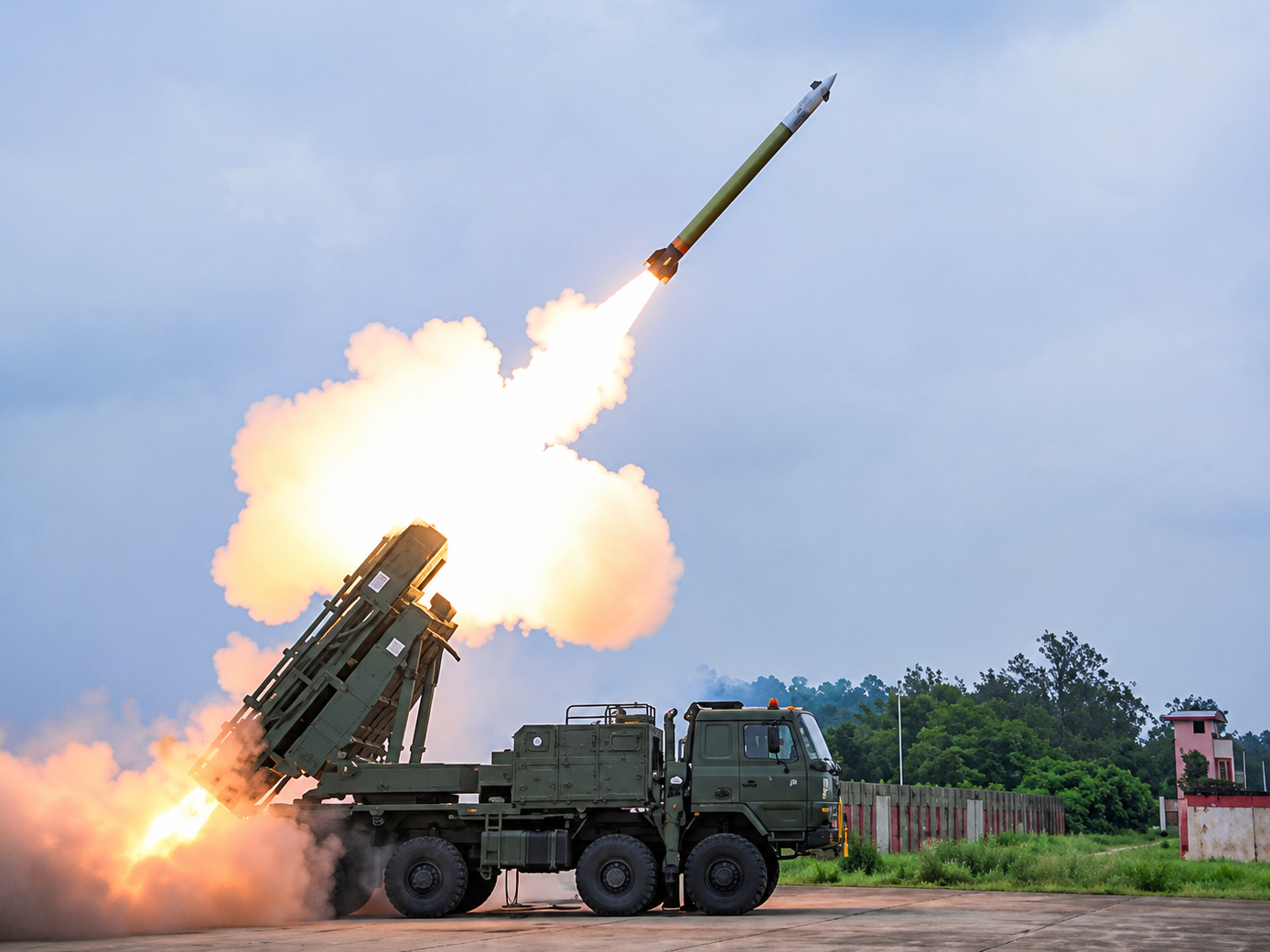
India's indigenous defence capabilities, the Defence Research and Development
Organisation (DRDO) on Wednesday successfully flight-tested the Pinaka Long
Range Guided Rocket (LRGR) from the Integrated Test Range (ITR) at Chandipur in
Odisha, validating the system's performance at a user-defined minimum range of
60 km.
According to the
Ministry of Defence, the rocket successfully executed all planned in-flight
manoeuvres and struck the designated target with "textbook
precision", following the predicted trajectory. The flight was tracked
throughout by all deployed range instruments, reaffirming the accuracy and
reliability of the advanced guided rocket system.
The Pinaka LRGR has
been developed by the Armament Research and Development Establishment (ARDE) in
collaboration with the High Energy Materials Research Laboratory (HEMRL), with
support from the Defence Research and Development Laboratory (DRDL) and the
Research Centre Imarat (RCI). The flight trial was coordinated by the Integrated
Test Range and the Proof & Experimental Establishment.
A key highlight of
the trial was the launch of the LRGR from the in-service Pinaka launcher,
demonstrating the platform's versatility and its capability to fire different
variants of the Pinaka rocket system from the same launcher without any
modifications.
Congratulating the
DRDO, the Indian Army and industry partners, Defence Minister Rajnath Singh
described the successful flight-test as "a major milestone in India's
indigenous capability to design and develop long-range guided rockets."
Defence Secretary and
DRDO Chairman Rajesh Kumar Singh closely monitored the trial and congratulated
the scientists, engineers and all teams associated with the successful test,
underscoring the significance of the achievement in strengthening India's
self-reliance in advanced defence technologies.