Through
scientific beekeeping, Vedanta Aluminium is helping farmers diversify their
incomes, improve agricultural productivity and build sustainable livelihoods.
THEBUSINESSBYTES
BUREAU
JHARSUGUDA,
OCTOBER 20, 2026
In the fields of
Bhugrapali village in Odisha’s Jharsuguda district, the familiar sight of paddy
and vegetable crops is now accompanied by the gentle hum of honeybees. For
farmer Kshirodra Patel, these tiny pollinators have become an unexpected source
of opportunity. Alongside cultivating his six-acre farm, he now earns nearly ₹25,000 annually from beekeeping,
creating an additional income stream for his family of seven. What began with
just three bee boxes has steadily evolved into a valuable livelihood activity,
complementing traditional farming while strengthening his household’s financial
security.
Kshirodra’s journey
is among many emerging through Vedamrit, a livelihood initiative by Vedanta
Aluminium, India’s largest producer of aluminium. By introducing rural
communities to scientific beekeeping, the programme is helping farmers
diversify their incomes while enhancing agricultural productivity through
natural pollination. Through hands-on training, the distribution of bee boxes
and continuous technical support, Vedamrit is enabling families to turn a small
intervention into a sustainable source of income and growth.
For Kshirodra, the
results have been encouraging. Within three months of receiving his first three
bee boxes, he harvested nearly 23 kg of honey. As his colonies multiplied, he
expanded his activities to include the sale of bee colonies. Improved
pollination also contributed to an estimated 30% increase in vegetable yields,
demonstrating how beekeeping can complement traditional agriculture.
Similar changes are
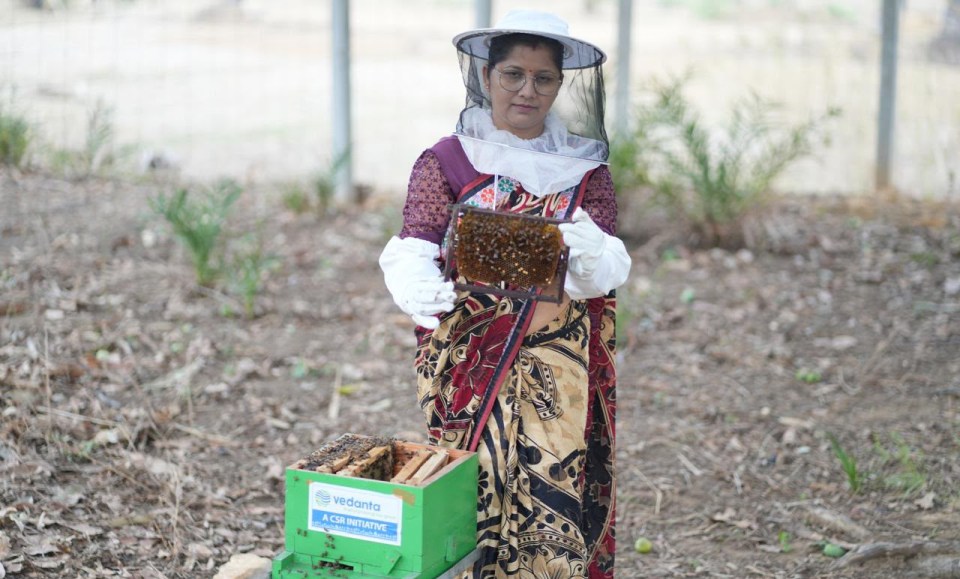
taking shape in neighbouring villages. In Salepali, Manjari Padhan, who had
long balanced household responsibilities with agricultural work, found a new
opportunity through Vedamrit. Starting with a single bee box, she harvested
eight litres of honey, gaining both an additional source of income and greater
financial confidence.
“Learning beekeeping gave me the confidence to
try something new. I started with just one bee box, and today I can earn from
the honey I harvest. Being able to contribute to my family’s income means a lot
to me,” says Manjari.
In Buchamunda,
67-year-old Rajkumari Mahar added beekeeping to her existing livelihood
activities, harvesting five litres of honey from her first bee box. Meanwhile,
Pratima Sunani of Salepali introduced beekeeping on her family’s five-acre
vegetable farm, harvesting eight kilograms of honey within three months.
Together, these
individual successes reflect Vedamrit’s growing impact on rural communities.
The initiative has enabled 526 farmers across 20 villages to adopt scientific
beekeeping, with plans to expand its reach to 1,500 beekeepers. Over the past
year, participating farmers collectively harvested more than 2,000 litres of
honey, generating additional income for rural households.
To strengthen the
value chain, Vedamrit has also established a modern honey processing plant at
Kolabira, equipped to support honey extraction, processing and packaging. The
facility aims to help rural producers meet quality standards, enhance the value
of their products and access premium markets, thereby connecting local honey
production with wider commercial opportunities.
By bringing together scientific techniques, farmer collectivisation, processing infrastructure and market access, Vedamrit is developing a scalable model for sustainable rural livelihoods. Beyond generating income, the initiative supports biodiversity through pollination while enabling farmers to make productive use of their existing agricultural resources.
For Kshirodra, Manjari, Rajkumari and Pratima, a bee box represents more than honey production. It offers the confidence to explore new possibilities and the opportunity to build a more secure future. Through Vedamrit, Vedanta Aluminium continues to demonstrate how community-focused interventions can strengthen rural economies while contributing to a more sustainable agricultural ecosystem.