
THEBUSINESSBYTES
BUREAU
BHUBANESWAR,
FEBRUARY 2, 2026
A comprehensive study released by the
Indian Institute of Technology (IIT) Bhubaneswar on the evolving performance of
Tata Power-led TP Central Odisha Distribution Limited (TPCODL) has underscored
that the transformation underway at the utility demonstrates how sustained
capital investment, high-tech automation and a strong safety-first work culture
can together deliver long-term public service improvement. Emphasising that
Odisha’s power distribution reform model is increasingly drawing national
attention, the study notes that institutionalising disciplined operational
practices has helped narrow the urban–rural service divide while building a
resilient, modern grid that directly benefits consumers.
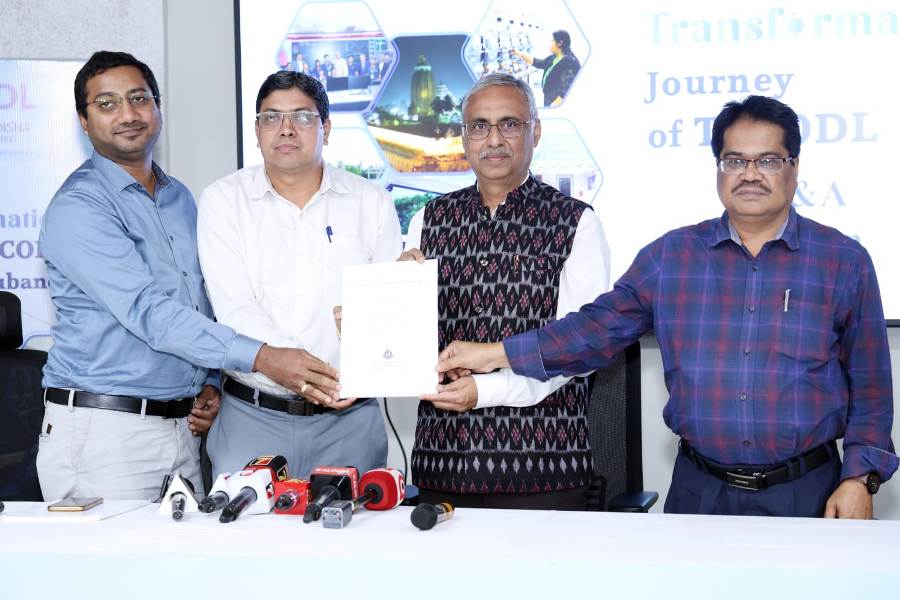
IIT Bhubaneswar on Monday released an
in-depth study here in the presence of TPCODL CEO Aravind Singh, examining the
power distribution performance of TP Central Odisha Distribution Limited
(TPCODL), a joint venture between Tata Power and the Government of Odisha.
 The study, prepared by Prof.
Chandrashekhar Bhende, Professor; Dr. Chandrasekhar Perumalla, Associate
Professor; and Dr. Abhineet Prakash, Assistant Professor from the Department of
Electrical Engineering, School of Electrical & Computer Sciences at IIT
Bhubaneswar, analyses how network reliability, operational efficiency,
technological interventions and customer service delivery have progressed over
a five-year period following distribution sector reforms. It highlights the outcomes
of sustained capital investment, network modernisation and the progressive
adoption of digital technologies across the distribution system.
The study, prepared by Prof.
Chandrashekhar Bhende, Professor; Dr. Chandrasekhar Perumalla, Associate
Professor; and Dr. Abhineet Prakash, Assistant Professor from the Department of
Electrical Engineering, School of Electrical & Computer Sciences at IIT
Bhubaneswar, analyses how network reliability, operational efficiency,
technological interventions and customer service delivery have progressed over
a five-year period following distribution sector reforms. It highlights the outcomes
of sustained capital investment, network modernisation and the progressive
adoption of digital technologies across the distribution system.
The study provides a detailed
assessment of TPCODL, which caters to a population of 1.36 crore spread across
29,354 square kilometres in Central Odisha. The analysis draws on extensive
field inspections, validation of system data and a close review of operational
practices and consumer service mechanisms across both urban and rural
geographies, offering a comprehensive picture of performance improvements and
remaining challenges.
One of the most significant findings
of the study is the marked improvement in network reliability, evidenced by an
approximately 50 per cent reduction in the System Average Interruption Duration
Index (SAIDI) over the review period. This improvement points to a more stable
and resilient distribution network, supported by enhanced fault detection
systems, faster fault isolation and quicker restoration processes. These
measures have also contributed to a decline in transformer tripping incidents
and transformer failure rates, indicating improved asset health, preventive
maintenance and lifecycle management practices.
The study records substantial gains in
operational efficiency as well, with Aggregate Technical and Commercial
(AT&C) losses declining from nearly 30 per cent at the beginning of the
reform period in FY’21 to 18.94 per cent in FY’25. This improvement has been
driven by stronger operational control, more accurate and efficient billing
processes and tangible enhancements in network efficiency. Key contributors
include a 44 per cent increase in 33 kV feeders, a 42 per cent increase in 11
kV feeders and the integration of 250 substations into a centralised control
centre. Over the five-year period, capital investments exceeding ₹1,500 crore have been channelled into strengthening
substations, expanding automation coverage, deploying digital monitoring
platforms and reinforcing overall network resilience.
A notable aspect of the study is its
focus on disaster preparedness and resilience. It highlights that targeted
efforts to develop a cyclone-resilient distribution network, through
infrastructure strengthening, redundancy planning and improved emergency
protocols, have enabled restoration of power within 24 to 48 hours in
cyclone-affected areas. This reflects a significant enhancement in preparedness
and response capability in a state frequently exposed to extreme weather
events.
Commenting on the findings, Prof.
Chandrashekhar Bhende said, “This assessment of Tata Power-led Central Odisha
Discom serves as an objective diagnostic for long-term public service
improvement. As the Odisha distribution reform model gains national attention,
our findings highlight how high-tech automation, combined with a strong
safety-first work culture, can support sustainable outcomes. We observed a
clear shift toward greater operational discipline. Institutionalising these
practices is helping the discom narrow the urban–rural service divide and build
a more resilient, modern grid that benefits consumers.” Noting that the study
had identified certain areas where further progress is possible, Bhende
remarked that improvement is a continuous journey
Prof. Chandrasekhar Perumalla added
that the independent study, supported by extensive field assessments ranging
from centralised control centres to remote rural locations, confirms a
consistent upward trajectory in TPCODL’s operational efficiency. He noted the
tangible impact of smart infrastructure investments, particularly in enabling
rapid service restoration through mobile and digital platforms. While urban
areas have seen a sharp reduction in power interruptions, the study also points
to opportunities for further strengthening networks in remote regions to
achieve comparable reliability standards.
Strong emphasis has also been placed
on consumer centricity and the evolution of service delivery mechanisms. The
study highlights the expansion of consumer service channels, including a 24×7
call centre and 20 Customer Care Centres, alongside the availability of
multiple digital payment options and the growing use of digital platforms for
complaint registration, service requests and information dissemination.
Improvements in billing accuracy, a sharp reduction in provisional billing and
proactive customer communication have together enhanced transparency, customer
trust and overall service quality.
Decentralised fault response emerges
as another critical enabler of improved service delivery, particularly across
geographically dispersed areas. The presence of 131 Fuse Call Centres in urban
areas and 811 Fuse Call Centres in rural locations supports first-level fault
response throughout the licence area, while remaining digitally integrated with
centralised monitoring and grievance redressal systems. The expanded rural
reach of these centres has helped address historically longer response times,
contributing to a customer satisfaction score of 96 per cent in FY’25.
When asked about the biggest
operational challenge facing TPCODL, Chief Executive Officer Aravind Singh
pointed to the Nor’wester storms, which pose a formidable test for swift power
restoration. Explaining the difficulty, Singh noted that while the India
Meteorological Department provides advance alerts for cyclonic storms at least
two to three days in advance — allowing ample time for planning and deployment —
the warning window for Nor’westers is often limited to just two to three hours.
This sharply reduced lead time, he said, significantly constrains preparedness
and makes rapid response far more demanding for the power distribution utility.
The study places TPCODL’s performance
within the broader national power sector reform framework, noting its strong
alignment with the objectives of the National Electricity Policy on efficiency,
consumer centricity and financial sustainability, as well as the intent of the
proposed amendments to the Electricity Act, particularly in areas of
accountability and distribution efficiency. This alignment is further reflected
in TPCODL’s A+ rating in the 14th Annual Integrated Rating and Ranking by the
Ministry of Power, marking three consecutive years of top-tier recognition for
excellence in operational, financial and consumer-centric performance.