THEBUSINESSBYTES
BUREAU
BHUBANESWAR,
JANUARY 14, 2026
In a
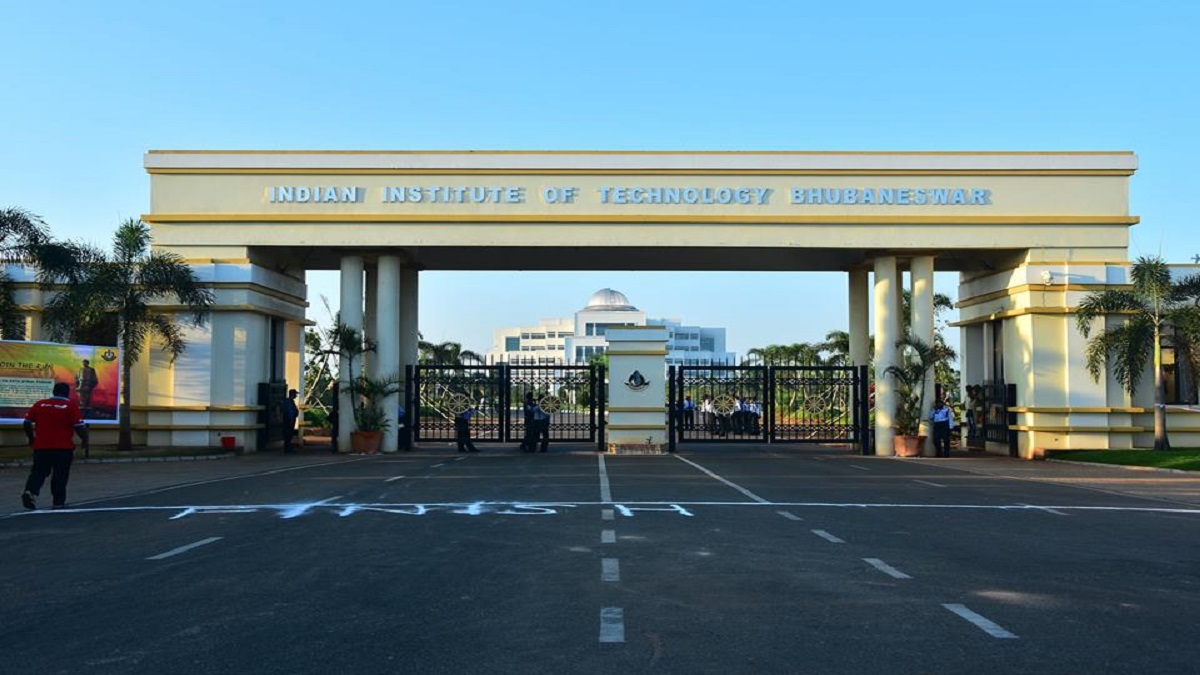
significant boost to India’s mineral exploration capabilities, the Indian
Institute of Technology (IIT) Bhubaneswar has received a prestigious award for
developing a cutting-edge satellite-based technology for bauxite prospecting
and exploration in Odisha, positioning the state as a pioneer in
next-generation, sustainable mining practices.
Dr. Ashim Sattar,
Assistant Professor at IIT Bhubaneswar, was honoured for his research published
in the Journal of Geochemical Exploration
during the 4th Odisha Mining and Infrastructure International Conference 2026.
The award was presented at a ceremony graced by Odisha Industries and Skill
Development Minister Shri Sampad Swain, underscoring the state government’s
focus on innovation-driven industrial growth.
 Dr. Sattar and
his research group successfully identified potential bauxite depositional sites
at a regional scale across the Koraput and Rayagada districts using advanced
hyperspectral satellite remote sensing. The study combined hyperspectral
satellite data with detailed field surveys, geochemical and petrographic
analyses, and laboratory-based spectral studies to create a robust framework
for first-order mapping of bauxite deposits. Notably, this pioneering work
represents the first large-scale remote sensing-based assessment of bauxite
zones in Odisha.
Dr. Sattar and
his research group successfully identified potential bauxite depositional sites
at a regional scale across the Koraput and Rayagada districts using advanced
hyperspectral satellite remote sensing. The study combined hyperspectral
satellite data with detailed field surveys, geochemical and petrographic
analyses, and laboratory-based spectral studies to create a robust framework
for first-order mapping of bauxite deposits. Notably, this pioneering work
represents the first large-scale remote sensing-based assessment of bauxite
zones in Odisha.
Bauxite, the
primary ore of aluminium, is a critical raw material for sectors ranging from
aerospace and construction to packaging. With the global aluminium market
projected by Credit Suisse to face a supply shortfall by 2030, securing a
stable and sustainable domestic bauxite supply has emerged as a strategic
priority for India. Odisha, which holds an estimated 2.3 billion tonnes of
bauxite reserves — over half of the country’s total resources — plays a central
role in this equation. However, the state’s reserves are largely located in the
difficult terrains of the Eastern Ghats, where conventional exploration methods
are costly, time-intensive, and environmentally intrusive.
Leveraging
hyperspectral imaging and the concept of spectral signatures — the unique
electromagnetic response patterns of earth materials — the IIT Bhubaneswar team
demonstrated a cost-effective, rapid, and environmentally friendly approach to
detecting bauxite-bearing zones. The technology significantly reduces the need
for extensive ground disturbance, aligning mineral exploration with sustainability
goals.
The findings
are expected to aid mining companies and policymakers in accurately identifying
high-potential bauxite zones, optimising resource allocation, and minimising
environmental impacts. More broadly, the initiative lays a strong foundation
for advanced mineral mapping and responsible resource management, reinforcing
Odisha’s emerging role as a hub for innovation-led mining and industrial
development in India.