THEBUSINESSBYTES
BUREAU
NEW DELHI,
JANUARY 25, 2026
After nearly two decades of negotiations, India and the European Union are set to announce the conclusion of talks and finalisation of a long-awaited free trade agreement on January 27, marking a defining moment in bilateral economic relations and global trade realignments. The announcement will be made at the India–EU Summit in New Delhi, reflecting a shared urgency to deepen cooperation amid disruptions in global trade triggered by steep US tariffs.
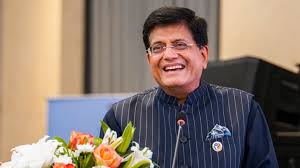
Commerce and Industry Minister Piyush
Goyal has described the agreement as the “mother of all deals” signed by India
so far, underscoring its scale and strategic significance. Negotiations for the
pact began in 2007 and have navigated multiple global economic cycles before
reaching the finishing line after 18 years. An official said while the closure
of talks will be declared this week, the formal signing will take place after
legal vetting of the text on a mutually agreed date. Implementation could take
additional time, as the agreement requires approval from the European
Parliament, while in India it will need the nod of the Union Cabinet.
 The summit will bring together Prime
Minister Narendra Modi, European Commission President Ursula von der Leyen, who
arrived in India on January 24 for a four-day visit, and European Council
President Antonio Costa. Their talks are expected to emphasise trade,
investment, technology and supply chain resilience.
The summit will bring together Prime
Minister Narendra Modi, European Commission President Ursula von der Leyen, who
arrived in India on January 24 for a four-day visit, and European Council
President Antonio Costa. Their talks are expected to emphasise trade,
investment, technology and supply chain resilience.
Under the proposed FTA, India and the
27-nation EU bloc will reduce or eliminate import duties on over 90 per cent of
goods traded between them. For several labour-intensive sectors such as
textiles and footwear, duties are expected to be eliminated immediately upon
implementation, while others will see phased reductions over five, seven or ten
years. The agreement will also liberalise trade in services, easing norms
across sectors like telecommunications, transportation, accounting and
auditing, alongside quota-based market access for select products.
India’s agreement with the EU will be
its biggest trade pact to date, given the bloc’s composition of 27 developed
economies including France, Germany, Italy, Spain, the Netherlands, Sweden and
Belgium. The pact assumes greater importance as high US tariffs, including
rates as steep as 50 per cent on some Indian goods, have disrupted global trade
flows. The FTA is expected to help Indian exporters diversify markets, reduce
dependence on China and integrate more deeply into European value chains.
The EU currently accounts for around
17 per cent of India’s total exports, while exports to India make up about 9
per cent of the bloc’s overseas shipments. In 2024-25, bilateral trade in goods
stood at USD 136.53 billion, with India exporting USD 75.85 billion and
importing USD 60.68 billion, making the EU India’s largest goods trading
partner. Services trade touched USD 83.10 billion in 2024.
India is seeking zero-duty access for
labour-intensive sectors such as textiles, leather, handlooms and select
processed foods. The EU, in turn, is keen on greater access for automobiles,
wines and high-tech manufacturing. Sensitive agriculture issues have been kept
outside the deal, with both sides protecting key farm and dairy interests.
Dairy, in particular, remains excluded from all Indian FTAs to safeguard small
and marginal farmers.
Beyond trade, the agreement is
expected to boost investment ties. The EU is already a major investor in India,
with cumulative FDI inflows of USD 117.4 billion between April 2000 and
September 2024, accounting for over 16.5 per cent of total FDI equity inflows.
Around 6,000 EU firms operate in India, while Indian companies have invested
over USD 40 billion in the EU, highlighting the depth and future promise of
this landmark partnership.