
THEBUSINESSBYTES BUREAU
NEW DELHI, NOVEMBER 25, 2026
India’s rapidly expanding start-up ecosystem, advances in biotechnology
and growing capabilities in artificial intelligence, genomics and precision
medicine are positioning the country as an emerging global hub for healthcare
innovation, Union Minister of State (Independent Charge) for Science and
Technology Dr Jitendra Singh said on Wednesday.
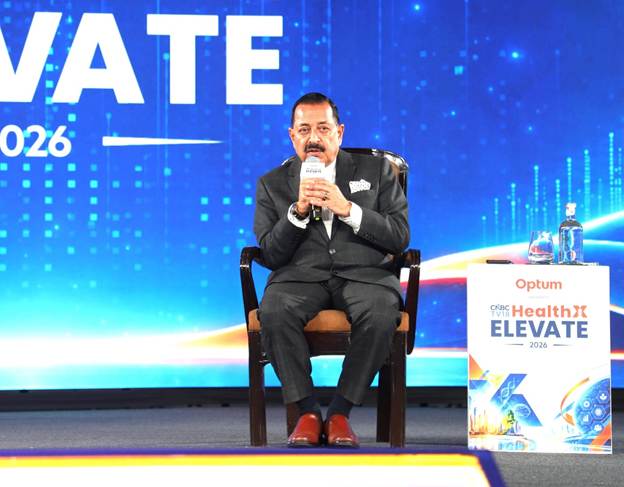
Addressing HealthX Elevate 2026, a gathering of healthcare leaders,
entrepreneurs, investors and experts, Singh said India’s start-up ecosystem had
expanded from around 350 ventures in 2014 to more than 2.5 lakh currently,
making it the world’s third-largest. Significantly, over 60 per cent of these start-ups
originate from Tier-II and Tier-III cities and smaller towns, reflecting the
democratisation of entrepreneurship beyond metropolitan centres.
He attributed this transformation to improved digital access and an
enabling ecosystem that has opened up opportunities for aspiring entrepreneurs
across the country. Entrepreneurship, he said, is no longer restricted to
conventional technology or science-based sectors, with passion, focus and
effective use of technology emerging as key drivers of success.
Highlighting the biotechnology sector's remarkable growth, the minister
said India’s biotech start-up base had increased from around 50-60 in 2014 to
nearly 10,000 today. The country was increasingly developing affordable
solutions for diseases with both domestic and global relevance.
Referring to India's growing scientific capabilities, Singh cited the
development of the country's DNA vaccine against COVID-19, which was supplied
to around 30 countries, and advances in genetic therapy, including a successful
haemophilia trial whose findings were published in the New England Journal of
Medicine. Indian researchers are also exploring cost-effective nuclear medicine
solutions for diseases such as acute lymphoblastic leukaemia, he said.
Emphasising the need for stronger industry participation, Singh said
government support alone could not take research to its full commercial
potential and called for greater private-sector investment in healthcare
research, biotechnology and innovation. He expressed confidence that India
could develop a globally recognised blockbuster drug in the coming decade.
On artificial intelligence, the minister said it should be viewed as an
enabling technology across disciplines, particularly in diagnosis, data
analysis and healthcare delivery. Tasks that earlier required hours or days
could now be completed within minutes with AI assistance, he noted.
Referring to the Genome India initiative, Singh said gene sequencing of
10,000 individuals had been completed, covering 80 distinct population groups.
The resulting genetic insights, combined with AI, could strengthen research and
help usher in an era of precision medicine, where treatment is tailored to an
individual's genetic profile, lifestyle, environment and molecular
characteristics.
He also stressed the importance of preventive healthcare and early
diagnosis, highlighting ongoing research into biomarkers that could help
predict disease risks, including diabetes-related complications in women during
pregnancy.
Singh said India was witnessing a shift towards deep-tech and science-led
enterprises spanning biotechnology, quantum technology, AI and space, with the
opening of new sectors to private participation creating fresh opportunities.
Responding to concerns over the challenges faced by deep-tech start-ups
in securing their first major customer, he cited changes in government funding
provisions, including the removal of a CSIR requirement that start-ups must
have existed for at least three years to qualify for support.
Calling for closer collaboration among government, industry, researchers and healthcare professionals, Singh said the era of working in silos was over. Pooling expertise, resources and investment was essential to accelerate innovation and translate scientific research into practical solutions.
He said the ultimate objective of healthcare innovation must be affordable and accessible healthcare for all, requiring a whole-of-nation approach involving government, industry, medical professionals and greater philanthropic support.