
THEBUSINESSBYTES BUREAU
NEW DELHI, NOVEMBER 27, 2026
India’s power sector could attract investments worth an estimated ₹200 lakh
crore over the next two decades, Union Power Minister Manohar Lal said on
Friday, calling for coordinated efforts by the Centre, State governments and
the private sector to
unlock the sector’s vast growth potential.
Addressing the two-day Power Ministers’ Conference, which began in New
Delhi on Friday, the Minister emphasised the need for an integrated approach to
power generation, energy storage, transmission and distribution to meet the
country’s growing energy requirements and strengthen its electricity
infrastructure.
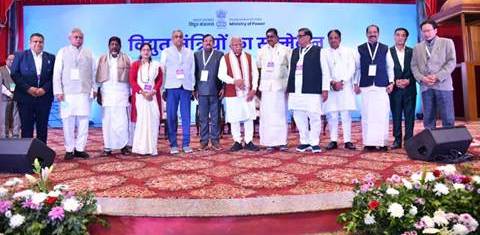
The conference, being held on November 27 and 28, has brought together
Power Ministers, senior officials and electricity regulators from 28 States and
eight Union Territories to deliberate on critical policy priorities, emerging
challenges and the future roadmap for the power sector. The last national-level
conference of Power Ministers was held in 2024.
Manohar Lal said India had made significant strides in expanding its
power generation capacity, integrating renewable energy into the electricity
mix and strengthening the national grid. However, he stressed that sustained
progress would require coordinated planning and timely implementation of reforms
across the entire power value chain.
Highlighting the importance of financial sustainability, the Minister
said power distribution companies (DISCOMs) had collectively registered a
positive profit after tax (PAT) in the financial year 2024-25, marking a
turnaround after a prolonged period of financial stress. He called for
sustained policy, operational and regulatory interventions to consolidate their
financial position and ensure long-term viability.
The Minister also underscored the importance of accelerating smart meter
deployment across States, pointing out that the initiative could deliver
significant benefits to consumers while improving transparency, efficiency and
accountability in the power distribution system.
The conference agenda includes extensive deliberations on resource
adequacy plans, faster deployment of energy storage systems, inter-State and
intra-State transmission bottlenecks and the financial health of DISCOMs.
Implementation of the Revamped Distribution Sector Scheme (RDSS), particularly
smart metering, feeder separation and household electrification, will also be a
key area of focus. Issues concerning nuclear power sites are among the other
subjects scheduled for discussion.
Minister of State for Power Shripad Yesso Naik urged States and Union
Territories to actively share their experiences, implementation-related
difficulties and regulatory concerns, besides identifying areas requiring
further assistance from the Centre.
Emphasising the importance of translating policy decisions into tangible
results, Naik called for a decisive shift from policy formulation to effective
execution and from infrastructure creation to measurable outcomes. He said an
integrated and sustainable approach was essential to address the sector’s evolving
requirements.
Power Secretary Pankaj Agarwal said India’s long-term ambition was to
move beyond energy security towards energy independence, in keeping with the
national vision of Viksit Bharat 2047.
He informed the gathering that the country’s installed power generation
capacity had reached around 563 GW, with more than 55 per cent sourced from
non-fossil fuel-based energy. India had added approximately 60 GW of generation
capacity in the preceding 12 months, of which nearly 87 per cent came from non-fossil
fuel sources, reflecting the growing contribution of clean energy to the
country’s electricity mix.
A joint session with the Forum of Regulators and State Electricity Regulatory Commissions is scheduled for November 28, during which State Power Ministers, chairpersons of regulatory commissions, State Power and Energy Secretaries and senior officials of the Ministry of Power will deliberate on major regulatory, operational and policy issues confronting the sector.
The discussions are expected to focus on strengthening coordination between the Centre and States, addressing emerging infrastructure requirements and ensuring that India’s expanding power capacity translates into reliable, affordable and financially sustainable electricity for consumers across the country.