

THEBUSINESSBYTES
BUREAU
NEW DELHI,
FEBRUARY 1, 2026
India Inc. has broadly welcomed the
Union Budget 2026–27 presented by Finance Minister Nirmala Sitharaman on Sunday,
terming it a balanced, forward-looking roadmap that blends fiscal discipline
with growth-oriented reforms across banking, manufacturing, MSMEs,
infrastructure, agriculture, insurance and clean energy.
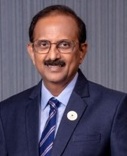 State Bank of India Chairman and
Indian Banks’ Association Chairman Challa
Sreenivasulu Setty said the Budget “maintains policy continuity and tax
predictability while balancing rural and urban priorities,” highlighting the
sharp focus on manufacturing, semiconductors, AI, data centres and
infrastructure. He noted that measures such as the SME Growth Fund and
strengthened TReDS framework “will act as key drivers for the MSME sector,”
while the capex target of ₹12.2
lakh crore and fiscal consolidation path “augur well in a volatile global
environment.”
State Bank of India Chairman and
Indian Banks’ Association Chairman Challa
Sreenivasulu Setty said the Budget “maintains policy continuity and tax
predictability while balancing rural and urban priorities,” highlighting the
sharp focus on manufacturing, semiconductors, AI, data centres and
infrastructure. He noted that measures such as the SME Growth Fund and
strengthened TReDS framework “will act as key drivers for the MSME sector,”
while the capex target of ₹12.2
lakh crore and fiscal consolidation path “augur well in a volatile global
environment.”
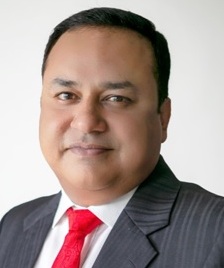 Echoing the optimism from the banking
sector, Axis Bank’s President & Head - Mid-Corporates & Medium
Enterprises Group Prashanth T.S. said
the Budget “meaningfully improves the growth runway for MSME banking,” adding
that easing collateral dependence and delayed cash flows “creates a stronger
foundation for calibrated and resilient credit growth.”
Echoing the optimism from the banking
sector, Axis Bank’s President & Head - Mid-Corporates & Medium
Enterprises Group Prashanth T.S. said
the Budget “meaningfully improves the growth runway for MSME banking,” adding
that easing collateral dependence and delayed cash flows “creates a stronger
foundation for calibrated and resilient credit growth.”
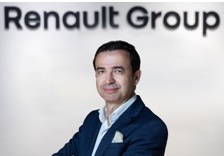 From the manufacturing and mobility
space, Renault Group India CEO Stéphane
Deblaise described the Budget as “a strong and reassuring signal of policy
continuity,” particularly praising India Semiconductor Mission 2.0 and
incentives to reduce import dependence, which he said “create confidence for
deeper localisation and sustainable mobility.”
From the manufacturing and mobility
space, Renault Group India CEO Stéphane
Deblaise described the Budget as “a strong and reassuring signal of policy
continuity,” particularly praising India Semiconductor Mission 2.0 and
incentives to reduce import dependence, which he said “create confidence for
deeper localisation and sustainable mobility.”
FMCG major Godrej Consumer Products
also welcomed tax reforms, with MD and CEO Sudhir
Sitapati noting that allowing MAT credit set-off up to 25 per cent under
the new tax regime “improves cash flows and frees up capital for reinvestment
into growth.”
In renewable energy, Saatvik Green
Energy CEO Prashant Mathur viewed
the Budget’s thrust on manufacturing and clean energy as reinforcing India’s
solar ambitions, stating that the policy clarity “supports scale, localisation
and long-term capacity expansion.”
Agriculture and fertiliser industry
leaders underlined the Budget’s focus on productivity and resilience.
Coromandel International MD and CEO and FAI Chairman S. Sankarasubramanian said it “brings together productivity,
resilience and affordability,” while FAI Director General Dr Suresh Kumar Chaudhari remarked that it “pushes agriculture towards
more local, scientific and accountable decision-making.”
The insurance sector also saw
significant tailwinds. IndusInd General Insurance CEO Rakesh Jain said the Budget “lays a strong foundation for
insurance-led growth,” adding that MSME reforms, infrastructure push and motor
insurance changes “reinforce trust and expand the base of insurable
enterprises.”
From a capital and infrastructure
perspective, Essar Capital’s Managing Partner Dhanpat Nahata said the Budget “delivers strength exactly where
India needs it,” while Essar’s Operating Partner Srinivasan Vaidyanathan termed it “a decisive push aligned with the
sectors powering India’s next decade.” Essar Ports Executive Director Ashish Rajgarhia highlighted that the
focus on freight corridors and waterways “strengthens the maritime backbone as
global supply chains are redefined.”
Overall, corporate leaders see Budget
2026–27 as a credible, reform-driven framework that reinforces India’s march
towards Viksit Bharat while offering stability, resilience and long-term growth
opportunities.