THEBUSINESSBYTES
BUREAU
BHUBANESWAR,
JANUARY 11, 2026
The 12th
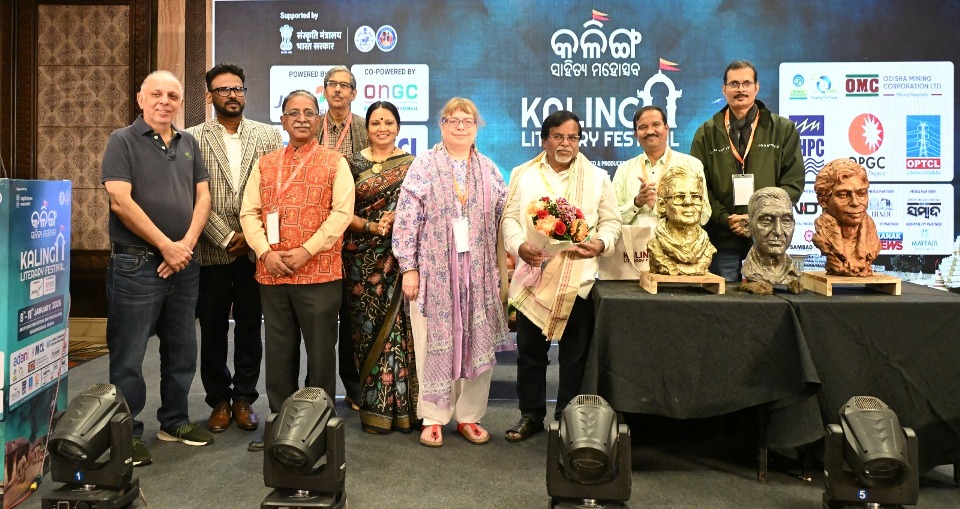
Kalinga Literary Festival (KLF) 2026 concluded on Sunday with a day rich in
intellectual depth and cultural resonance, bringing the four-day international
literary celebration to a memorable close at the Mayfair Convention,
Bhubaneswar. The fourth and final day unfolded as a vibrant confluence of
literature, journalism, philosophy, poetry, cinema and civilisational
discourse, reaffirming KLF’s stature as one of South Asia’s most credible and
inclusive platforms for ideas.
Day four
witnessed a wide spectrum of sessions across multiple venues, engaging
audiences in conversations that seamlessly connected tradition with
contemporary thought. Eminent writers, journalists, diplomats, poets, thinkers,
artists and cultural commentators explored themes ranging from governance and
literature to media, humour, poetry as resistance, cinema’s literary influence
and India’s civilisational narratives.
The day opened
with compelling sessions including “Prashasan O Odia Sahitya” featuring Amrit
Ruturaj, Kiran Kumar Mohanty, Debaprasad Das and Chittaranjan Nayak; “Humour in
Media: Rethinking Cartoons” with Bibhu Acharya in conversation with Chinmay
Hota; and “Life and Times of a Journalist” where senior journalist Chitra
Subramaniam spoke with Satish Padmanabhan. A special musical-literary
presentation, “Hamara Geet Zamana Gayega” by Niteshwar Kumar, added a lyrical
note to the morning.
Mid-morning
discussions further deepened the intellectual engagement with sessions such as
“Hrudae Shabda Hruda Ku Chhuen – Music and Literature” featuring Bijaya Mall,
Paanchanan Nayak, Srikant Gautam, Sarat Nayak and Ratikanta Satpathy, alongside
“Nepali Literary Journeys Across South Asia” with Dhirendra Premrishi, Kewora
Bhattray, Ranjana Niraula, Rupa Jha and Suman Barsha, moderated by Birat
Anupam. Conversations on literature, theatre and cinema featured Dr. Subodh
Pattnaik, Biyat Pragnya Tripathy and Dr. Gourahari Das, while a session on
Bharatiya Darshan, Parampara and Yuva by Acharya Prashant and an inter-school
competition reflected the festival’s engagement with youth and philosophical
inquiry.
One of the
major highlights of the day was the session “Poetry as Resistance, Fiction as
Freedom”, where acclaimed writer and translator Daisy Rockwell was in
conversation with Kanishk Gupta. Other notable sessions included “The Eternal
Sun: The Legacy of Surya Deva” with Shalini Modi in conversation with K. K.
Dash, “Forgotten Footprints: Untold Stories of Humanity’s Past” with Prateek
Dasgupta and Upasana Sarangi, and enriching Odia literary discussions featuring
Prakash Chandra Das and other prominent voices.
Post-lunch
sessions continued the momentum with thought-provoking dialogues such as “Why
India Matters: An Australian Perspective” featuring Ambassador Philip Green
OAM, Australia’s High Commissioner to India, in conversation with Satish
Padmanabhan, and “Mrs. Happily Single” with Shubha Sarma in conversation with
Sambit Tripathy. The day also saw in-depth engagements on Odia literature,
cinema and contemporary society involving a wide range of writers, filmmakers
and critics.
The evening
was marked by extended poetry readings, reflections on Odia poetic traditions
and special literary performances, culminating in the concluding session that
formally marked the close of KLF 2026.
Reflecting on
the journey of the festival, KLF Founder and Director Rashmi Ranjan Parida
said, “Kalinga Literary Festival has always stood for dialogue, diversity, and
dignity of ideas. Day 4 reaffirmed our belief that literature is not just about
books, but about society, conscience, and the courage to question and connect
across cultures. During last three days more than 100 sessions were organised.”
KLF Patron and CEO Ashok Kumar Bal added, “Over four days, KLF 2026 became a
living bridge between languages, generations, and geographies. The final day
captured the essence of this journey – where poetry met policy, art met
activism, and tradition engaged meaningfully with the future.”
With
enthusiastic participation from readers, students, scholars and cultural
enthusiasts, and the presence of leading voices from India and South Asia, the
12th Kalinga Literary Festival once again reaffirmed its role as a powerful
forum for literary and cultural exchange. In its 12th edition, KLF emerged as a
dynamic platform for dialogue across literature, culture, public policy,
history, translation, media, cinema and civilisational thought, hosting
hundreds of speakers from India and abroad.
 From its
opening in the presence of distinguished dignitaries including Kanak Vardhan
Singh Deo, Deputy Chief Minister of Odisha; Dr. Upali Pannilage, Minister from
Sri Lanka; Harivansh Narayan Singh, Deputy Chairman of the Rajya Sabha; and
Ambassador Philip Green OAM, to its closing reflections on plurality and
inclusivity, KLF 2026 stood out for its emphasis on diverse voices,
multilingual expression and respectful debate. Conducted across English, Hindi,
Odia and several South Asian languages, the festival offered a rare space where
ideas were explored with depth, empathy and intellectual rigour, reinforcing
KLF’s position as one of South Asia’s most significant literary and cultural
forums.
From its
opening in the presence of distinguished dignitaries including Kanak Vardhan
Singh Deo, Deputy Chief Minister of Odisha; Dr. Upali Pannilage, Minister from
Sri Lanka; Harivansh Narayan Singh, Deputy Chairman of the Rajya Sabha; and
Ambassador Philip Green OAM, to its closing reflections on plurality and
inclusivity, KLF 2026 stood out for its emphasis on diverse voices,
multilingual expression and respectful debate. Conducted across English, Hindi,
Odia and several South Asian languages, the festival offered a rare space where
ideas were explored with depth, empathy and intellectual rigour, reinforcing
KLF’s position as one of South Asia’s most significant literary and cultural
forums.