
THEBUSINESSBYTES
BUREAU
BHUBANESWAR,
APRIL 10, 2026
The 38th meeting of
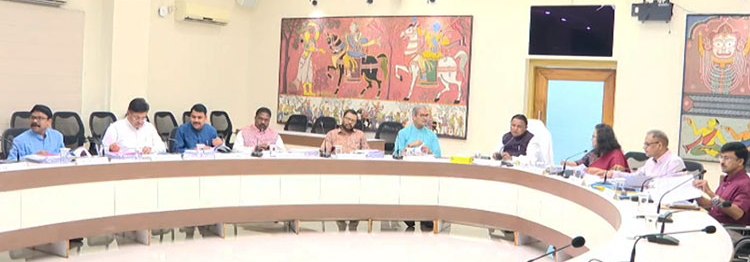
the Odisha Cabinet was held on Friday under the chairmanship of Chief Minister
Mohan Charan Majhi at the Conference Hall of Lok Seva Bhavan, where a series of
key policy decisions aimed at accelerating infrastructure development,
strengthening rural services and improving governance were approved. Following
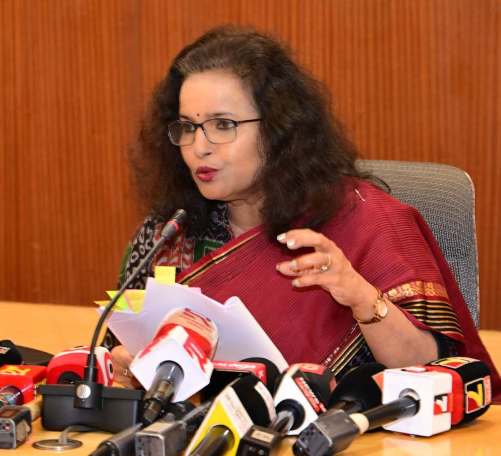
the meeting, Chief Secretary Anu Garg briefed the media on the decisions taken
across five departments, with a total of 11 proposals receiving the Cabinet’s
approval.
In a significant
policy shift focused on sustainability, the Cabinet approved the Operation
& Maintenance (O&M) Policy for Rural Drinking Water Supply 2026 to
ensure long-term functionality, reliability and efficiency of water supply infrastructure
across rural Odisha. The policy seeks to move beyond infrastructure creation
towards service delivery excellence, ensuring uninterrupted water supply,
improved water quality monitoring and scientific asset management. The
framework builds on the progress achieved under the Jal Jeevan Mission, which
has substantially expanded Functional Household Tap Connections (FHTCs) across
rural areas of the state.
The policy outlines
clearly defined responsibilities for the Rural Water Supply and Sanitation
wing, district administrations, Gram Panchayats and Village Water &
Sanitation Committees, strengthening decentralized governance and encouraging
community participation. It provides for structured user charges, dedicated
village-level O&M funds, periodic water quality testing and adoption of
digital technologies such as SCADA and IoT-based monitoring systems. A
centralized Command and Control Centre will oversee real-time monitoring of
water supply operations. Officials stated that the policy emphasizes preventive
maintenance, lifecycle management of assets, time-bound grievance redressal and
disaster preparedness while ensuring implementation within existing financial
provisions without additional recurring burden on the State exchequer.
Highlighting achievements
in rural water infrastructure, the government informed that 27 Mega Piped Water
Supply Projects have been completed during the current tenure, while trunk
infrastructure such as water treatment plants and intake systems have been
completed in 82 projects. A total of 3,046 single-village water supply projects
and 2,702 solar-based water supply systems have also been completed, increasing
the number of villages receiving FHTCs from 6,032 to over 21,000. Additionally,
28,741 tubewells have been installed to augment drinking water availability. To
ensure accountability, penalties amounting to nearly Rs 1,120 crore have been
imposed on executing agencies for unsatisfactory performance in water supply
projects, with FIRs lodged in cases of serious irregularities. Officials stated
that the policy aims to safeguard public investment and ensure the goal of “Har
Ghar Jal” translates into sustained and safe drinking water supply for every
rural household.
In another key
decision, the Cabinet approved construction of a 2×500 MVA, 400/220/33 kV GIS
sub-station at Basudevpur in Keonjhar district along with associated
transmission lines to meet growing power demand in industrial regions. The
project, estimated at Rs 1,647 crore, will be implemented by Odisha Power
Transmission Corporation Limited with 30 per cent equity support from the state
government and the remaining funding through banks and financial institutions.
The sub-station will strengthen the transmission network and support industrial
expansion in the mineral-rich Joda-Barbil-Palaspanga belt of Keonjhar and
Sundargarh districts. The project is scheduled for completion between FY
2026-27 and FY 2028-29.
The Cabinet also
approved the ‘Atal Bus Stand’ scheme aimed at modernizing public transport
infrastructure across the state. The initiative will develop state-of-the-art
bus stands at district headquarters, sub-divisional headquarters, block
headquarters, urban local bodies and major tourist locations. Bus stands will
be categorized into A, B and C classes based on requirement and traffic demand.
The scheme will integrate all existing bus stands under a unified framework to
ensure standardised development, efficient management and enhanced passenger
facilities. Implemented by Odisha State Road Transport Corporation, the
initiative has received approval for an outlay of Rs 3,400 crore till FY
2031-32. The scheme aims to improve operational efficiency, generate revenue
and promote tourism while ensuring inclusive and environmentally sustainable
development.
Focusing on
strengthening agricultural infrastructure, the Cabinet approved a series of
lift irrigation projects across Sambalpur, Sonepur, Jajpur and Keonjhar-Mayurbhanj
clusters under the Parbati Giri Mega Lift Irrigation Scheme. With an overall
outlay of Rs 10,759.20 crore, the initiative aims to expand irrigation coverage
in upland regions by lifting surplus water from rivers, reservoirs and canals
to areas previously left uncovered due to geographical constraints. The scheme
targets irrigation potential of about 2.63 lakh hectares, improving water
availability for farmers and enhancing agricultural productivity.
Under Cluster XXVII
in Sambalpur district, four schemes will create irrigation potential for around
6,210 hectares using water from the Hirakud reservoir through a pressurised
system, benefiting 54 villages. In Sonepur district, four projects under
Cluster XXX will cover about 6,025 hectares using water from the Tel river,
benefiting 47 villages. In Jajpur district, four schemes under Cluster XXXVII
will irrigate nearly 5,950 hectares by sourcing water from the Kharasua and
Brahmani rivers, covering 73 villages. In Keonjhar and Mayurbhanj districts,
three schemes under Cluster XXXVIII will irrigate about 4,280 hectares using
water from the Kanpur Main Canal, Ardei Nadi and Balisudra River, benefiting 33
villages. These projects are expected to encourage diversification from
water-intensive paddy cultivation to high-value crops through micro-irrigation
systems, thereby improving farm incomes and strengthening rural livelihoods.
 In the labour and
social security sector, the Cabinet approved framing of the Odisha Employees’
State Insurance Scheme Ministerial Service (Methods of Recruitment and
Conditions of Service) Rules, 2026 to streamline recruitment and service
conditions for ministerial staff serving in ESI hospitals and dispensaries
across the state. Amendments to the Odisha Employees’ State Insurance Medical
Service Rules, 2014 were also approved to improve transparency, fairness and
efficiency in recruitment of medical officers.
In the labour and
social security sector, the Cabinet approved framing of the Odisha Employees’
State Insurance Scheme Ministerial Service (Methods of Recruitment and
Conditions of Service) Rules, 2026 to streamline recruitment and service
conditions for ministerial staff serving in ESI hospitals and dispensaries
across the state. Amendments to the Odisha Employees’ State Insurance Medical
Service Rules, 2014 were also approved to improve transparency, fairness and
efficiency in recruitment of medical officers.
Additionally, the Cabinet approved amendments to the Odisha Labour Service (Method of Recruitment and Conditions of Service) Rules, 2019, granting exemption from departmental examinations to Assistant Labour Officers and Rural Labour Inspectors appointed before the rules came into force in 2019. The decision will facilitate their regularisation and career progression within the cadre. The Cabinet also updated the legal syllabus in accordance with new criminal laws, replacing the Indian Penal Code, Indian Evidence Act and Code of Criminal Procedure with the Bharatiya Nyaya Sanhita, Bharatiya Sakshya Adhiniyam and Bharatiya Nagarik Suraksha Sanhita, ensuring alignment with the contemporary legal framework.