
THEBUSINESSBYTES BUREAU
BHUBANESWAR, JANUARY 31, 2026
In a
decisive push to accelerate industrial growth, strengthen grassroots
institutions and modernise governance, the Odisha Cabinet chaired by Chief
Minister Mohan Charan Majhi on Saturday approved a slew of landmark decisions
spanning investments, cooperatives, aviation connectivity and science-led
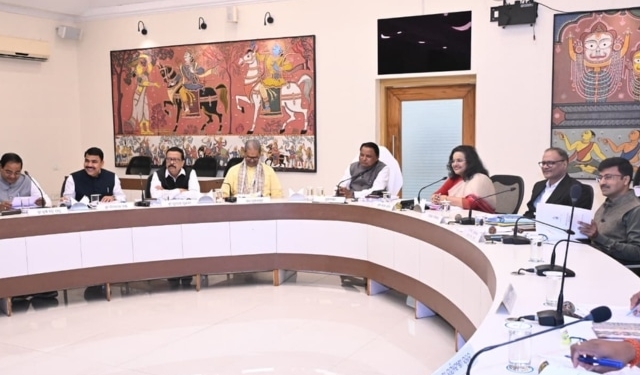
development. The approvals came during the Cabinet’s 35th meeting held at Lok
Seva Bhawan here today, where 12 proposals from 10 key departments, along with
two proposals from the General Administration and Public Grievances Department,
received the green signal.
A major
highlight of the meeting was the Cabinet’s approval of the State Cooperative
Policy 2026, a comprehensive roadmap aimed at transforming Odisha’s cooperative
sector into a technology-driven, efficient and member-centric ecosystem.
Aligned with the Prime Minister’s vision of “Prosperity through Cooperation”
and the National Cooperative Policy announced in July 2025, the policy seeks to
inject new momentum into cooperatives across agriculture, dairy, fisheries,
tribal development, handloom, housing and credit institutions. The government
expects the policy to play a pivotal role in strengthening Primary Agricultural
Cooperative Societies, cooperative banks and marketing societies, while
promoting transparency, digital services, financial inclusion and value
addition. The policy will remain in force until 2036 and is positioned as a key
pillar of Odisha Vision 2036 and India Vision 2047.
In a major
boost to Odisha’s industrial and manufacturing ambitions, the Cabinet approved
Kalyani Group’s integrated automotive, aerospace and defence manufacturing
complex in Dhenkanal district. Spread over 1,100 acres with an investment of Rs
17,250 crore, the project will house multiple production units and vendor
parks. It is expected to generate more than 20,000 jobs in the long term and
significantly reduce India’s import dependence on strategic materials such as
titanium and speciality steel, strengthening the country’s defence and
aerospace supply chains.
The Cabinet
also approved the continuation of international flights from Bhubaneswar to
Singapore and Dubai with viability gap funding support until March 2026.
Operated by IndiGo, these routes are expected to sustain global connectivity,
support Odia migrants and bolster aviation-led economic growth. At the same
time, the government decided to withdraw VGF support for the Bangkok and Abu
Dhabi routes.
Reinforcing
its focus on knowledge and innovation, the state government cleared the State
Science and Technology Council Scheme with an outlay of Rs 254.85 crore for
five years. The scheme aims to promote research and development, scientific
awareness and innovation among students and institutions, while building a robust
pool of skilled manpower.
On the
infrastructure and agriculture front, the Cabinet approved the Diversion Weirs
Improvement Scheme with an allocation of Rs 362 crore over three years to
modernise irrigation structures, restore lost ayacut and improve water-use
efficiency across the state.
Among other
key decisions, the Cabinet approved amendments to professional service
recruitment rules, adopted the Odisha Uniformed Services Selection Commission
Rules 2026, amended judicial service rules, and cleared the proposal to convene
the sixth session of the seventeenth Legislative Assembly beginning February
17, underscoring a broad-based push towards reforms, investment and inclusive
development.