
THEBUSINESSBYTES
BUREAU
BHUBANESWAR,
JULY 16, 2026
Odisha has taken a
major step towards strengthening its disaster resilience with the State
Executive Committee (SEC) on disaster management approving a ₹222.20-crore project to address
urban flooding and waterlogging in Bhubaneswar, besides clearing a ₹1.77-crore
proposal to mitigate the impact of heatwaves in Bhubaneswar
and Cuttack.
The decisions were
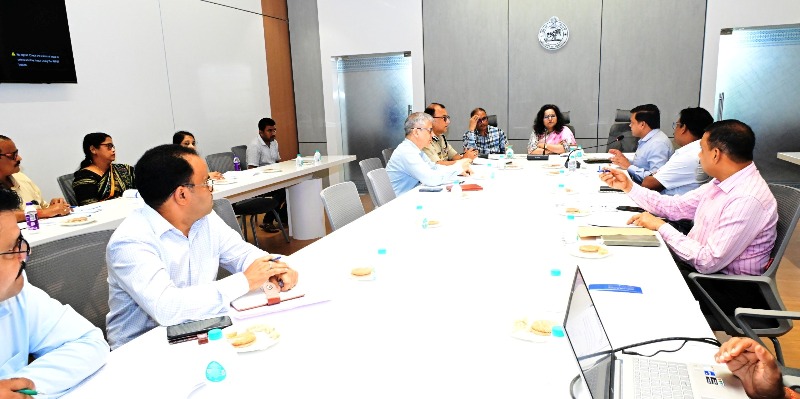
taken at the first SEC meeting for the 2026-27 financial year, chaired by Chief
Secretary Anu Garg at Lok Seva Bhavan. The committee approved the National
Disaster Management Authority (NDMA)-supported urban flood mitigation project,
with ₹200 crore to be provided by the
Centre and the remaining ₹22.20 crore by the state government.
The ambitious project
aims to strengthen Bhubaneswar’s stormwater drainage network, restore and
integrate urban lakes, promote rainwater harvesting and water security
measures, establish advanced early warning systems, undertake comprehensive
flood risk assessments, and enhance institutional capacity for disaster
preparedness and response.
To tackle the growing
threat of extreme heat, the SEC also approved a ₹1.77-crore heatwave mitigation plan for Bhubaneswar and
Cuttack. The initiative envisages the construction of multi-purpose rest
shelters, installation of vetiver cooling mats at bus stops, reflective roof
painting, vetiver roof shading, and provision of safe
drinking water facilities at key public locations.
Reviewing the state’s
disaster management finances, the committee noted that ₹979.18 crore has been allocated
under the State Disaster Response Fund (SDRF) and ₹429 crore under the State
Disaster Mitigation Fund (SDMF), taking the overall disaster management
provision to around ₹2,147
crore. It was informed that expenditure of ₹1,064.48 crore has already been
incurred during the current year, while utilisation certificates have been
received for 92.93 per cent of the funds released.
The SEC also approved
a series of measures to further bolster Odisha’s disaster response framework.
These include proposals for forest fire risk mitigation, strengthening
communication systems of the Odisha Disaster Rapid Action Force (ODRAF) and
Fire Services, and procurement of HF/VHF communication equipment, VSAT
terminals and satellite phones to ensure uninterrupted connectivity during
emergencies.
In a significant community-based preparedness initiative, the committee sanctioned the formation of village-level volunteer task forces in 3,000 non-cyclone shelters. The volunteers will be trained in early warning dissemination, search and rescue operations, first aid, relief management and psycho-social support to enhance grassroots disaster response capacity.
Chairing the meeting, Chief Secretary Anu Garg directed all concerned departments to ensure timely implementation of the approved projects, transparent utilisation of funds and technology-driven monitoring to further strengthen Odisha’s disaster management system and enhance its resilience against future natural hazards.