Three-year pact to strengthen research-driven
governance; partnership to support Odisha Vision 2036 and 2047 through policy
innovation, rigorous research and capacity-building
THEBUSINESSBYTES BUREAU
BHUBANESWAR, NOVEMBER 4, 2026
In a major push towards strengthening research-driven governance and
ensuring informed policy decisions, the Odisha government on Wednesday signed a
three-year Memorandum of Understanding (MoU) with the Abdul Latif Jameel
Poverty Action Lab (J-PAL) South Asia to promote evidence-based policymaking
across various state departments.
Anchored in the Planning and Convergence Department, the partnership aims
to align policy interventions with the state's ambitious Odisha Vision 2036 and
2047, focusing on rigorous research, technical policy support and institutional
capacity-building.
Under the agreement, J-PAL South Asia, hosted at the Institute for
Financial Management and Research (IFMR) in Chennai, will collaborate with
different government departments to identify key policy challenges, generate
robust evidence and translate research findings into practical and actionable
recommendations.
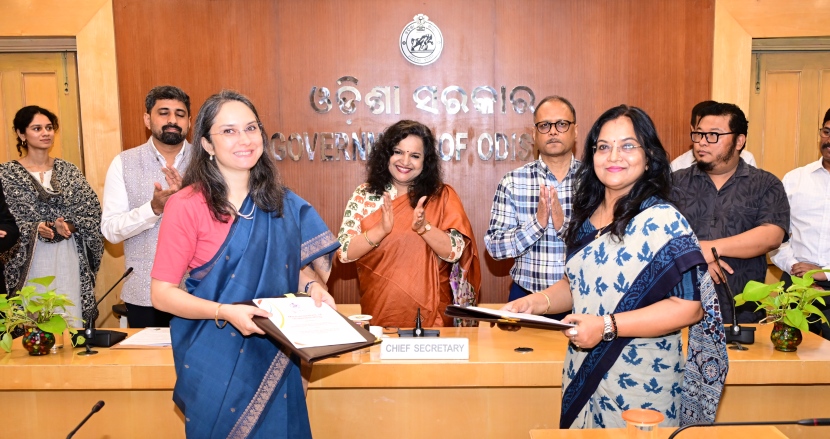
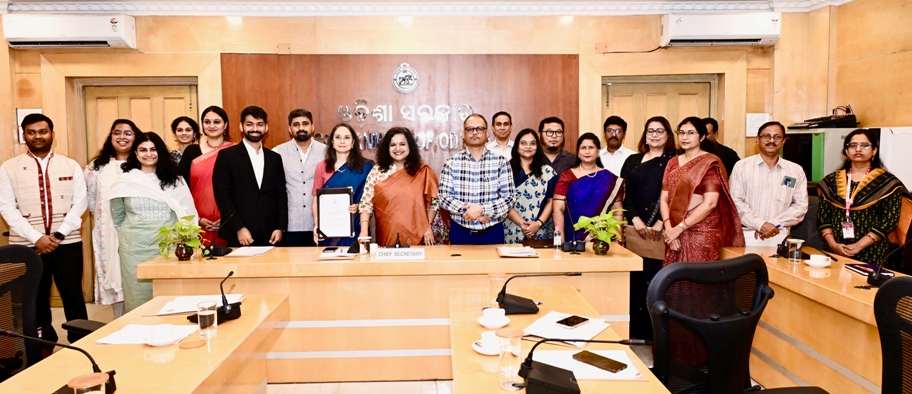 The MoU was signed by Rashmi Kabi, FA-cum-Additional Secretary in the
Planning and Convergence Department, and Shobhini Mukerji, Executive Director
of J-PAL South Asia, in the presence of Chief Secretary Anu Garg, Development
Commissioner-cum-Additional Chief Secretary Deoranjan Kumar Singh, Acting
Associate Director (Policy) of J-PAL South Asia Murali Mallikarjunan and senior
officials from various departments.
The collaboration assumes significance as Odisha seeks to transform
itself into a prosperous state, or 'Samruddha Odisha', by 2036 and a developed
state, or 'Viksit Odisha', by 2047, through innovative governance, data-driven
interventions and evidence-backed development strategies.
The partnership builds on J-PAL South Asia's engagement with Odisha since
2006, during which it has worked in areas such as early childhood education,
foundational literacy and numeracy, governance, sanitation, agriculture and
gender equality.
As part of the collaboration, J-PAL will work closely with state
departments to understand their priorities and support the design,
implementation and evaluation of interventions suited to Odisha's development
needs.
One of the notable initiatives under the partnership is 'Barnali', a
gender-equity curriculum currently being taught in around 23,000 government
schools. J-PAL South Asia serves as the knowledge and research partner to the
School and Mass Education Department and Breakthrough Trust for the initiative.
The partnership will be overseen by a Steering Committee chaired by the
Chief Secretary and comprising senior government officials and representatives
of J-PAL South Asia. The committee will meet every six months to examine and
review project proposals, while designated nodal officers from both sides will
coordinate implementation. Specific projects, their scope and deliverables will
be finalised in consultation with the concerned departments.
Speaking on the occasion, Chief Secretary Garg said Odisha had set itself
the ambitious goal of achieving Viksit Odisha as part of the broader vision of
Viksit Bharat.
"Our Vision commits us to engaging research institutions in policy
research and piloting innovations, as well as adopting data- and AI-based
interventions in line with global best practices," she said.
Outlining the role of J-PAL South Asia, the Chief Secretary said the
organisation would help bring relevant global evidence to bear on the state's
priorities, adapt promising approaches to local requirements and support the
design and testing of evidence- and data-based solutions before their wider
implementation.
She expressed confidence that the collaboration would strengthen the
state's ability to develop effective interventions and scale up successful
models across departments.
Mukerji said Odisha had long been at the forefront of generating and
using evidence to inform public policy.
"With this partnership, we look forward to continuing our work with
the Government of Odisha on its policy priorities: bringing global evidence,
adapting it to local needs, co-developing programmes, and testing and scaling
what works," she said.
She also highlighted the state's strong foundation in monitoring and evaluation, saying the collaboration would build on existing institutional capacities to improve policy outcomes.
J-PAL is an international research network known for applying rigorous scientific methods, particularly randomised evaluations, to identify effective solutions to critical policy challenges, especially in the fight against poverty.