For
Odisha, the real success of its $20 billion mineral ambition will not lie
beneath the ground, but in the prosperity it creates above it, writes Priyabrat Biswal
Odisha
stands at a defining moment in its economic journey. The state’s mineral sector
— already a cornerstone of India’s industrial economy — is projected to expand
from roughly $8 billion today to nearly $20 billion by 2032, potentially
transforming Odisha into one of the most powerful engines of India’s
resource-driven growth. Yet the real measure of success will not lie in the
scale of mineral extraction alone, but in how effectively this immense wealth
translates into jobs, industrial ecosystems, and sustainable prosperity on the
ground.
With nearly 50–59 per
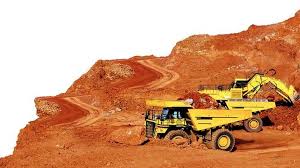
cent of India’s bauxite reserves, Odisha occupies a uniquely strategic position
in the global aluminium economy. The state already hosts key elements of the
aluminium value chain, including alumina refineries and primary metal
production facilities. If its bauxite resources are operationalised and expanded
in a timely and responsible manner, Odisha has the opportunity to build one of
the world’s most competitive aluminium ecosystems — one that not only
strengthens India’s industrial capacity but also fuels widespread employment
and regional development.
At
the heart of this transformation lies the mine-to-metal aluminium value chain,
a multi-stage industrial process that begins with the extraction of bauxite.
The ore is refined into alumina at specialised refineries and then converted
into primary aluminium metal through smelting. This metal feeds a vast network
of downstream industries, including rolling mills, extrusion units, engineering
components, transport equipment, construction materials, electrical
applications, and consumer goods manufacturing. When this entire chain operates
within the state, value addition remains local, ensuring that Odisha benefits
not merely from mining but from a broad industrial multiplier effect.
The
strengthening of this integrated ecosystem could fundamentally reshape the
economic landscape of the state, particularly in mineral-rich but economically
vulnerable regions of western Odisha. This transformation could play a crucial
role in generating employment and addressing distress migration from
mineral-bearing districts. The expansion of the captive bauxite-to-aluminium
value chain will not only create direct jobs in mining, refining, and metal
production but will also significantly strengthen the MSME ecosystem.
Aluminium, as a
strategic industrial resource, can catalyse growth across sectors such as
engineering, transportation, renewable energy, housing, and small manufacturing
units, thereby creating sustained livelihood opportunities.
Beyond
employment generation, a stronger domestic aluminium ecosystem would also reduce
India’s reliance on imports. Enhanced in-house mining and refining would lower
import dependence and generate significant cost savings for the country. These
savings could be reinvested in regional infrastructure, education, healthcare,
roads, skill development centres, and community welfare initiatives in the
districts where the minerals are sourced.
The
economic numbers underline the magnitude of this opportunity. Opening key
mining clusters in the state could contribute around ₹18,000 crore annually to Odisha’s
Gross State Domestic Product (GSDP). In employment terms, the sector could
generate approximately 15,000 direct jobs and more
than 50,000 indirect jobs, particularly in logistics, contract services,
equipment supply, and industrial support sectors.
However,
the ultimate impact will depend on how effectively mining operations are
aligned with refinery capacities and the expansion of downstream industries. A
balanced approach — where mineral extraction is integrated with refining,
smelting, and manufacturing — will determine whether Odisha merely exports raw
resources or emerges as a global aluminium manufacturing hub.
For
communities living in mineral-bearing regions, the stakes are deeply personal.
Many families continue to depend on irregular and seasonal sources of income,
leaving them vulnerable to economic uncertainty. A villager from one such
region captured the everyday reality faced by many households:
Here, local people depend on daily labour,
sometimes in the wildlife sanctuary, but the work is not regular. When there is
no work, managing even food every day becomes a struggle. If industries start
here, people will get regular salaries. Their children can attend school regularly
and lead a meaningful life.
The
operationalisation of bauxite mines and existing alumina refineries could
dramatically change this picture, particularly in districts such as Kalahandi
and Rayagada, where more than three lakh people depend on unstable and seasonal
livelihoods. Industrial development typically triggers a cascade of
improvements — better road connectivity, reliable power supply, drinking water infrastructure,
healthcare facilities, schools, housing, and digital connectivity.
Stable
wages generated by industrial employment raise household incomes and strengthen
local markets. As purchasing power increases, small businesses flourish, new
services emerge, and communities gain the economic stability needed to invest
in education and healthcare — two critical foundations for long-term human
development.
The
potential scale of this transformation is enormous. A fully integrated captive mine-to-metal aluminium
ecosystem in western Odisha could support up to 2.4 million livelihoods across
the value chain, including jobs in mining, refining, smelting, downstream
manufacturing, logistics, and ancillary services.
Equally
significant is the potential growth of the state’s micro, small and medium
enterprises. More than 10,000 MSMEs could emerge in sectors such as transport
services, engineering fabrication, metal processing, machinery maintenance, and
component manufacturing. These enterprises would anchor local economic
activity, ensuring that mineral wealth circulates through the regional economy
rather than remaining confined to large industrial players.
Yet
the path forward must be guided by the principles of responsible and
sustainable development. The expansion of bauxite mining and aluminium
production will need to balance economic growth with environmental stewardship
and community engagement. Transparent governance, modern mining practices, and
strong rehabilitation and resettlement frameworks will be essential to ensure
that local communities share equitably in the benefits of development.
If managed
thoughtfully, Odisha’s mineral wealth can become a powerful catalyst for
inclusive growth. The aluminium sector — vital for infrastructure, renewable
energy, transport, housing, and advanced manufacturing — is poised to play a
central role in India’s future economy. Odisha, with its unmatched bauxite
reserves and growing industrial base, is uniquely positioned to lead this
transformation.
The
state’s mineral future is undeniably promising. The challenge now is to ensure
that this immense natural advantage evolves into jobs, thriving local
industries, modern infrastructure, and better living standards for millions of
people.
For
Odisha, the real success of its $20 billion mineral ambition will not lie
beneath the ground — but in the prosperity it creates above it.