For aluminium-producing regions such as
Odisha, where industrial residue generation and infrastructure development
coexist, red mud utilisation presents an opportunity to promote industrial
symbiosis and a circular economy, writes Priyabrat Biswal
The rapid expansion of infrastructure development has significantly
increased the demand for natural construction materials such as soil, moorum,
laterite and aggregates. At the same time, industries generate substantial
quantities of waste that require responsible management. One such industrial
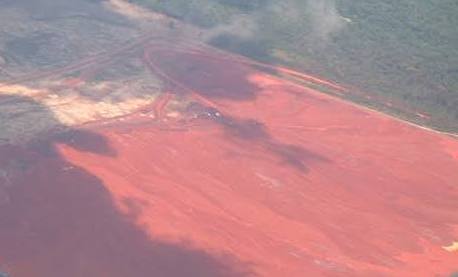
by-product is red mud, or bauxite residue, generated during alumina extraction
from bauxite through the Bayer process. Typically, around 1–1.5 tonnes of red
mud are generated for every tonne of alumina produced. Its fine particle size,
high alkalinity and complex chemical composition make conventional disposal
challenging. However, with appropriate treatment and engineering, this
industrial waste could become a valuable resource for infrastructure
development, particularly road construction.
Road projects require considerable quantities of earthwork materials for
embankments, subgrades and pavement foundation layers. The increasing pressure
on natural resources, environmental concerns associated with borrow areas and
transportation costs make alternative materials increasingly attractive.
Research has demonstrated that suitably processed and stabilised red mud has
potential for use in road embankments and subgrade construction. Its mineral
composition, typically containing iron oxides, alumina, silica and calcium
compounds, provides opportunities to engineer its geotechnical properties.
Depending on its characteristics, red mud can be blended with fly ash or
stabilised using lime, cement and other suitable binders to improve strength,
bearing capacity and resistance to deformation. Such engineered mixtures could
partially replace conventional earthwork materials, reducing dependence on
naturally sourced soil and conserving valuable borrow areas.
The potential applications of red mud extend beyond embankments and
subgrades. Stabilised red mud, particularly when blended with suitable
industrial by-products, could be explored for pavement sub-base and base
layers, subject to adequate strength, durability and moisture-resistance
performance. Its fine particle size and mineral characteristics also make it a
potential partial replacement for conventional mineral fillers in bituminous
mixtures. However, its influence on binder-filler interaction, Marshall
stability, rutting resistance and moisture susceptibility must be established
through laboratory investigations before field application.
Red mud also offers opportunities in cement and concrete manufacturing.
Its alumina, iron oxide and silica content makes it a potential supplementary
raw material for cement clinker production and certain blended cementitious
systems. Research has additionally explored its partial incorporation in
concrete and geopolymer materials. When combined with suitable reactive
aluminosilicate materials and alkaline activators, red mud can contribute to
alkali-activated binder systems, offering possibilities for alternative
construction materials with reduced dependence on conventional Portland cement.
Another promising application is the manufacture of bricks, tiles and ceramic
products, where its iron oxide and aluminosilicate constituents can contribute
to the properties and colour of fired products.
Beyond construction, red mud has potential for resource recovery and
environmental applications. Depending on its composition, it may contain
recoverable quantities of iron, titanium, aluminium, scandium and other valuable
elements, including certain rare earth elements. Appropriate extraction
technologies could help recover these resources before the remaining residue is
utilised. Furthermore, its iron- and aluminium-rich mineral phases offer
adsorption sites for certain contaminants, making suitably processed red mud a
potential low-cost material for wastewater treatment, particularly for removing
phosphorus, dyes and selected heavy metals.
Nevertheless, the utilisation of red mud requires careful attention to environmental safety. Untreated material can exhibit high alkalinity, residual soluble sodium compounds and potentially leachable trace elements. Appropriate treatment methods, including washing, carbonation and other de-alkalisation techniques, should therefore be considered according to the material characteristics and intended application. Comprehensive laboratory evaluation of chemical composition, pH, leaching behaviour, compaction, California Bearing Ratio (CBR), unconfined compressive strength, permeability and durability is essential before field deployment. Long-term monitoring of groundwater quality and pavement performance is equally important.
For aluminium-producing regions such as Odisha, where industrial residue generation and infrastructure development coexist, red mud utilisation presents an opportunity to promote industrial symbiosis and a circular economy. Rather than viewing it exclusively as a waste-disposal challenge, red mud can be considered a potential secondary resource for selected engineering applications. Its scientifically validated and environmentally responsible utilisation could reduce consumption of natural earthwork materials, minimise waste accumulation and contribute to more resource-efficient infrastructure development. The way forward lies in application-specific treatment, compliance with relevant engineering specifications and field-scale demonstrations to establish its long-term technical and environmental performance.