With capacity scaled up to 8 MTPA on
investments exceeding Rs 50,000 crore, plant strengthens India's steel
self-reliance, sustainability and inclusive development
THEBUSINESSBYTES BUREAU
KALINGANAGAR, NOVEMBER 18, 2026
Marking 11 years of industrial excellence, technological innovation and
community engagement, Tata Steel Kalinganagar (TSK) has emerged as a major
driver of Odisha's industrial transformation, positioning the state as a key
hub of India's expanding steel manufacturing ecosystem.
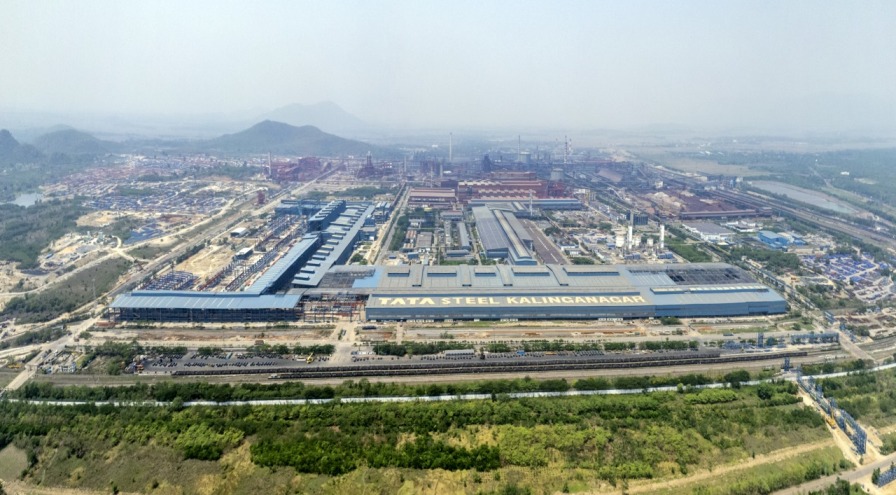
Commissioned in 2015 with an initial steelmaking capacity of 3 million
tonnes per annum (MTPA), the integrated steel complex has expanded its capacity
to 8 MTPA through investments exceeding Rs 50,000 crore, marking the largest
organic capacity expansion in Tata Steel's history.
Equipped with India's largest blast furnace, the facility manufactures
more than 100 grades of high-quality steel, contributing to the country's
self-reliance in strategic industrial materials and reducing dependence on
imports. Its growth also reflects the changing industrial profile of Odisha,
which has evolved from primarily supplying raw materials to becoming one of
Tata Steel's largest investment destinations.
Over the years, the company's cumulative investments in Odisha have
crossed Rs 1 lakh crore, reinforcing the state's position as a major centre for
steel production and allied industries.
"Over the past 11 years, Tata Steel Kalinganagar has set new
benchmarks in world-class steelmaking through operational excellence,
technological innovation and sustainability. As we enter the next phase of
growth, our focus remains on strengthening India's manufacturing capabilities,
creating opportunities for the region and driving Odisha's industrial progress
while creating lasting value for our communities," Uttam Singh, Vice
President – Operations, Tata Steel Kalinganagar, said.
The company has now embarked on another phase of expansion and
modernisation, with strategic projects worth Rs 9,067 crore recently
inaugurated or taken up for foundation laying by Odisha Chief Minister Mohan
Charan Majhi. The projects are expected to generate around 10,500 direct and
indirect employment opportunities while strengthening downstream manufacturing,
raw material logistics and green infrastructure.
A major component of the expansion is the newly inaugurated facilities at
the Cold Rolling Mill complex, comprising two Continuous Galvanising Lines
(CGLs) with a combined capacity of 1 MTPA and a Continuous Annealing Line
(CAL).
The advanced facilities are equipped with third-generation air-knives,
magnetic stabilisers, oxidation chambers and specialised secondary coating
technologies, enabling precision manufacturing of coated Advanced High Strength
Steels (AHSS). The products are expected to cater to growing demand from the
automotive and consumer appliance sectors, where lightweight, high-strength and
durable steel is increasingly gaining importance.
In another significant infrastructure initiative, Phase I of the 7 MTPA
underground slurry pipeline project will facilitate transportation of iron ore
fines from Tata Steel's Kalamang mines to Kalinganagar. The initiative is
expected to ease pressure on existing road and rail infrastructure, improve
logistics efficiency and lower carbon emissions associated with conventional
transportation.
The commissioning of Linde India Limited's 2x1,800 tonnes-per-day
cryogenic Air Separation Unit (ASU) further strengthens the plant's industrial
infrastructure. Supported by renewable energy agreements, the facility will
supply essential industrial gases, including oxygen, nitrogen and argon, for
steelmaking operations, while retaining the capability to provide medical
oxygen during emergencies.
TSK's growth has also been accompanied by a strong emphasis on digital
transformation and sustainable manufacturing. The plant has earned recognition
from the World Economic Forum as an Advanced 4th Industrial Revolution
Lighthouse, becoming the first facility in India and the second globally to
receive the distinction.
Its sustainability framework includes maintaining 33 per cent green
cover, adopting Zero Effluent Discharge operations and achieving 100 per cent
utilisation of solid waste. In 2024, the facility received ResponsibleSteel
certification, recognising its commitment to responsible production and ethical
sourcing practices.
Beyond industrial performance, the steelmaker has sought to promote
diversity and inclusion within its workforce. Around 30 per cent of its
employees comprise women, Persons with Disabilities, members of the LGBTIQA+
community and individuals from Affirmative Action communities, reflecting its
efforts to build a more inclusive workplace.
The company's community development initiatives, implemented in partnership with Tata Steel Foundation, have positively impacted more than 14 lakh people over the past decade. The interventions span education, healthcare and livelihood generation, including support for Loyola School, healthcare services through the 100-bed multispecialty Tata Steel Medica Hospital and sustainable livelihood opportunities for more than 100 local women artisans through Navjeevan Cooperative Ltd.
As Tata Steel Kalinganagar completes 11 years of operations, its expanding manufacturing capabilities, investments in advanced technologies and focus on environmental responsibility underline the growing role of Odisha in India's industrial development.