
THEBUSINESSBYTES BUREAU
BHUBANESWAR, MAY 26, 2026
Despite growing public enthusiasm and official claims of rapid progress
under the PM Surya Ghar: Muft Bijli
Yojana, a cloud of unanswered questions around installation quality,
billing transparency, and vendor accountability is emerging in Odisha, raising
concerns over ground-level implementation of the ambitious rooftop solar
initiative.
In an effort to present a balanced perspective on reported irregularities
linked to domestic solar power installations, confusion over electricity
billing adjustments, and concerns regarding the quality of work carried out by
vendors, detailed queries were sent on May 22, 2026 to the Corporate
Communication Department of Tata Power and its public relations agency Adfactors
PR. The communication sought clarity on key aspects of the scheme’s
execution, including installation standards, material quality benchmarks,
pricing structure, inspection mechanisms, warranty accountability, and billing
logic for surplus solar generation.
The queries specifically attempted to understand whether installation and
associated civil works under rooftop solar systems follow uniform guidelines or
are left largely to vendor discretion; whether there are prescribed quality
standards for components such as panels, wiring, and inverters; and whether
installation charges are regulated or determined independently by vendors.
Further questions also sought clarity on whether any third-party inspection
system exists to validate installations before commissioning.
Other concerns raised included the enforcement mechanism behind the
widely publicised 25-year solar panel guarantee, and who is responsible for
honouring it in case of defects or performance failures. Clarifications were
also sought on how electricity billing is calculated when consumer generation
exceeds or falls short of consumption, and whether surplus units carry forward
or lapse at the end of the financial year. Importantly, questions were also
raised on the claim of “zero electricity bills” being received by consumers,
despite the continued applicability of fixed monthly charges and electricity
duty.
However, despite the detailed communication, no response was received
from either Tata Power or Adfactors PR. A reminder sent on May 26, 2026 also
went unanswered. The absence of any clarification, even after repeated
outreach, has intensified concerns over transparency, grievance redressal
mechanisms, and the clarity of consumer-facing information under the scheme.
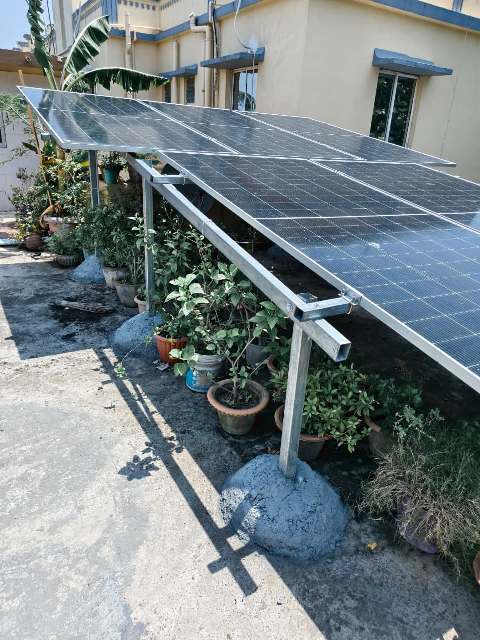 While official communications and promotional releases frequently
highlight strong uptake of rooftop solar installations and showcase successful
implementation of the programme in Odisha, ground-level accounts suggest a more
complex reality. A photograph shared by an aggrieved consumer, accessed in
connection with this report, presents a contrasting narrative of delays,
incomplete civil works, and dissatisfaction with installation quality.
While official communications and promotional releases frequently
highlight strong uptake of rooftop solar installations and showcase successful
implementation of the programme in Odisha, ground-level accounts suggest a more
complex reality. A photograph shared by an aggrieved consumer, accessed in
connection with this report, presents a contrasting narrative of delays,
incomplete civil works, and dissatisfaction with installation quality.
According to the consumer, the vendor — identified as Solar One — had
initially assured completion of the rooftop solar setup within two days.
However, the installation reportedly took nearly a month to become operational,
with several components of civil work either left incomplete or executed below
expected standards. The consumer further alleged that the quality of work did
not align with specifications and assurances publicly highlighted during
promotional briefings.
The grievance, as shared, was also escalated to the concerned authorities
soon after issues surfaced, with repeated requests for intervention as the
vendor allegedly delayed rectification. However, as of the time of reporting,
no effective resolution had been provided, adding to concerns about responsiveness
and accountability within the implementation framework.
Such incidents, if indicative of wider patterns, raise pressing questions about execution oversight, vendor monitoring, and consumer protection safeguards under the scheme. They also bring into focus the gap between policy announcements and on-ground delivery, particularly in a programme that aims to significantly expand household-level renewable energy adoption.
With the target of installing 3 lakh rooftop solar units in Odisha by 2027 under PM Surya Ghar: Muft Bijli Yojana, these unresolved concerns could pose challenges to both consumer confidence and implementation momentum. As the programme scales up, the absence of clear responses to basic operational questions risks deepening uncertainty among beneficiaries and stakeholders alike, leaving critical aspects of transparency and accountability under scrutiny.