THEBUSINESSBYTES
BUREAU
NEW DELHI,
FEBRUARY 1, 2026
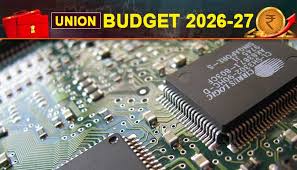
The Union Budget 2026-27 has laid out
an ambitious and forward-looking roadmap to accelerate India’s electronics and
information technology sectors, with a strong thrust on semiconductor
self-reliance, manufacturing expansion and long-awaited tax certainty for IT
and ITeS companies. Presenting the Budget in Parliament, Finance Minister
Nirmala Sitharaman announced a series of measures aimed at strengthening
India’s position as a global technology and digital services powerhouse.
A major highlight of the Budget is the
launch of India Semiconductor Mission (ISM) 2.0, which will build on the
foundation laid by ISM 1.0 and focus on developing semiconductor equipment and
materials, designing full-stack Indian intellectual property, and reinforcing
resilient supply chains. Emphasising an industry-led approach, ISM 2.0 will
promote advanced research and specialised training centres to nurture
cutting-edge technologies and a skilled workforce. An allocation of ₹1,000 crore has been earmarked for the
mission in FY 2026–27, signalling the government’s sustained commitment to the
strategic sector.
Riding on strong investor confidence,
the Budget also proposes a substantial increase in the outlay for the
Electronics Components Manufacturing Scheme to ₹40,000
crore. Launched in April 2025, the scheme has already attracted investment
commitments exceeding twice its initial target, underlining India’s growing
attractiveness as an electronics manufacturing hub.
In a significant relief for the IT and
ITeS industry, the Budget introduces reformed safe harbour provisions to ensure
greater tax certainty. Software development, IT-enabled services, knowledge
process outsourcing and contract R&D will now be classified under a single
category of ‘Information Technology Services’, with a uniform safe harbour
margin of 15.5 per cent. The eligibility threshold has been raised sharply to ₹2,000 crore, while the approval process will be fully
automated and rule-based, allowing companies to opt in for up to five consecutive
years.
To further streamline dispute
resolution, the Budget proposes fast-tracking unilateral Advance Pricing
Agreements for IT services, with an endeavour to conclude cases within two
years. Modified return facilities will also be extended to associated enterprises
entering into APAs.
Recognising data centres as critical
digital infrastructure, the Budget offers a tax holiday until 2047 for foreign
cloud service providers using data centres located in India, subject to serving
Indian customers through Indian reseller entities. Additionally, a safe harbour
margin of 15 per cent on cost has been proposed for related-party data centre
services.
The Budget also announces the
formation of a high-powered ‘Education to Employment and Enterprise’ Standing
Committee to assess the impact of emerging technologies such as artificial
intelligence on jobs and skills, reinforcing the services sector as a key
pillar of the Viksit Bharat vision.