
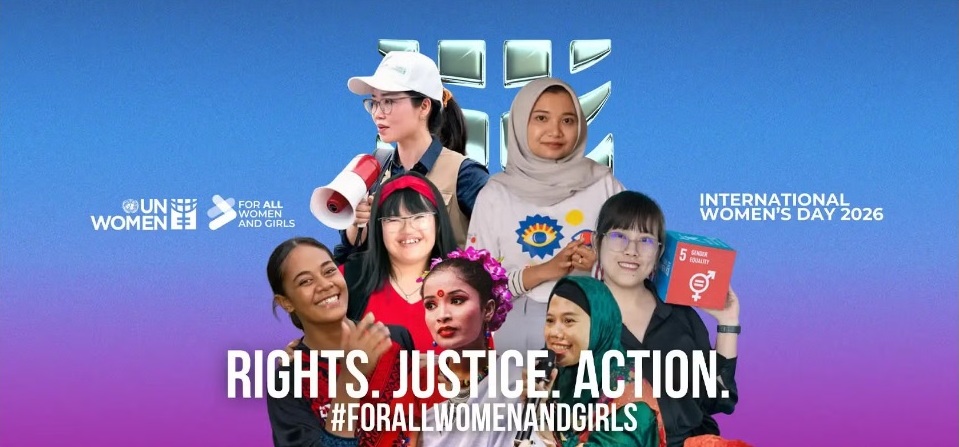
Every woman should receive the respect she
deserves, her voice should be heard, her dignity protected, and her
individuality celebrated, writes Priyabrat Biswal
“Yatra pujyate nārī tatra ramyante
devatāḥ” — where women are revered, there the Gods rejoice. This ancient
Sanskrit wisdom is often quoted in speeches, scriptures and ceremonial
occasions. Yet the reality of our society frequently tells a different story.
On the occasion of International Women’s Day, this timeless line reminds us not
only of what we proclaim about women, but also of how far we still must go to
truly live by it.
In
a society still burdened by centuries-old patriarchal attitudes, a woman is
often confined to a role rather than recognised as an independent individual.
Her identity is rarely her own. She is someone’s daughter, someone’s sister,
someone’s wife or someone’s mother — seldom simply herself. The constitutional
rights guaranteed to her and the promises of equality are loudly reiterated in
conferences, policy documents and celebratory speeches. Yet in everyday life,
these assurances often remain distant aspirations rather than lived realities.
The
modern world takes pride in its progress. Globalisation has opened doors to
education, careers and economic independence for millions of women. Today,
women excel as scientists, entrepreneurs, soldiers, artists and political leaders.
Despite these remarkable achievements, however, the deeper transformation — the
transformation of mindset — continues to lag behind. The barriers that restrict
women are not always visible anymore, but they survive in subtle prejudices,
inherited attitudes and cultural expectations that quietly shape behaviour. In
many ways, society has modernised its systems, but not its thinking.
 It
is time to confront this contradiction. Genuine empowerment of women will not
emerge merely from laws, schemes or inspiring slogans. It will arise from a
collective shift in how society perceives women — not as dependents or
possessions, but as equal partners in shaping the future.
It
is time to confront this contradiction. Genuine empowerment of women will not
emerge merely from laws, schemes or inspiring slogans. It will arise from a
collective shift in how society perceives women — not as dependents or
possessions, but as equal partners in shaping the future.
A
woman adorned with a nose-pin, anklets, alata
colouring her feet crimson and the gentle fragrance of perfume should never be
reduced to an object of display or entertainment. Her grace and beauty are
expressions of culture and individuality, not symbols of ownership. She is not
an entity meant for utilisation, but a companion in cooperation and
participation — an equal contributor in every sphere of life, from the
household to the highest corridors of decision-making.
Yet
the stories that frequently reach the headlines remind us how distant we remain
from this ideal. Too often, women who raise their voices against injustice are
forced to pay an unbearable price. Let the Soumyashrees of our society never
feel compelled to resort to self-immolation to protest harassment and
humiliation. Let the Babinas never become victims of brutal crimes for daring
to resist lecherous and immoral men. Let the Sanchitas never have to sit in
protest merely to seek recognition of the fatherhood of their child.
These
names may represent individuals, but they symbolise the struggles of countless
women whose voices rarely find space in headlines. Their experiences compel
society to confront an uncomfortable truth: genuine respect for women cannot
coexist with silence in the face of injustice.
The
transformation we seek must begin at the very foundation of society. Every
child should be born into a world where relationships are defined by love,
responsibility and dignity — not deception, coercion or abandonment. A society
that truly values women will ensure that every daughter grows up with
confidence, every sister with security, every wife with partnership and every
mother with dignity.
More
importantly, such a society will recognise that a woman’s worth does not lie
solely in these roles. She is an individual in her own right — with dreams,
aspirations, talents and the freedom to shape her own destiny.
A
woman is often described as second only to God because she possesses the
profound power to create life. Yet reverence must go far beyond poetic
expressions. True respect is not reflected in rituals or symbolic praise, but
in everyday actions — in equal opportunities, in safety, in dignity and in the
freedom to live without fear.
When
a society truly honours its women, it transforms itself. Families grow
stronger, communities become more compassionate and nations progress with
greater harmony and creativity. The empowerment of women is therefore not
merely a social issue; it is the very foundation of sustainable progress.
As
the world observes International Women’s Day, the occasion should serve not
only as a celebration but also as a moment of introspection. It is a time to
ask whether our actions truly match our ideals, and whether our respect for
women is genuine or merely ceremonial.
The
hope for the future is simple yet profound: that every woman receives the
respect she deserves, that her voice is heard, her dignity protected and her
individuality celebrated. In such a society, women will never again be seen as
problems to be managed, but as revered and invaluable pillars of human
progress.
For
when women are truly honoured, the ancient wisdom becomes a living reality —
and humanity itself becomes richer, kinder and more divine.