
THEBUSINESSBYTES
BUREAU
BHUBANESWAR,
SEPTEMBER 24, 2026
The Asian Development
Bank (ADB) and the Odisha government have joined hands to develop an integrated
and sustainable urban mobility framework for the Bhubaneswar-Katak-Puri-Paradip
Economic Region (BKPPER), with a focus on transforming public bus services, strengthening
institutional mechanisms and improving regional connectivity.
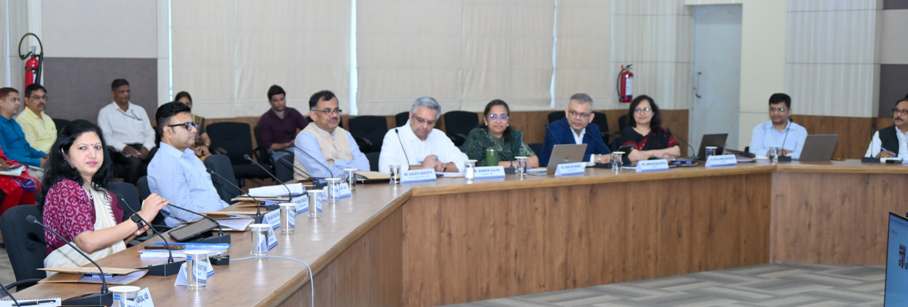
An inception workshop
on the “Preparation of Sustainable Urban Mobility Transition Plans for Odisha”
was organised by the Housing and Urban Development Department in collaboration
with the ADB at Kharavela Bhawan here on Thursday.
The initiative seeks
to prepare a comprehensive mobility framework for BKPPER covering regional
mobility planning, transformation of public bus services and institutional
strengthening for sustainable urban transport. The exercise is aligned with the
long-term aspirations outlined in Odisha Vision 2036 and Vision 2047.
During the workshop,
the ADB team presented key findings and recommendations from its Inception
Report. Detailed discussions were held on the Comprehensive Regional Mobility
Plan for BKPPER, the Bus Service Transformation Roadmap and the Draft Odisha
Transit-Oriented Development Policy, with senior officials and stakeholders
providing inputs.
Setting the context
for the exercise, Housing and Urban Development Department Additional Chief
Secretary Usha Padhee said the initiative should go beyond merely preparing a
document and should result in an implementable framework developed through
partnership among all stakeholders.
Sharing an experience
from her early days in service in a remote part of Odisha, Padhee highlighted
how inadequate mobility can limit people's access to essential services and
economic opportunities.
“Mobility is closely linked with access,
productivity and quality of life. As Odisha enters a significant phase of
urbanisation, we need forward-looking and coordinated planning,” she said.
“Odisha is in a position where we can put the
right systems in place as we move towards the next level of urbanisation,”
Padhee said, stressing the opportunity to adopt sustainable mobility principles
at an early stage and avoid legacy challenges associated with unplanned urban
growth.
ADB Transport Sector
Office Director Kanzo Nakai highlighted the close link between mobility, urban
productivity and economic development.
Referring to an ADB
study covering six major metropolitan cities, Nakai said commuters in some
cities spend up to four hours a day travelling, leading to significant
productivity losses.
He said Odisha's
current stage of urbanisation offers an opportunity to avoid some of the
car-centric development patterns and infrastructure challenges experienced by
older metropolitan areas and move towards more sustainable and integrated
mobility systems.
The workshop was
attended by Transport Commissioner Amitav Thakur, Director, Municipal
Administration, Arindam Dakua, CRUT Managing Director Md Siddique Alam, IDCO
Managing Director D Prasant Reddy and BDA Vice-Chairman Chanchal Rana.
Senior officials from
the Works Department, OSRTC, Police, IDCO and KDA, besides the Collectors of
Jagatsinghpur, Cuttack, Puri and Khordha districts, also participated in the
deliberations, with several stakeholders joining online.
From the ADB and consultant team, Senior Transport Advisor Saugata Dasgupta, Consultant Bankim Kalra, Consultant Zohra Mutabanna, Ankush Malhotra and Pritha Ghosh Chatterjee of SYSTRA, among others, participated in the workshop.
The deliberations are expected to contribute to the preparation of an integrated mobility transition framework aimed at promoting efficient, inclusive, connected and sustainable urban transport in Odisha, with BKPPER emerging as a key focus region.