THEBUSINESSBYTES
BUREAU
BHUBANESWAR,
SEPTEMBER 24, 2026
Odisha will pilot an
Integrated Cluster Development Initiative (ICDI) in Puri and Ganjam districts
to accelerate economic growth and raise farmers’ incomes by integrating
agriculture, horticulture, fisheries and dairy sectors, officials said on Thursday.
The decision was
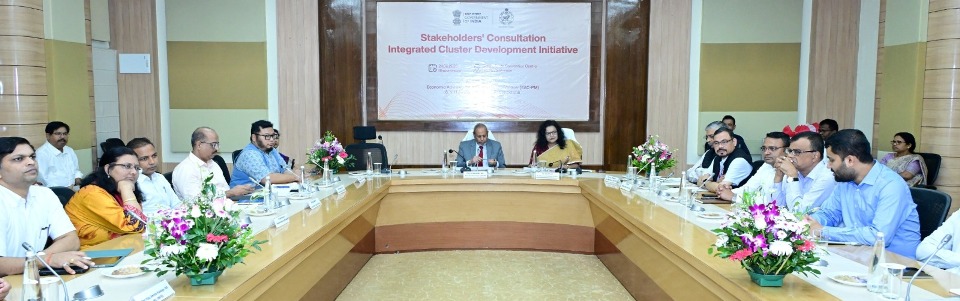
taken at the first ICDI Consultation Workshop held at Lok Seva Bhawan here,
which deliberated on the potential for cluster-based development,
identification of priority areas, removal of bottlenecks, institutional
coordination and a future action plan.
The workshop was
jointly organised by the Economic Advisory Council to the Prime Minister
(EAC-PM), NITI Aayog and the Odisha Planning and Convergence Department.
EAC-PM Chairman Prof
S Mahendra Dev, Chief Secretary Anu Garg, NITI Aayog Programme Director
(Economic and Financial) Dr Prabhakar Vastu, EAC-PM Joint Secretary Dr K K
Tripathi, Agriculture and Farmers’ Empowerment Commissioner-cum-Secretary
Sachin Ramchandra Yadav, Fisheries and Animal Resources Development Department
Commissioner-cum-Secretary Prem Chandra Chaudhary, IFPRI Senior Researcher Dr
Sudha Narayanan and senior officials from various departments attended the
workshop.
In the inaugural
session, Dev stressed the need to move from a conventional "productivity
approach" to an "agricultural livelihood approach" aimed at
enhancing incomes from agricultural produce.
He emphasised greater
post-harvest value addition, upliftment of small and marginal farmers and
strengthening Farmer Producer Organisations (FPOs) and cooperatives through
convergence of various schemes and institutions.
Odisha, being an
eastern state, has the potential to set an example by integrating agriculture,
horticulture, fisheries and tourism, Dev said.
The ICDI is proposed
to begin as a pilot initiative in Puri and Ganjam districts before being
expanded to Angul, Dhenkanal, Sambalpur and Deogarh. Collectors of the
districts participated in the workshop.
Chief Secretary Anu
Garg said a developed Odisha would make a significant contribution to the
larger goal of Viksit Bharat and stressed the need for inclusive and balanced
regional development.
She called for
strengthening the entire value chain from production to markets by linking farm
produce with value addition, processing and marketing.
Connecting regional
produce with larger domestic and international markets and greater involvement
of women self-help groups (SHGs) would provide fresh momentum to the rural
economy, Garg said.
She also stressed the
need for stronger coordination among government departments, district
administrations, research and financial institutions, cooperatives, the private
sector and local entrepreneurs for successful implementation of the cluster
initiative.
Agriculture and
Farmers’ Empowerment Secretary Sachin Yadav made a detailed presentation on the
state’s horticulture sector, highlighting Odisha’s emergence as a major
producer of fruits and vegetables.
Horticulture crops
are cultivated over 16.53 lakh hectares in the state, with annual vegetable
production of around 1.1 million metric tonnes and nearly 3.83 lakh farmers
engaged in 95 cluster activities, he said.
Yadav said the
proposed clusters in Puri and Ganjam would focus on crops and products such as
cashew, mango, vegetables and spices, with emphasis on collection, cold
storage, processing and marketing linkages.
He also outlined a
roadmap for strengthening FPOs and connecting Odisha’s farm produce with
national and international markets.
Fisheries and Animal
Resources Development Secretary Prem Chandra Chaudhary outlined strategies for
boosting incomes in the fisheries and dairy sectors.
The fisheries
strategy includes initiatives such as the Deep Sea Fishing Mission, Shrimp
Mission, reservoir fish farming, cold-chain infrastructure, processing and
strengthening of FPOs.
In the dairy sector, the focus would be on improving productivity, animal health, fodder availability, milk collection, processing and cold-storage infrastructure.
The workshop underlined the need for an integrated, cluster-based approach to address gaps across the farm-to-market value chain and create sustainable livelihood opportunities for farmers and rural communities in Odisha.