
THEBUSINESSBYTES
BUREAU
BHUBANESWAR,
JUNE 6, 2026
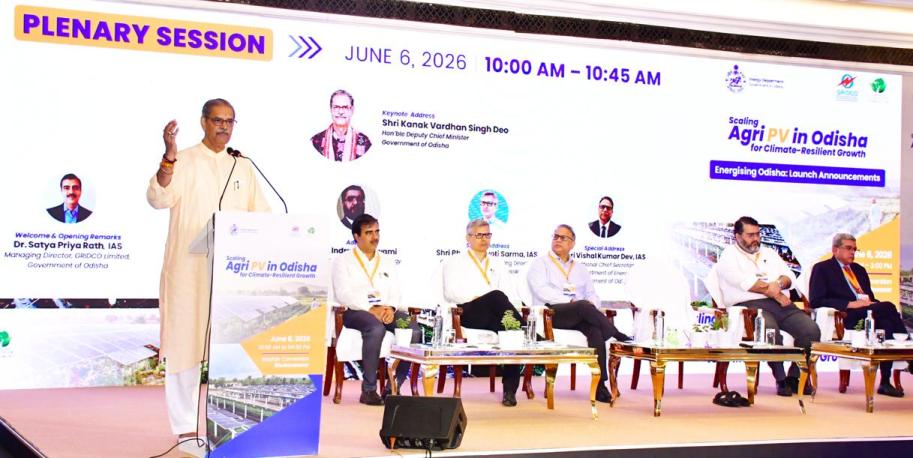
“AgriPV has the potential to significantly
enhance farmers’ incomes while accelerating Odisha’s clean energy transition,”
said Deputy Chief Minister Kanak Vardhan Singh Deo while inaugurating a
high-level workshop on “Scaling AgriPV in Odisha for Climate-Resilient Growth”
in Bhubaneswar on Saturday. Emphasizing the state's vision of a
climate-resilient and farmer-centric development model under Viksit Odisha, he
said the integration of agriculture and solar power generation can create
sustainable economic opportunities for rural communities.
 The workshop brought
together policymakers, energy experts, renewable energy developers, and
representatives from the agriculture sector to deliberate on strategies for
expanding Agrivoltaics (AgriPV) across Odisha.
The workshop brought
together policymakers, energy experts, renewable energy developers, and
representatives from the agriculture sector to deliberate on strategies for
expanding Agrivoltaics (AgriPV) across Odisha.
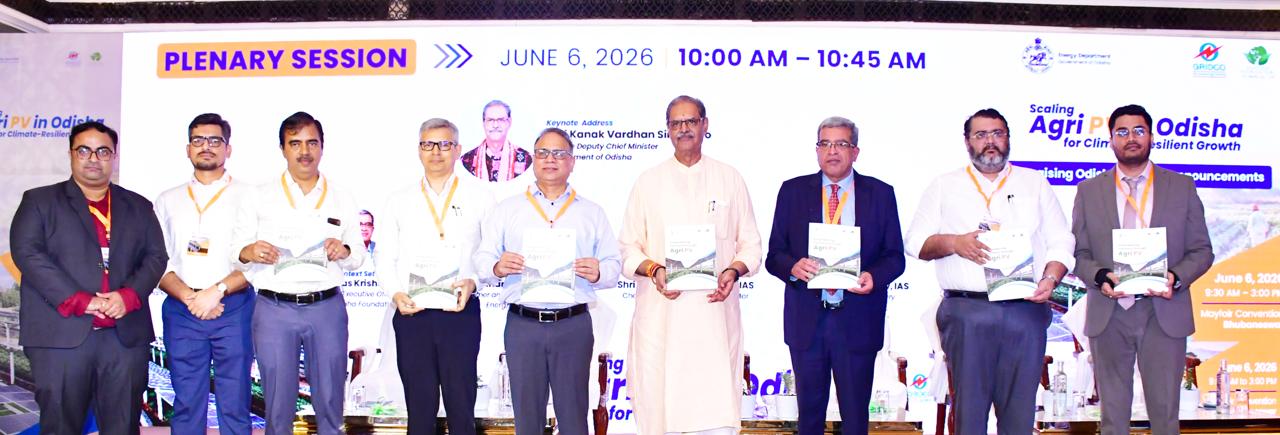
On the occasion,
several landmark initiatives aimed at strengthening Odisha’s clean energy
ecosystem were unveiled. These included the report “Empowering Farmers through
AgriPV”, jointly prepared by GRIDCO Ltd. and Vasudha Foundation, the launch of
the Odisha State Energy Action Plan (OSEAP) web platform for long-term energy
planning, and the inauguration of two 150-metre Wind Resource Assessment Masts
at Sonapur and Gopalpur in Ganjam district.
A major highlight of
the event was the signing of Battery Energy Storage Purchase Agreements for a
125 MW / 500 MWh Battery Energy Storage System (BESS) project to be implemented
across six substations in the state. The initiative is expected to enhance grid
stability and facilitate the integration of renewable energy into Odisha’s
power network.
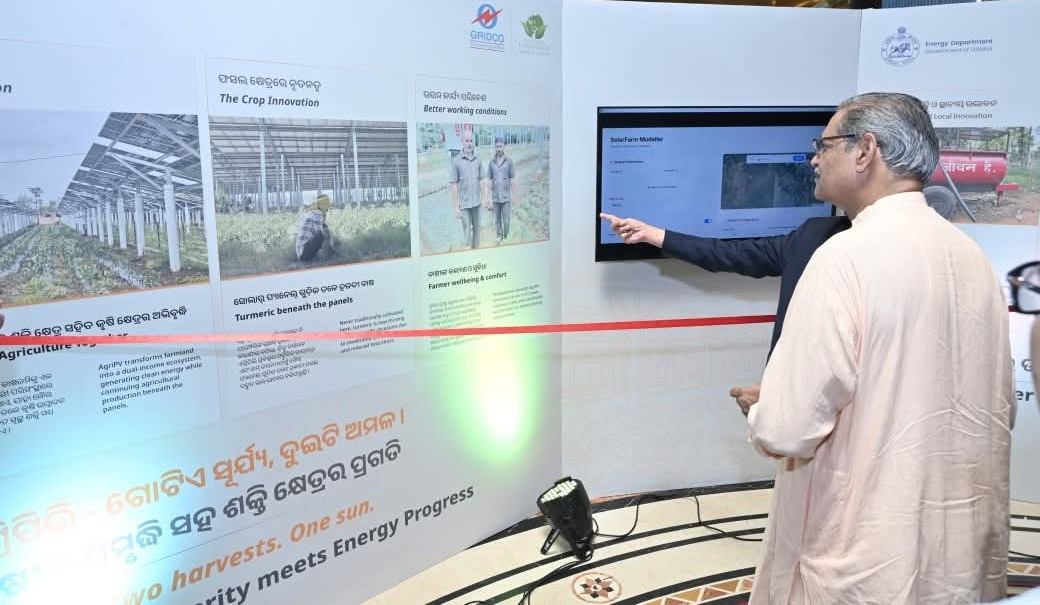 Addressing the
gathering, Vishal Kumar Dev, Additional Chief Secretary, Energy Department,
underscored Odisha’s comprehensive approach towards energy transition. He said
the state is strategically combining renewable energy generation, energy
storage solutions, and data-driven planning to meet future power demands while
ensuring sustainability.
Addressing the
gathering, Vishal Kumar Dev, Additional Chief Secretary, Energy Department,
underscored Odisha’s comprehensive approach towards energy transition. He said
the state is strategically combining renewable energy generation, energy
storage solutions, and data-driven planning to meet future power demands while
ensuring sustainability.
Dr. Satyapriya Rath, Managing Director of GRIDCO, highlighted the transformative potential of Agrivoltaics in rural Odisha. He noted that the convergence of AgriPV, battery storage, and advanced energy planning can drive inclusive economic growth, strengthen energy security, and improve livelihoods in farming communities.
The workshop concluded with extensive technical discussions focusing on policy frameworks, financing mechanisms, and implementation strategies required to scale AgriPV adoption across the state. Participants expressed confidence that Odisha’s integrated approach to renewable energy and agriculture could emerge as a model for climate-resilient development in India.