THEBUSINESSBYTES BUREAU
BERHAMPUR, FEBRUARY 17, 2026
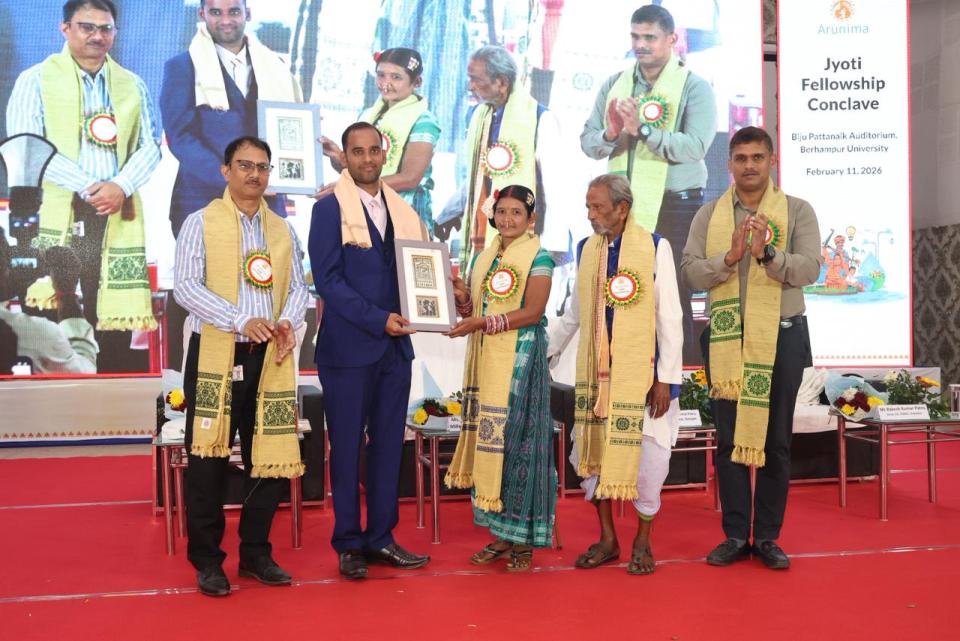
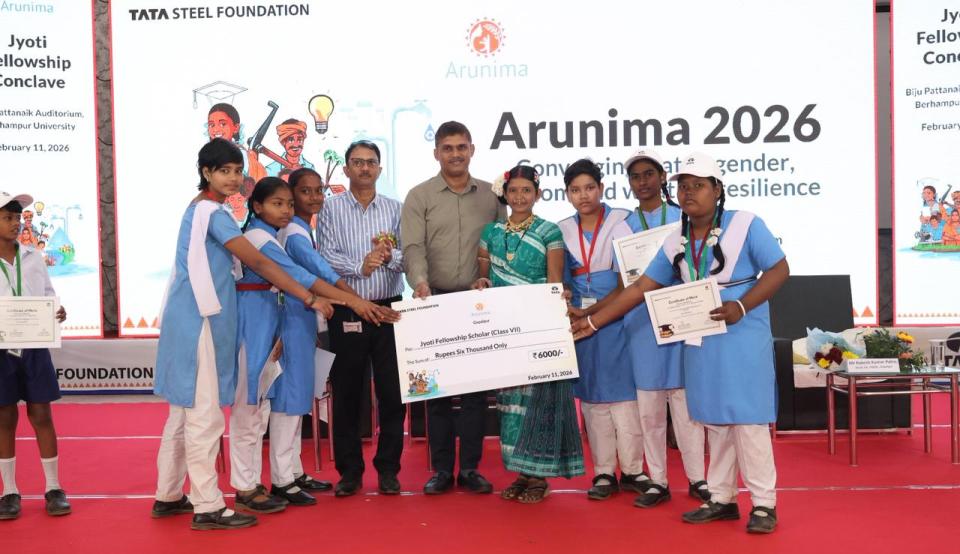
A total of 633 meritorious students from economically weaker Scheduled
Caste families were awarded the Tata Steel Foundation’s Jyoti Fellowship at the
eighth edition of “Arunima 2026”, held at Berhampur University. Organised by
the Foundation’s Gopalpur Unit, the two-day flagship community initiative
brought together students, women leaders, farmers, domain experts and public
representatives on a common platform to advance inclusive development.
The conclave was graced by Krushna Chandra Nayak, MLA of Chatrapur; Sarmistha
Pradhan, Chairperson of the Notified Area Council, Chatrapur; Padma Shri
awardees Patayat Sahu, Dr. Sabarmatee and Simanchal Patra; Dr. Biswa Ranjan
Pradhan, Project Scientist at IIT Bhubaneswar; Dr. Gobinda Chandra Acharya,
Principal Scientist at the Central Horticultural Experiment Station,
Bhubaneswar; Bharat Bhusan Sahoo, District Fisheries Officer, Ganjam; Raimati
Ghiuria, widely known as the Millet Queen from Koraput; Retd. Prof. Ratna Sahu;
Smt. Sandhyarani Muni, Director of Munico Food Pvt. Ltd.; Rakesh Kumar Patro,
Head – Corporate Services, Tata Steel Special Economic Zone Limited (TSSEZL);
and Dr. Jayant Kumar Tripathy, Unit Lead (TSF) – Gopalpur.
 Designed as an integrated platform to promote education, youth
leadership, women’s empowerment and sustainable livelihood development across
TSF’s operational villages, the conclave engaged 538 farmers from the Gopalpur
region in focused discussions on diversified, climate-resilient and
market-linked agricultural practices. Around 345 women leaders from the
Foundation’s operational areas also participated, deliberating on women’s
leadership, gender mainstreaming, entrepreneurship and strategies for
strengthening dignified and sustainable livelihoods.
Designed as an integrated platform to promote education, youth
leadership, women’s empowerment and sustainable livelihood development across
TSF’s operational villages, the conclave engaged 538 farmers from the Gopalpur
region in focused discussions on diversified, climate-resilient and
market-linked agricultural practices. Around 345 women leaders from the
Foundation’s operational areas also participated, deliberating on women’s
leadership, gender mainstreaming, entrepreneurship and strategies for
strengthening dignified and sustainable livelihoods.
On the occasion, five Youth Change Makers were felicitated for their
grassroots contributions to preventing child marriage, promoting menstrual
hygiene awareness and supporting adolescent education, while 30 progressive
farmers were honoured for enhancing household incomes through agriculture and
allied activities. A key highlight of the event was the launch of Information,
Education and Communication (IEC) materials on organic input production and
sustainable farming, aimed at improving soil health, reducing chemical
dependency and enhancing farm profitability. The technical sessions covered
natural farming, herbal plantation, probiotic crop practices, natural resource
management and fisheries schemes, reinforcing the conclave’s focus on holistic
and sustainable rural transformation.