THEBUSINESSBYTES
BUREAU
BHUBANESWAR,
MARCH 10, 2026
The Odisha
Government’s Budget 2026–27 has unveiled the ₹220-crore DALKHAI Initiative (Dignified Access to
Livelihood, Knowledge, Health and Allied Infrastructure), a targeted
intervention aimed at addressing distress migration and strengthening
livelihoods across Western Odisha. While the initiative
focuses on long-term investments in skills, rural enterprises and social
infrastructure, policy experts and industry observers say the immediate
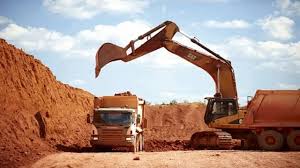
operationalisation of local bauxite mining in the region could serve as the
fastest pathway to large-scale employment generation via the existing alumina
refinery in the Kalahandi region.
The state has
announced a record capital outlay of ₹72,100 crore — equivalent to 6.5 per cent of Odisha’s
Gross State Domestic Product — signalling an ambitious push
toward industrial and infrastructure-led growth. Within this strategy, the
mineral-rich districts of Koraput, Kalahandi and Rayagada, which together hold
more than 55% of India’s bauxite reserves, are increasingly being positioned as
the cornerstone of Western Odisha’s economic revival.
“Mining contributes to economic development in
any region. If a country wants economic progress, mining activities are
essential. If we need steel, iron ore must be mined. If we need aluminium,
bauxite must be mined locally. Coal is still required for energy until viable
alternatives become widely available. Mining also generates significant revenue
for states. For example, during the COVID period in 2021–22, Odisha auctioned
several mines and increased mining revenue by about 365 per cent,
reaching nearly ₹50,000
crore. This revenue helped the state manage the pandemic and build health
infrastructure when other revenue sources were limited. Part of mining revenue
also returns to local communities through mechanisms such as
the District Mineral Foundation (DMF), which supports socioeconomic development
in mining-affected areas,” Debi Dutta Biswal, former Director of Mines and
Principal Chief Conservator of Forests, Odisha said.
 The urgency of local
employment has become increasingly evident. Data presented in the Odisha
Assembly in December 2025 revealed that 518 migrant workers from the state died
while working outside Odisha over the past five years. High-migration districts
such as Kalahandi and Rayagada continue to see thousands of young workers leave
annually for low-paid and often hazardous work in brick kilns and construction
sites across other states.
The urgency of local
employment has become increasingly evident. Data presented in the Odisha
Assembly in December 2025 revealed that 518 migrant workers from the state died
while working outside Odisha over the past five years. High-migration districts
such as Kalahandi and Rayagada continue to see thousands of young workers leave
annually for low-paid and often hazardous work in brick kilns and construction
sites across other states.
Regional economists
now argue that a “mining-first” local development strategy could complement
welfare initiatives such as DALKHAI by generating immediate income
opportunities. Fast-tracking projects, including the proposed Kalahandi bauxite
mines, would not only create direct mining jobs but also stimulate logistics,
infrastructure development and ancillary industries in the surrounding regions.
Such industrial momentum could also support the newly announced Jeypore–Koraput–Sunabeda economic cluster, creating a localized manufacturing and processing corridor that retains skilled and semi-skilled labour within the state.
If executed with robust environmental safeguards and strong community participation, industry observers believe the local production of bauxite through responsible mining could transform Western Odisha into a strategic aluminium and industrial hub — while addressing the persistent challenge of distress migration and creating sustainable economic opportunities for local communities.