THEBUSINESSBYTES
BUREAU
BHUBANESWAR,
MARCH 16, 2026
In a major political
development, the Bharatiya Janata Party (BJP) clinched three out of the four
Rajya Sabha seats from Odisha in the biennial elections held on Monday, marking
the state’s first contested Upper House polls in 12 years and underscoring the
party’s growing dominance in the state’s political landscape.
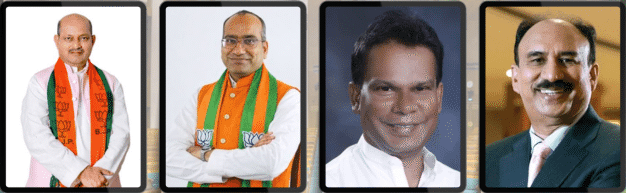
The winners include
Manmohan Samal, the BJP’s Odisha state president, sitting Rajya Sabha member Sujeet
Kumar, and BJP-backed independent candidate and former Union minister Dilip
Ray. The fourth seat went to Santrupt Mishra, the nominee of the Biju Janata
Dal (BJD).
 The BJP, which enjoys
a commanding majority in the 147-member Odisha Assembly with 79 MLAs along with
independent support, secured the first two seats comfortably for its official
candidates. The real battle, however, unfolded for the remaining two seats,
where cross-voting by opposition legislators played a decisive role.
The BJP, which enjoys
a commanding majority in the 147-member Odisha Assembly with 79 MLAs along with
independent support, secured the first two seats comfortably for its official
candidates. The real battle, however, unfolded for the remaining two seats,
where cross-voting by opposition legislators played a decisive role.
According to reports,
as many as 11 MLAs — six from the opposition BJD, two suspended BJD members,
and three from the Indian National Congress — cast their votes in favour of
BJP-backed independent Dilip Ray. The unexpected rebellion ensured Ray’s
victory over the joint opposition nominee, eminent urologist Dr. Datteshwar
Hota, who had been fielded by the BJD, Congress and Communist Party of India
(Marxist) in a bid to prevent a BJP sweep.
BJD candidate
Santrupt Mishra managed to secure his berth with the backing of the party’s
remaining loyal legislators, gathering the required preference votes to enter
the Upper House.
The election process
witnessed high political drama, including allegations of horse-trading levelled
by the opposition. Voting was briefly halted amid disputes over ballot papers,
and a minor scuffle between BJD and BJP MLAs was also reported inside the
Assembly premises during the proceedings.
The outcome further reflects the BJP’s strengthened hold over Odisha politics following its historic victory in the 2024 Assembly elections that ended the 24-year rule of the BJD led by Naveen Patnaik. The cross-voting episode has also exposed internal dissent within opposition ranks and hinted at possible strains in the BJD-Congress understanding.
The newly elected members will serve a six-year term in the Rajya Sabha beginning April 2026, a development that will further bolster the BJP’s numerical strength in Parliament’s Upper House.