THEBUSINESSBYTES
BUREAU
BHUBANESWAR,
MARCH 15, 2026
The Union Budget has
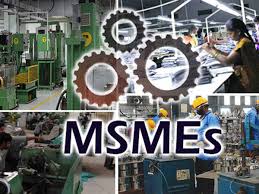
once again placed MSMEs at the moral centre of India’s growth narrative — credit
lines widened, procurement norms gently nudged, and technology funds refreshed
to encourage innovation and scale. The underlying premise is familiar and
widely accepted: small enterprises generate the bulk of employment; nurture
them well and prosperity inevitably follows. In Odisha, however, that
optimistic promise encounters a far more complex and uneven industrial
landscape.
The state hosts some
of the country’s most formidable industrial capacities — massive steel and
aluminium facilities that symbolise India’s heavy industrial strength. From
Tata Steel’s expansive operations in Kalinganagar to JSW Steel and Jindal Steel
& Power in Angul, and from ArcelorMittal Nippon Steel’s growing presence at
Paradip to Vedanta’s aluminium operations in Jharsuguda and Lanjigarh, Odisha’s
large-industry footprint is undeniable. Yet the MSME ecosystem that should
naturally flourish around such industrial giants remains unevenly distributed,
and in parts of western Odisha it appears almost skeletal.
 Policy frameworks
often assume a natural choreography between big and small industry. The arrival
of a mega plant is expected to spark a ripple effect — machine shops emerging
nearby, logistics firms expanding operations, welding units and fabrication
workshops springing up, alongside packaging vendors, transport contractors,
canteens, maintenance providers, and dozens of other invisible yet vital
trades. This ecosystem has taken shape in some parts of the country, but in the
Kalahandi–Rayagada belt the process has faltered. Here, the region’s industrial
aspirations were largely tied to a single pivot — the alumina refinery at
Lanjigarh.
Policy frameworks
often assume a natural choreography between big and small industry. The arrival
of a mega plant is expected to spark a ripple effect — machine shops emerging
nearby, logistics firms expanding operations, welding units and fabrication
workshops springing up, alongside packaging vendors, transport contractors,
canteens, maintenance providers, and dozens of other invisible yet vital
trades. This ecosystem has taken shape in some parts of the country, but in the
Kalahandi–Rayagada belt the process has faltered. Here, the region’s industrial
aspirations were largely tied to a single pivot — the alumina refinery at
Lanjigarh.
The refinery,
however, has spent much of its operational life grappling with a shortage of
bauxite, relying on distant and expensive sources of raw material. Running
below its designed capacity, the plant has struggled to offer the one
ingredient that MSMEs depend upon above all else — certainty of demand.
A drive through
nearby industrial estates reveals the consequences. Industrial sheds originally
built for equipment suppliers stand half-occupied or idle. Transport operators
who invested in fleets of tippers with bank loans now compete for sporadic
orders that barely cover operational costs. Young welders and technicians
trained in government skill development centres increasingly board night buses
bound for Telangana or other industrial states in search of steady work. A
generation that was expected to service a thriving aluminium corridor has
instead joined the familiar migration to brick kilns, construction sites, and
distant factories.
This, however, is not
the story of the entire state. In coastal Odisha, around facilities operated by
Tata Steel and Jindal Steel & Power, a modest but functioning vendor
culture has taken root. Maintenance contractors, machining workshops,
housekeeping agencies, and logistics providers have gradually built business
relationships with large industrial plants, forming the beginnings of a stable
MSME ecosystem. In western Odisha, by contrast, where only a single anchor
industry exists and that too operates under constraints of feedstock, the gap
remains strikingly visible.
Regional economists
estimate that a fully utilised Lanjigarh refinery could potentially support
between 800 and 1,000 MSMEs across sectors such as transport, fabrication,
chemicals, packaging, hospitality, and allied services. Such an ecosystem could
generate as many as 40,000 indirect jobs across surrounding districts. At
present levels of utilisation, however, barely a third of this potential appears
to be realised. The opportunity cost is reflected in half-empty industrial
parks, district credit-deposit ratios that languish near the bottom of state
tables, and the quiet frustration of first-generation entrepreneurs still
waiting for consistent industrial demand.
For many residents of
western Odisha, the promise once sounded different. The region was envisioned
as an aluminium-led growth corridor where large-scale industry would seed
hundreds of small enterprises and local livelihoods. That vision did not stall
because of a lack of policy schemes or financial incentives, but because of
something far more fundamental — the steady availability of raw material.
If the Union Budget’s
renewed emphasis on MSMEs is to translate into tangible economic activity in
this region, the first step may lie in ensuring that the anchor plant receives
the resources required to operate at full capacity. Only then can the ecosystem
of small businesses around it find the stability needed to grow.
Odisha already has
the industrial giants — Tata, Jindal, ArcelorMittal, and Vedanta. What it
continues to await is the bridge that connects their massive factory gates with
the aspirations of villages and small entrepreneurs beyond them. Until that
bridge is firmly built, development in this part of the state may remain a
story that began with great confidence and then, somewhere along the conveyor
belt, ran out of ore.