
THEBUSINESSBYTES
BUREAU
NEW
DELHI, SEPTEMBER 7, 2026
The Centre and states
are joining hands to upgrade Krishi Vigyan Kendras (KVKs) into modern
agricultural technology and skill hubs, with the government setting a target to
strengthen infrastructure and logistics at 300 prioritised KVKs by March 2027.
Union Agriculture and
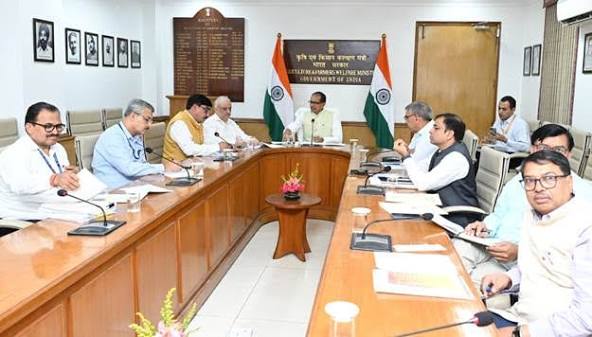
Farmers’ Welfare and Rural Development Minister Shivraj Singh Chouhan on Monday
reviewed the action plan for strengthening KVKs through enhanced state
participation and called for faster implementation of key recommendations
emerging from the 5th Chief Secretaries’ Conference 2025.
Union Minister of
State for Agriculture and Farmers’ Welfare Bhagirath Choudhary, DARE Secretary
and ICAR Director General Mangi Lal Jat, along with senior officials, attended
the meeting.
Chouhan stressed the
need for active participation and timely support from state governments to
achieve the target of upgrading 300 prioritised KVKs within the stipulated
timeframe.
The DARE Secretary
has held discussions with chief secretaries of all states and Union Territories
to mobilise financial and institutional support for the initiative. Several
states have already begun the process through their State Agricultural
Universities.
Maharashtra, Gujarat,
Goa and Chhattisgarh have received Detailed Project Reports from universities
and KVKs, while other states are at various stages of preparing and
implementing their plans.
The meeting also
reviewed the ambitious plan to establish Incubation-cum-Skill Centres in all
KVKs by December 2028. Under the initiative, KVKs are being mapped with
agro-based enterprises, technical partner institutions and district-specific
agricultural opportunities.
KVK-wise incubation
plans are being prepared for submission to states and Union Territories for
funding and implementation support, with the aim of promoting innovation,
skills and rural entrepreneurship.
Personnel reforms at
KVKs also came under discussion. Proposed reforms relating to pay, allowances
and promotion of KVK staff have received approval from the Department of
Expenditure.
The meeting also
emphasised the role of state governments in providing NPS contributions and
retirement benefits to KVK staff, wherever applicable. States were urged to
undertake timely recruitment against vacancies to ensure adequate manpower for
effective functioning of the centres.
Chouhan also called
for timely release of funds to KVKs, particularly for seasonal agricultural
programmes, so that field-level interventions are completed within the
appropriate agricultural window.
Under the Cluster
Frontline Demonstrations programme on pulses and oilseeds for 2026-27,
activities are being carried out across 24 states through 353 KVKs and
districts. Against a target area of 12,349 hectares, demonstrations have
already covered 9,750 hectares.
The meeting discussed
issues relating to fund-flow mapping and delays in releasing funds in some
states. States were asked to ensure smooth and timely flow of funds up to ATARI
and KVK levels, besides ensuring timely availability of recommended quality
seeds and varieties.
The government also
reviewed the role of KVKs in implementing the Pradhan Mantri Dhan-Dhaanya Krishi
Yojana (PM DDKY). States were asked to provide adequate financial support to
KVKs for their mandated activities as well as district-specific action plans
under the scheme.
It was further
emphasised that district-level activities undertaken by KVKs, in addition to
capacity-building programmes, should be uploaded on the designated portal to
enable effective monitoring, reporting and assessment of outcomes.
Chouhan said the
transformation of KVKs would depend on strong Centre-State convergence, timely
financial support, modern infrastructure, adequate manpower and effective
implementation of district-specific plans.
He stressed that KVKs
must be equipped with the necessary infrastructure, human resources and
institutional support to effectively serve farmers and address emerging
challenges in agriculture.
With strengthened infrastructure and institutional support, KVKs are expected to play a greater role in taking scientific knowledge, modern farm technologies, improved varieties, skills, innovation and entrepreneurship opportunities closer to farmers and rural communities.
The deliberations underscored the need for states and Union Territories to accelerate implementation of the agreed measures so that KVKs emerge as effective platforms for agricultural technology dissemination, skill development, innovation and rural entrepreneurship, contributing to a stronger and more prosperous farm sector.