
THEBUSINESSBYTES BUREAU
BHUBANESWAR, FEBRUARY 25, 2026
“Human victory is not measured by
physical prowess but by the depth of compassion and love,” said eminent
litterateur and academician Gourahari Das while delivering the keynote address
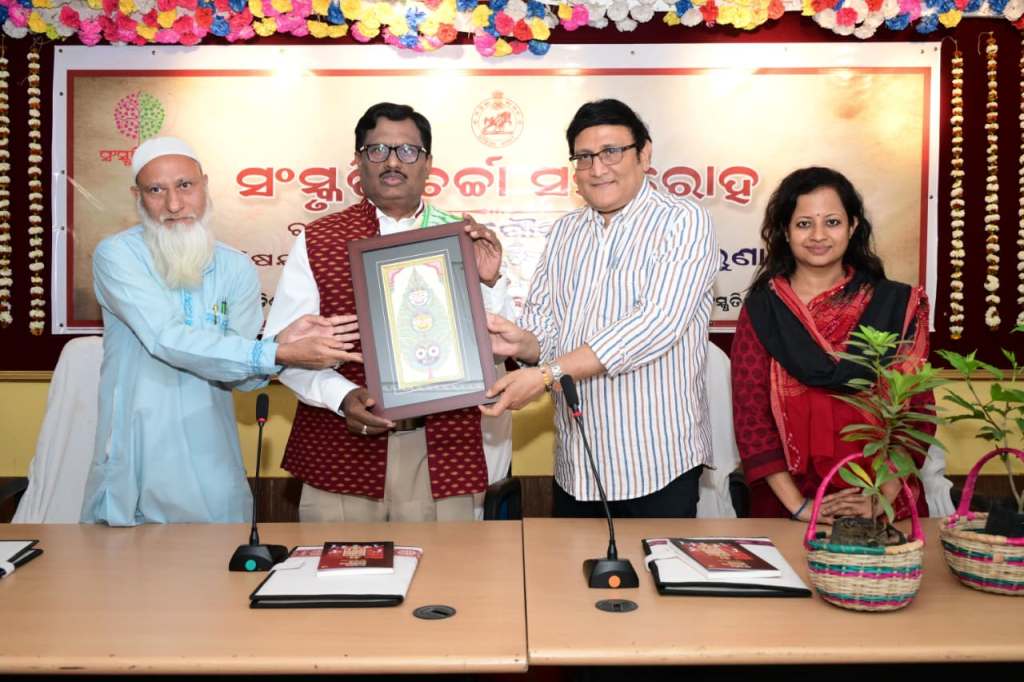
at the 92nd Sanskruti Charchcha
organised at the Odisha State Archives in Bhubaneswar, where scholars gathered
to deliberate on the theme “Odia Culture: Love and Compassion.”
Das opened his address with a philosophical reflection on Charles
Darwin’s evolutionary theory, noting that the later emphasis on empathy and
cooperation offers a deeper moral insight into human survival. He asserted that
Odisha’s cultural journey exemplifies this principle, as its social fabric has
been woven not through conflict but through compassion, coexistence and
spiritual humanism. The state’s civilisational ethos, he said, has been shaped
by the inclusive influences of Jainism, Buddhism, Shaivism and above all the
Jagannath tradition, which dissolves barriers of caste, class and creed and
nurtures a collective identity rooted in equality.
 Drawing from Odia literary heritage, Das referred to Lakshmi Purana, the legend of Dharmapada,
and other devotional and folk narratives that uphold sacrifice, dignity of
labour and social justice. These texts, he observed, have historically
challenged hierarchical structures and reinforced the idea that moral courage
and empathy form the foundation of a just society. Odisha may appear materially
modest, he remarked, but it possesses an immense reservoir of ethical and
cultural wealth capable of guiding it toward a harmonious and prosperous
future. In contrast, he cautioned, nations driven solely by military or
economic power often fail to ensure genuine happiness for their people.
Drawing from Odia literary heritage, Das referred to Lakshmi Purana, the legend of Dharmapada,
and other devotional and folk narratives that uphold sacrifice, dignity of
labour and social justice. These texts, he observed, have historically
challenged hierarchical structures and reinforced the idea that moral courage
and empathy form the foundation of a just society. Odisha may appear materially
modest, he remarked, but it possesses an immense reservoir of ethical and
cultural wealth capable of guiding it toward a harmonious and prosperous
future. In contrast, he cautioned, nations driven solely by military or
economic power often fail to ensure genuine happiness for their people.
Odia Language, Literature and Culture Department Special Secretary Deba
Prasad Dash, who attended as chief guest, extended the discourse by describing
compassion as an active, participatory virtue that goes beyond sympathy to
sharing the suffering of others. Invoking the Jagannath culture and the
universal message of saint-poet Bhima Bhoi — who prayed for the redemption of
the world even at the cost of his own suffering — he emphasised that Odisha’s
cultural identity is anchored in collective well-being, emotional solidarity
and spiritual inclusiveness.
The programme commenced with a welcome address by State Archives
Superintendent Sheikh Soleman Ali, who highlighted the importance of such
dialogues in preserving Odisha’s intellectual and cultural legacy.
Scholars and participants engaged in a thoughtful exchange on how literature, philosophy and tradition continue to shape contemporary social values.
The session concluded with a vote of thanks by Banani Mohapatra of the Odia Language, Literature and Culture Department.