
THEBUSINESSBYTES BUREAU
BHUBANESWAR, FEBRUARY 25, 2026
In a decisive push to curb road accident fatalities and guarantee
immediate medical care for victims, the Odisha government has initiated
preparations to roll out the ‘Prime Minister Road Accident Victims
Hospitalisation and Assured Treatment’ (PM Rahat) scheme across the state. The
programme promises cashless, time-bound treatment for accident victims and aims
to transform the critical “golden hour” into a structured, lifesaving response
system.
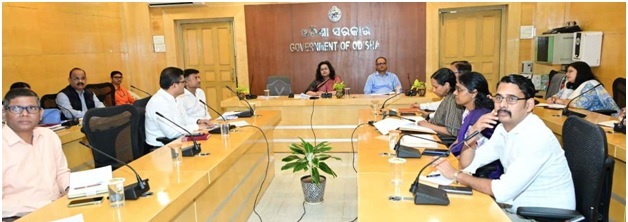
A high-level preparatory meeting chaired by Chief Secretary Anu Garg at
Lok Seva Bhawan on Wednesday brought together top officials from the Health,
Transport, Police and district administrations to chart the implementation
roadmap. The discussions focused on institutional coordination, digital
monitoring, hospital empanelment, and grievance redressal mechanisms to ensure
seamless execution from accident site to hospital bed.
 Under the scheme, any road accident victim admitted to a hospital within
24 hours will be entitled to free treatment for up to seven days or ₹1.5 lakh,
whichever is earlier. The entire cost will be covered through the Motor Vehicle
Accident Fund, removing financial barriers during emergencies. The initiative is tightly integrated with the
112 emergency response system, enabling rapid dispatch of assistance and
real-time SMS alerts to stakeholders.
Under the scheme, any road accident victim admitted to a hospital within
24 hours will be entitled to free treatment for up to seven days or ₹1.5 lakh,
whichever is earlier. The entire cost will be covered through the Motor Vehicle
Accident Fund, removing financial barriers during emergencies. The initiative is tightly integrated with the
112 emergency response system, enabling rapid dispatch of assistance and
real-time SMS alerts to stakeholders.
A robust technology backbone will drive the scheme’s transparency and
efficiency. Police authorities will upload accident details to the e-DAR portal
within 24 hours, allowing hospitals to process claims through the Transaction
Management System without delays. This digital workflow is expected to minimise
paperwork, accelerate reimbursements, and ensure accountability at every stage.
At the governance level, the scheme will be monitored nationally by the
Ministry of Road Transport and Highways, while in Odisha it will function under
the National Road Safety Council chaired by the Chief Minister, Transport
Minister or Chief Secretary. District Road Safety Committees led by Collectors
will oversee local implementation, making them the nodal authorities for
monitoring readiness, hospital coordination, and public awareness.
The Health Department has widened the treatment network by including
hospitals empanelled under the Pradhan Mantri Jan Arogya Yojana as well as
other emergency-care-equipped facilities. Officials emphasised close
coordination between the Health and Transport departments to ensure victims
receive uninterrupted care from rescue to recovery. Dedicated district
grievance cells will address complaints, with final decisions resting with the
Collectors.
Highlighting the urgency, Chief Secretary Garg noted that Odisha records
nearly 16 road accident deaths every day, underscoring the need for swift
intervention. He urged all departments and district administrations to
prioritise preparedness and launch awareness campaigns so that citizens,
hospitals, and first responders understand the scheme’s benefits and
procedures.