THEBUSINESSBYTES
BUREAU
NEW
DELHI, SEPTEMBER 7, 2026
In a major push to
strengthen the country's defence capabilities and domestic manufacturing, the
Defence Acquisition Council (DAC) on Monday cleared capital acquisition
proposals worth around Rs 1.10 lakh crore for the armed forces, with nearly 98
per cent of the procurements set to be sourced from Indian industry.
The approvals,
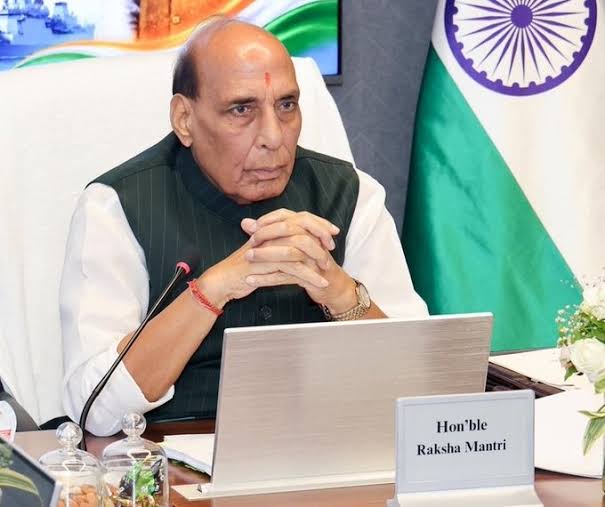
granted under the chairmanship of Defence Minister Rajnath Singh, cover a wide
range of platforms and systems for the Indian Army, Navy and Air Force,
including advanced helicopters, surveillance radars, mobility platforms,
mine-laying systems, electronic warfare equipment and secure identification
systems.
For the Indian Army,
the DAC accorded Acceptance of Necessity (AoN), or in-principle administrative
approval, for the procurement of Chemical Biological Radiological and Nuclear
(CBRN) Recce Vehicles, High Mobility Vehicles (HMVs), Self-Propelled Mechanical
Mine Layers (MMLs), Advanced Light Helicopters (ALHs), Trawl Tanks and the
Sarvatra Bridge System.
The CBRN Recce
Vehicles will be equipped to detect, identify, monitor and mark areas
contaminated with chemical, biological, radiological and nuclear agents,
enhancing the Army's preparedness for operations in contaminated environments.
The proposed High
Mobility Vehicles are expected to bolster operational capabilities, logistics
support and mobility across challenging terrains, while the Self-Propelled
Mechanical Mine Layers will provide fast and responsive mine-laying
capabilities in difficult operational conditions.
The Advanced Light
Helicopters will be used for executing complex missions across varied terrains
and operational situations by the Indian Army and the Indian Air Force. Trawl
Tanks and the Sarvatra Bridge System will support fighting formations by
enabling composite crossings during operations across diverse terrains.
For the Indian Navy,
the DAC approved procurement of Arudhra Radars as well as the design and
development followed by procurement of Marine Gas Turbines (MGTs).
The Arudhra Radars
are intended to replace existing Air Route Surveillance Radars at various Naval
Air Stations, while the development and procurement of Marine Gas Turbines,
which serve as propulsion systems for warships, is aimed at reducing the Navy's
dependence on foreign vendors.
The Indian Air Force
also received approvals for a range of proposals aimed at enhancing the
war-fighting capabilities of its fighter aircraft, transport platforms and
helicopters.
The DAC further
cleared procurement of Ground-Based Multi-Purpose Jammers (GBMPJs) and
installation of the Defence Forces Secure Access Card (DEFSAC) System. The
GBMPJ is designed to provide effective jamming against adversary radars,
strengthening the electronic warfare capabilities of the armed forces.
The DEFSAC system
will replace existing paper-based identity cards, passes and permits with
interoperable Radio Frequency Identification-based smart cards, potentially
streamlining access and security management across the defence forces.
The strong domestic
procurement component is expected to provide a significant boost to Indian
defence manufacturers, as approximately 98 per cent of the total acquisitions
cleared by the DAC will be made from Indian industry.
The approvals come as
India continues to emphasise indigenous defence production, greater
self-reliance in military equipment and strengthening of domestic manufacturing
capabilities.