THEBUSINESSBYTES
BUREAU
NEW
DELHI, MARCH 6, 2026
Developing nations
like India are set to become the future growth engines of the world, and
greater academic exposure to India will significantly benefit students from
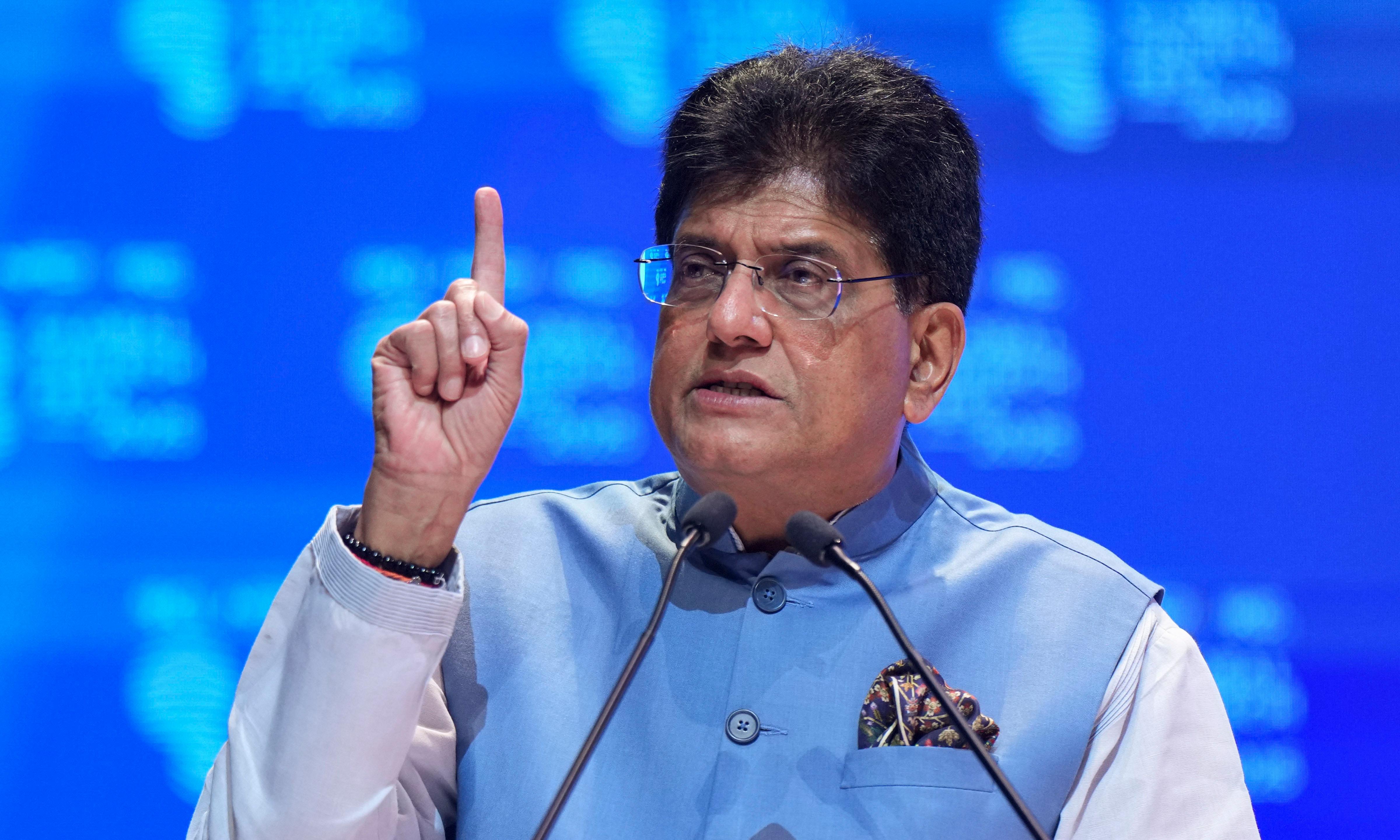
developed countries in shaping their future careers, Union Minister of Commerce
and Industry Piyush Goyal said on Thursday.
Addressing the Vice
Chancellors’ Conclave on “Reimagining Internationalisation of Higher Education
for Viksit Bharat 2047” in New Delhi, the Minister highlighted the immense
potential of education as a service in strengthening India’s export earnings
while expanding the global footprint of Indian higher education institutions.
 Goyal said he was
keen to engage with Vice Chancellors to understand their ideas and perspectives
on the future direction of higher education in India. He expressed satisfaction
that the Ministry of Commerce and the Indian Institute of Foreign Trade (IIFT)
are taking the lead in exploring how education services can contribute
significantly to India’s export economy and global academic outreach.
Goyal said he was
keen to engage with Vice Chancellors to understand their ideas and perspectives
on the future direction of higher education in India. He expressed satisfaction
that the Ministry of Commerce and the Indian Institute of Foreign Trade (IIFT)
are taking the lead in exploring how education services can contribute
significantly to India’s export economy and global academic outreach.
The conclave served
as a platform for thematic discussions and expert deliberations on the
internationalisation of higher education, focusing on international academic
partnerships, student mobility, regulatory frameworks and dual degree
programmes. Participants also examined global trends in education mobility and explored
strategies to enhance the international competitiveness of Indian higher
education institutions.
Highlighting India’s
rising global role, Goyal said countries that are currently developing or less
developed are likely to become the future drivers of global growth. In this
context, he said that students from developed countries would greatly benefit
from spending time in India to understand the country’s economic, cultural and
societal dynamics.
He noted that this
growing recognition is already evident during negotiations of services chapters
in Free Trade Agreements (FTAs). According to the Minister, the nine FTAs
finalised under the leadership of Prime Minister Narendra Modi have all been
signed with developed economies, enabling India to expand its engagement with
more evolved markets. As a result, nearly two-thirds of global trade is now
covered through India’s FTAs.
Goyal said this marks
a significant shift in India’s global engagement strategy. Unlike earlier
times, when negotiations were often shaped by a colonial mindset or weaker
bargaining position, India now engages confidently with the world from a
position of strength.
Emphasising India’s
growing economic influence, the Minister said the country currently contributes
nearly 20 per cent of global growth and has already emerged as a major growth
engine. In the future, he added, younger generations across the world will
increasingly need to work with and understand countries like India.
The Minister also
highlighted the transformative reforms undertaken in the education sector
through the National Education Policy 2020. He said the policy was developed
through extensive consultations with educationists and stakeholders across the
country and abroad, receiving nearly three lakh suggestions and feedback before
being finalised.
According to Goyal,
the policy reflects the consultative approach of Prime Minister Narendra Modi
and has opened India’s academic ecosystem to global standards, while
encouraging expansion of institutions and attracting international students.
He noted that the
policy has enabled international universities to establish campuses in India
and facilitated collaborations between foreign and Indian institutions to offer
dual degree programmes. It has also encouraged cross-border student exchanges,
allowing Indian students to gain exposure to global education systems while
inviting international students to experience India’s academic environment.
Goyal suggested
innovative models to encourage students from developed countries to study in
India, such as a three-year programme where students could spend one year in
India and two years in their home institution, or split their academic period
equally between both institutions. Such arrangements, he said, would help
students understand how developing economies think, work and interact with
culture and society.
Addressing Vice
Chancellors present at the conclave, the Minister described them as architects
of India’s future, stressing their crucial role in shaping the minds of young
Indians and preparing them for emerging global challenges.
He emphasised that
higher education institutions must evolve with changing times and that teachers
should continuously undergo retraining and relearning to stay updated with
modern curricula and future-oriented knowledge.
Goyal cautioned that
outdated curricula cannot prepare students for the future, urging institutions
to remain agile and responsive to emerging opportunities. He also underlined
the importance of internationalising India’s trade, manufacturing and services
sectors, along with engaging with advanced technologies such as artificial
intelligence, quantum computing and machine learning, which will play a
critical role in sustaining India’s growth momentum.
Educational
institutions, he said, must reassess their curricula and teaching approaches
accordingly, incorporating subjects such as international trade and India’s
Free Trade Agreements so that students can better understand opportunities in
the evolving global economy.
Expressing confidence
in India’s academic potential, the Minister said students who understand
international law, global trading rules and the advantages arising from FTAs
will play a key role in advancing the vision of Viksit Bharat during the Amrit Kaal.
He further expressed
hope that the current ratio of 28 Indian students going abroad for every one
international student coming to India would eventually be reversed. In the coming
years, he said, India could attract nearly 1.3 million foreign students to
study in its institutions while fewer Indian students feel the need to pursue
education overseas.
The Minister
concluded by calling for stronger collaboration among academia, government and
industry to realise the vision of internationalising higher education and
transforming India into a global education hub by 2047.
Vice Chancellor of
IIFT, Rakesh Mohan Joshi, said the conclave created a collaborative platform
for academic leaders to reflect on how Indian institutions can strengthen
global engagement while contributing to the broader national vision of Viksit
Bharat 2047. “India has immense potential to emerge as a global destination for
quality education. Through initiatives such as the Vice Chancellors’ Conclave,
IIFT seeks to catalyse partnerships and dialogue that will strengthen
internationalisation of Indian higher education,” he said.
The conclave was attended by several eminent academic leaders including Pro-Chancellor Prof. Prem Vrat, Vice-Chancellor of Jawaharlal Nehru University Prof. Santishree Dhulipudi Pandit, Director of Indian Institute of Science Prof. T. G. Sitharam, and Chairman of the Executive Committee of National Assessment and Accreditation Council Prof. Anil Sahasrabudhe.
Distinguished academic leaders and Vice Chancellors from institutions such as the Indian Institutes of Management, Jawaharlal Nehru University, Jamia Millia Islamia, University of Southampton, Jamia Hamdard, the Central University of Tamil Nadu, North Eastern Hill University, Dr. B.R. Ambedkar University Delhi and Netaji Subhas University of Technology, along with policymakers and global academic representatives, also participated in the deliberations.